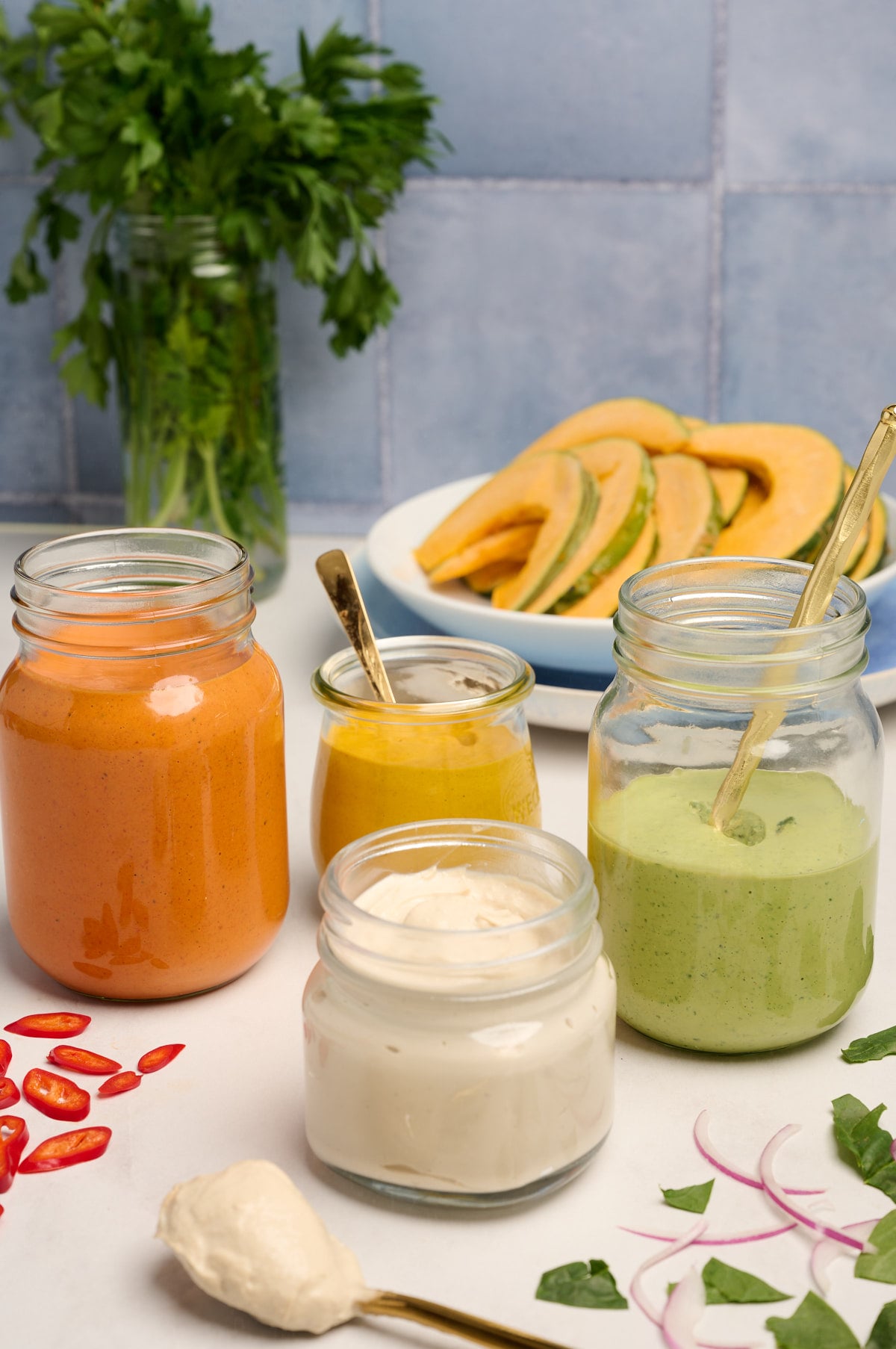
This Best Tahini Sauce Recipe is creamy, nutty, and incredibly versatile. Made with simple ingredients, it’s quick, healthy, and perfect for everything from falafel and grain bowls to roasted vegetables, sandwiches, salads, and grilled proteins.
This recipe comes together with just a few core ingredients: tahini paste, fresh lemon juice, garlic, kosher salt, and ice cubes or ice water.
As a professional chef, I’ve made countless versions of tahini sauce in both restaurant and home kitchens. The key to achieving an ultra-smooth, whipped texture is a simple yet game-changing technique: adding ice water or ice cubes while blending. It lightens the sauce and gives it a velvety finish without any added dairy. I also include a handful of creative variations, ranging from spicy to herby to smoky, so that you can customize the base recipe according to your mood or meal. Once you master this version, it’ll be a go-to in your kitchen too.
What is Tahini Paste?
Tahini is a creamy paste made from ground sesame seeds—its name comes from the Arabic word tahana, meaning “to grind.” It’s a staple across Middle Eastern and Mediterranean cuisines, forming the backbone of sauces, dips, and spreads like hummus and baba ganoush. But when blended properly, it transforms into a luscious, whipped sauce that’s deeply flavorful and incredibly versatile. I’ve worked with tahini for years in both restaurant test kitchens and private culinary coaching sessions—it’s a staple I always keep stocked in my pantry.
The key to great tahini is texture and balance. It should be pourable—not thick or chalky—with a mild, nutty flavor and no harsh bitterness. My go-to brand is Seed + Mill, a women-owned company I’ve worked with personally for years. During my time as a senior food stylist and culinary producer in the Food Network Kitchens—just above their flagship location in Chelsea Market—I regularly sourced their tahini for its consistent quality and rich flavor.
Seed + Mill uses sesame seeds from Humera, Ethiopia, and roasts them at precise temperatures to preserve their natural oils and nutritional benefits. Their tahini blends like a dream, and their spicy version is a personal favorite when I want a little heat.
The Chef’s Secret to Ultra-Creamy Tahini Sauce
There’s one unexpected technique that transforms tahini from dense and heavy to light, airy, and ultra-creamy: ice cubes.
I learned this method after years of making tahini sauce in restaurant kitchens, and I use it in my private client work to this day. While it might sound simple, there’s real science behind it. When ice cubes or ice-cold water are added to tahini, the cold temperature stabilizes the fat molecules, creating a stronger structure that’s primed for aeration. Then, as the mixture is blended in a food processor or high-powered blender, air is whipped into that stable base, suspending tiny bubbles and transforming the sauce into a light, fluffy, and velvety emulsion.
This fluffy whipped texture is what makes the sauce feel so luxurious—cooling the fat allows it to trap and hold air as it’s being whipped, creating an emulsion that’s creamy and cloud-like without any added dairy or oil. It’s much harder to achieve this kind of texture by hand with a whisk; the speed and power of the machine make all the difference.
Why not use warm water? Warm or room-temperature liquid causes the tahini to seize or break, leading to a gritty, oily mess. Cold water not only prevents this but also unlocks the luscious, spoon-coating texture that makes this sauce so special.
Once you try this technique, you’ll never go back. I’ve taught this exact method to clients and culinary students alike—it’s one of the simplest techniques that delivers the most impressive results.
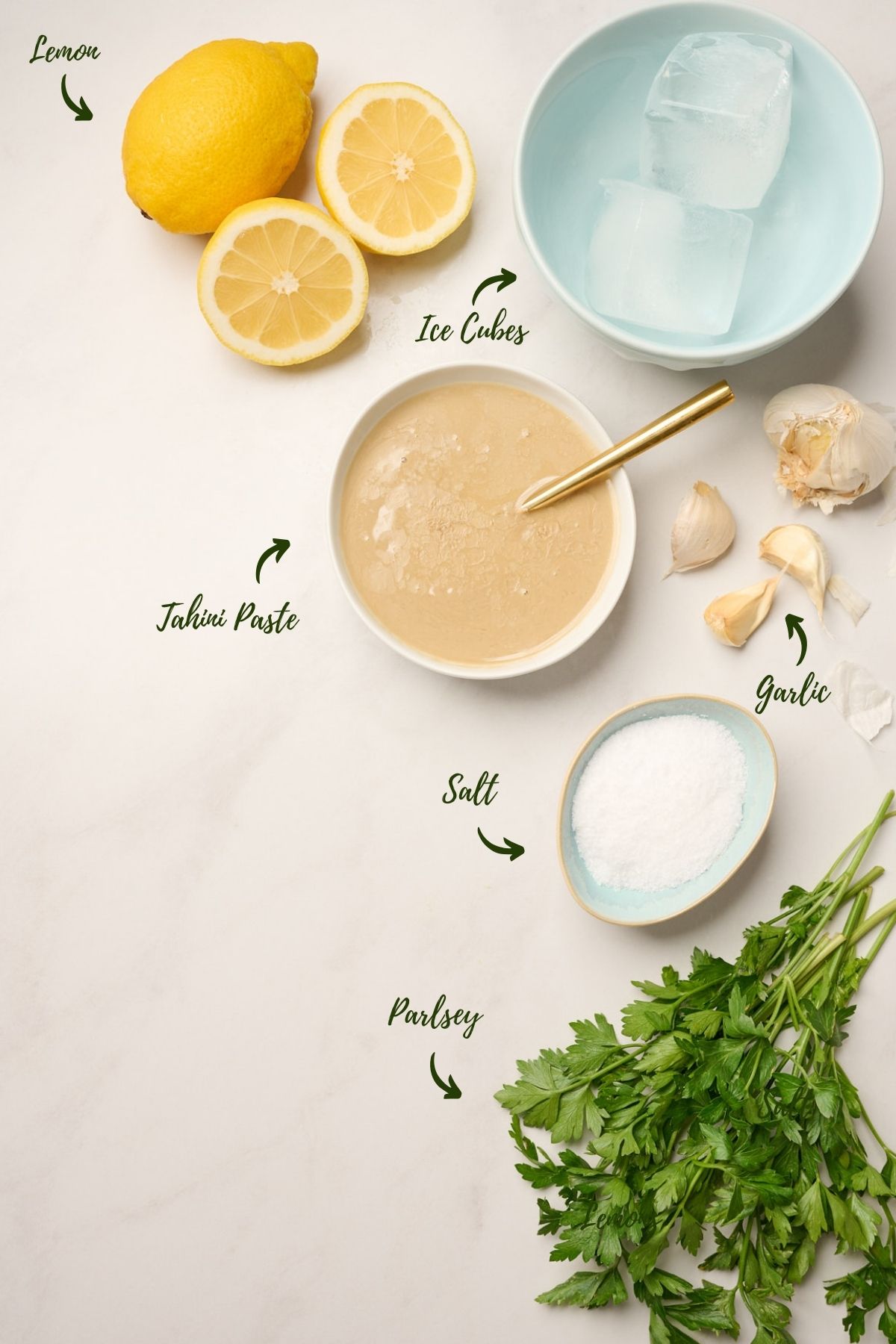
Core Ingredients
The full ingredient list and measurements are in the recipe card below, but here’s what you need to know about the essential components—and how to utilize them to achieve perfect flavor and texture.
Tahini: Choose a high-quality, smooth tahini made from hulled sesame seeds. Unhulled varieties tend to be more bitter and gritty. For this recipe, I always use Seed + Mill for its pourable texture and rich, balanced flavor.
Lemon Juice: Freshly squeezed only. Bottled lemon juice lacks the same brightness and acidity, and that tang or “pop” is crucial for balancing the richness of the tahini.
Ice Cubes or Extremely Cold Ice Water: As described above, this is the secret to achieving a whipped texture. Start with a few cubes and add more as needed to loosen the sauce.
Garlic adds subtle heat and depth, balancing the density of tahini with the acidity of the lemon. Feel free to add more if you like a more intense “bite”.
Chef’s Tip: For a more mellow garlic flavor, mince the garlic and soak it in lemon juice for about 10 minutes before blending. The acidity softens the garlic’s intensity while infusing depth. You can choose to leave the minced garlic in the lemon juice (stronger flavor) or strain it for a more subtle taste.
Kosher Salt: Kosher salt enhances natural flavors, making everything “pop”. Adjust to taste after blending for perfect seasoning.
Optional: Herbs and Heat: Garnish with fresh herbs like parsley, dill, cilantro, or mint for added color and flavor, and add a hint of chili oil, chili crunch, cayenne, or hot sauce for a subtle kick of heat. Over the years, I’ve tested dozens of variations in professional kitchens—these are the elements I come back to again and again.
How to Make Tahini Sauce (Step-by-Step)
Creating this velvety tahini sauce is simple with these chef-tested techniques designed to guarantee perfect texture and flavor.
Gather & Prepare Ingredients: Juice the lemons, peel the garlic, and measure the tahini.
Chef’s Tip: Lightly coat your measuring cup with oil or spray—this helps the tahini slip out cleanly without sticking.
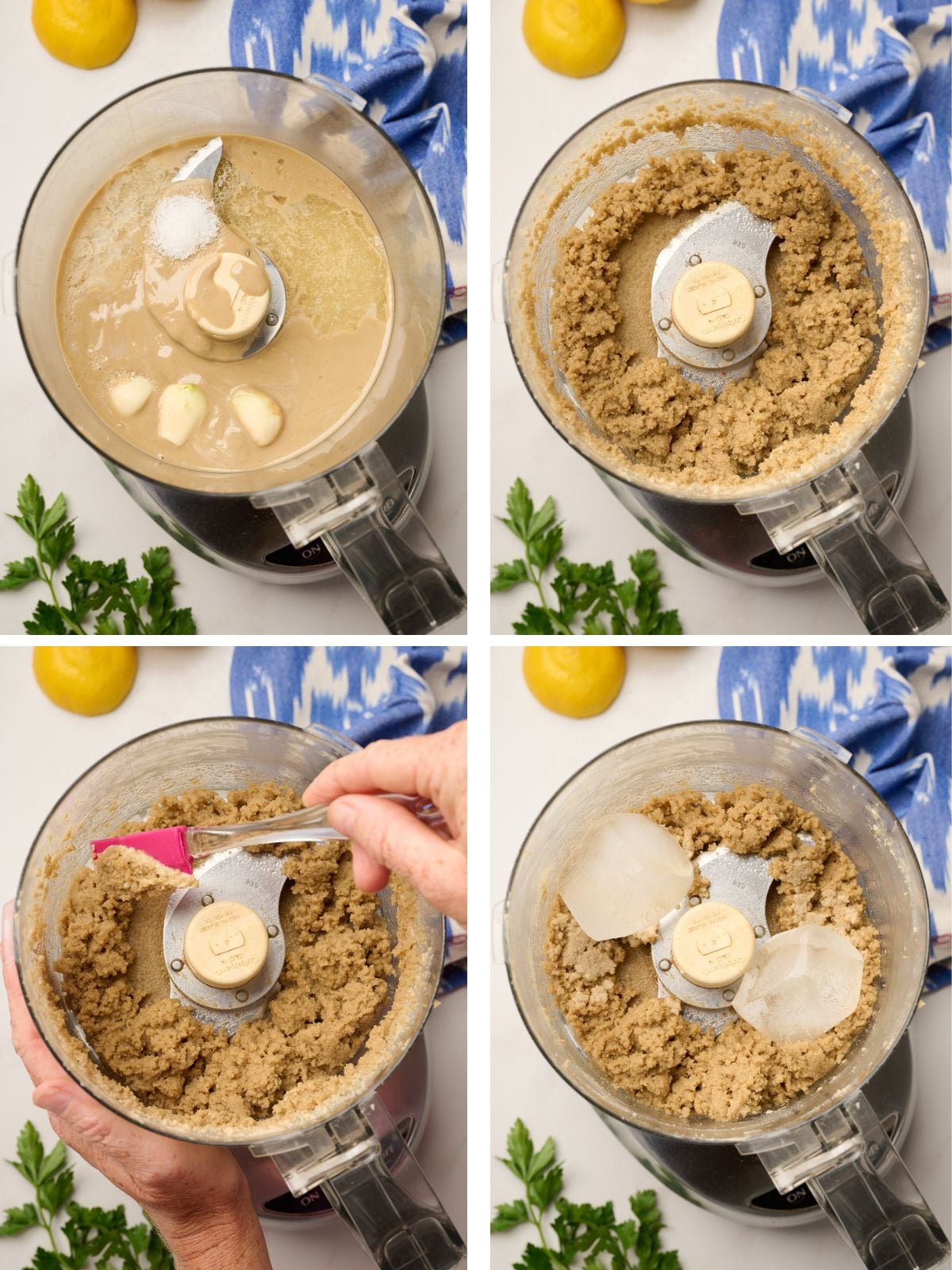
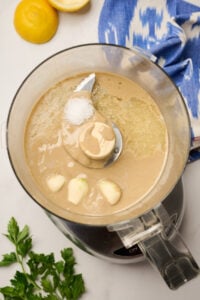
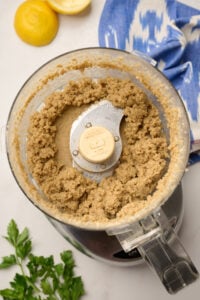
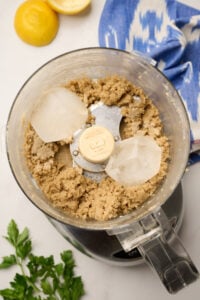
Blend the Base: Add tahini, lemon juice, garlic, and salt to a food processor or blender. Blend until a thick paste forms.
No food processor? Whisk by hand using ice water instead of cubes. That said, in professional settings, I always rely on a food processor to nail the ultra-aerated texture I want in less time.
Why This Step Matters? Scraping the sides with a spatula ensures everything is fully incorporated, preventing gritty pockets and yielding a smooth base.
Texture Cue: The paste should resemble gritty wet sand—this means it’s ready for thinning.
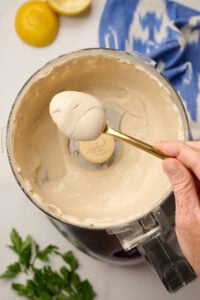
Whip With Ice: Drop in 2–4 ice cubes and blend for 3–4 minutes until the clanking stops; this indicates complete melting and incorporation. As the ice melts, it integrates air, creating a whipped, creamy texture.
Why it works: The cold stabilizes the fat and traps air, giving the sauce its signature lightness.
Troubleshooting: If separation occurs, stop, scrape the sides, and blend again. Avoid warm water—it can cause the tahini to seize.
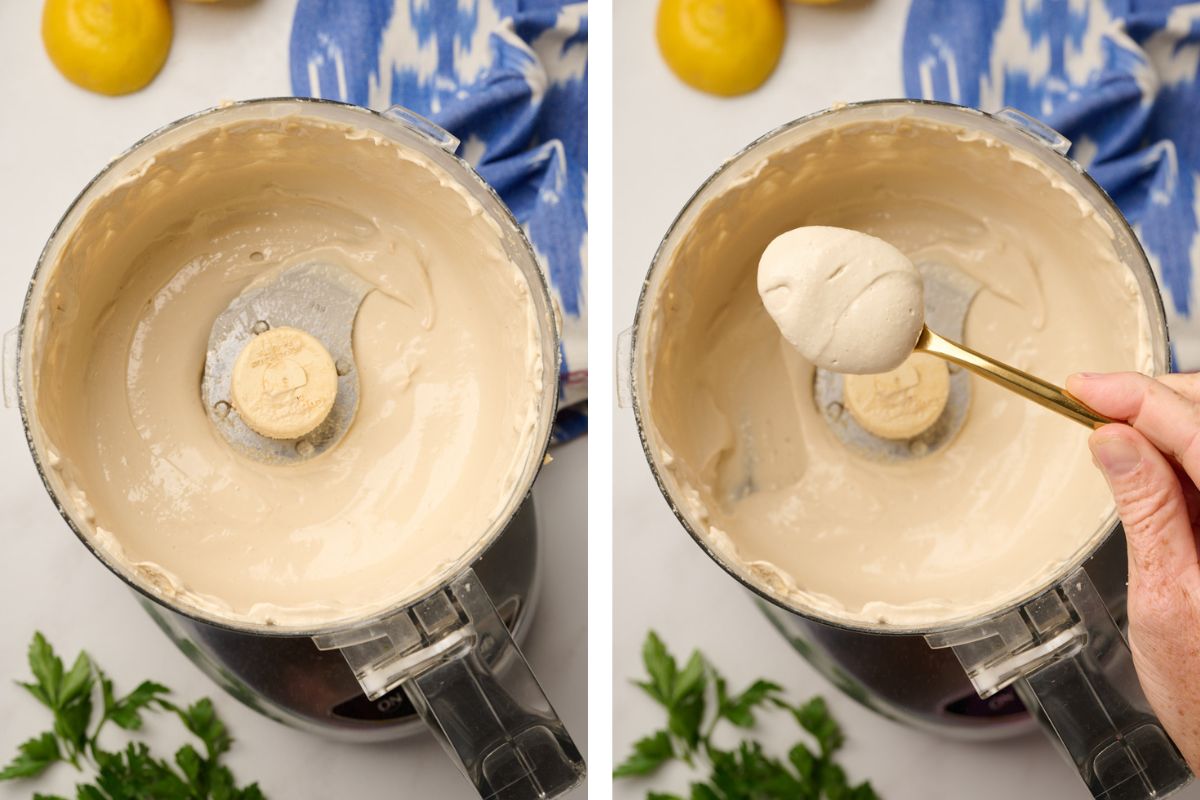
Taste & Adjust: Always taste before serving. A flat flavor usually needs more salt to enhance natural sweetness or a splash of lemon juice for brightness. Too thin? Blend in 1 to 2 tablespoons of olive oil. Too thick? Add another ice cube and blend again.
Garnish & Serve: Finish with fresh chopped herbs or add your favorite chili product for heat.
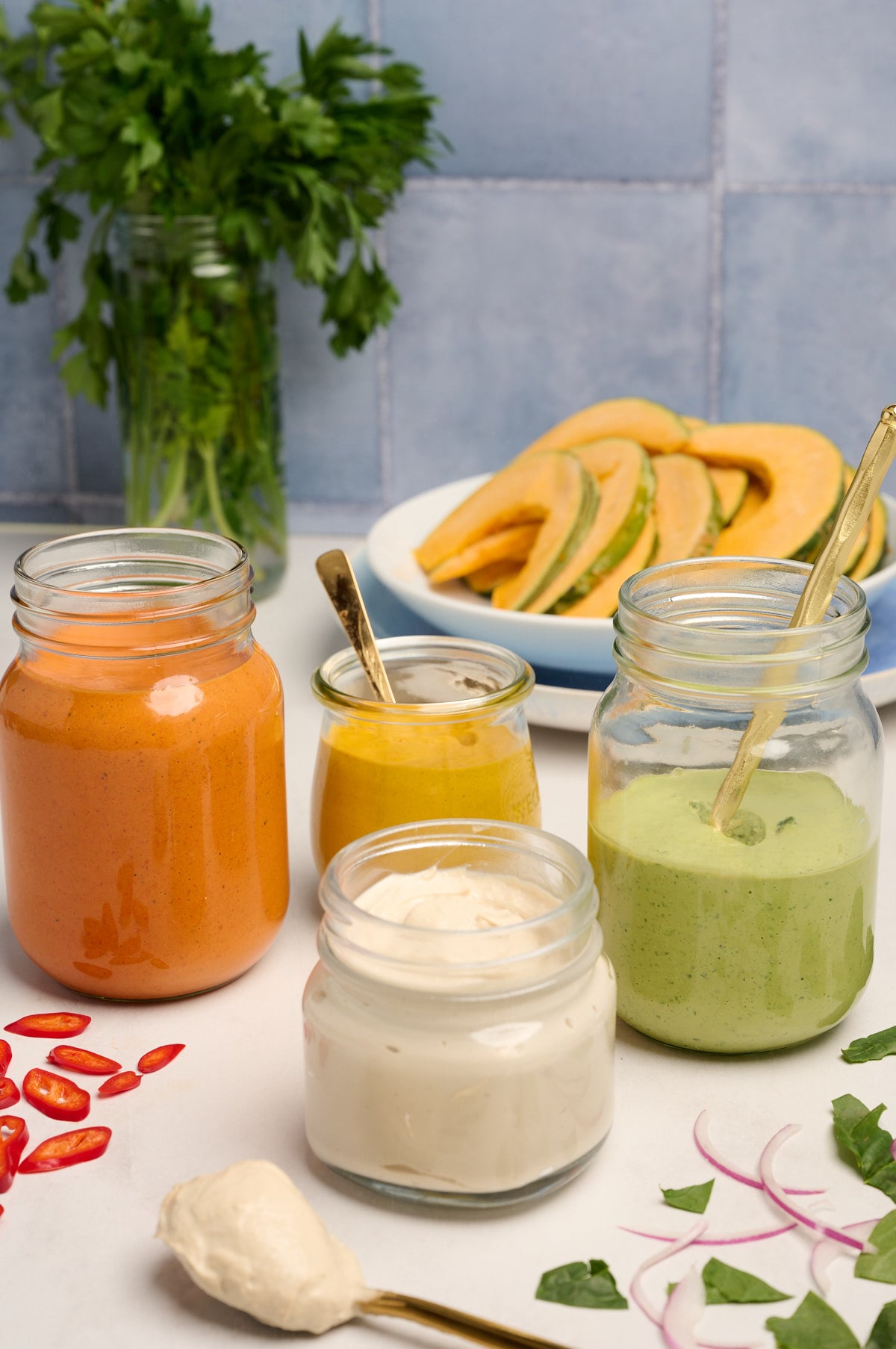
Chef-Tested Tahini Variations (Optional)
This tahini sauce is your flavor playground. Once you’ve mastered the base, try one of these chef-tested riffs to add color, spice, or bold new flavor.
Turmeric-Ginger Tahini: Stir in 1 tsp turmeric, 1 tsp grated ginger, 1 tsp olive oil, and 1 tsp maple syrup.
Flavor: Bright, warming, subtly sweet.
Use: Drizzle over roasted carrots, cauliflower, or lentil salads.
Spicy Harissa Tahini: Add 1–2 tsp harissa paste or a pinch of cayenne and chili flakes.
Flavor: Bold and smoky with heat.
Use: Spoon over grilled meats or tuck into pita with falafel.
Roasted Red Pepper Tahini: Blend in ½ cup roasted red peppers and ¼ tsp cumin.
Flavor: Smoky, rich, and slightly sweet.
Chef Tip: Drain jarred peppers well to avoid thinning.
Use: Spread on sandwiches or serve with grilled vegetables.
Green Herb Tahini: Add (one herb or a combination) ½ cup parsley, cilantro, dill, tarragon, chives, plus ¼ avocado or 1 tbsp olive oil.
Flavor: Fresh, grassy, and creamy.
Chef Tip: Strain for a smooth finish.
Use: Toss with greens, spoon over sweet potatoes, or drizzle on fish tacos.
Sweet Beet Tahini: Blend in 1 small roasted beet, ½ tsp cumin, 1 tbsp maple syrup, and a splash of red wine vinegar.
Flavor: Earthy, sweet, and vibrant.
Use: Dip for crudité or spread on wraps.
Sundried Tomato Tahini: Blend in ¼ cup oil-packed sundried tomatoes and 1 tsp balsamic vinegar.
Flavor: Tangy, savory, umami-rich.
Use: Spoon over grilled chicken, toss with pasta, or serve with crusty bread.
Best Easy Tahini Sauce Recipe
Equipment
Ingredients
- 3/4 cup tahini paste
- 1/4 cup fresh lemon juice
- 2-3 cloves garlic
- 1/2 tsp kosher salt
- 2 large (or 4 smaller) ice cubes
- Optional: 1 tbs fresh herbs (parsley, dill, chives, tarragon or mint)
Instructions
- Add tahini, lemon juice, garlic, and salt to a food processor or blender.

- Blend until a thick paste forms, stopping to scrape down the sides.
- Add ice cubes (or ¼ cup icy cold water). Blend for 3-4 minutes, until no clanking is heard and the sauce is perfectly smooth and whipped. Scrape down sides periodically to ensure thorough mixing.
- Season to taste with additional salt or lemon juice as needed. Garnish with optional fresh herbs.
Notes
- Texture Tip: The finished sauce should be airy, whipped, and pourable—not gritty or thick.
- No Blender? Whisk ingredients by hand, using ice water instead of cubes.
- Troubleshooting: Too thick? Add a splash of cold water. Too thin? Blend in 1–2 tablespoons of olive oil.
- Storage: Keeps for up to 2 weeks in an airtight container in the fridge. Stir before each use.
- Flavor Variations: Try mixing in roasted red peppers, herbs, turmeric, or harissa for bold new twists (see blog for full variations).
Nutrition
How to Use Tahini Sauce
This Tahini Sauce is incredibly versatile – fabulous as a sauce, a dip, or a dressing for bowls, greens, veggies, and proteins! Here are some of my favorite chef-inspired ways to incorporate it into your meals:
Grain Bowls: Build a hearty base with simple steamed rice, toasted pearl couscous, bulgur wheat, or nutty farro. Top with raw or roasted vegetables, such as roasted peppers, roasted beets, or roasted tomatoes. In my kitchen, we love to finish grain bowls with a generous drizzle of this whipped tahini sauce for added richness and contrast. For an extra indulgent touch, add a soft-boiled egg.
Salads: Use this sauce as a vibrant vinaigrette for fresh greens and veggies. It’s wonderfully mixed with simple salads, transforming them with its creamy texture and bright flavor. A pro tip from my restaurant days—this sauce is magic on chopped cucumber tomato salad or corn salad, anything herb-forward.
Vegetables: Add a flavorful “pop” by drizzling this sauce over simply cooked vegetables. It’s fantastic with sautéed kale, garlicky Swiss chard, or even roasted broccoli. Clients always ask for this combo—roasted broccoli and tahini never fails.
Proteins: This sauce beautifully complements a variety of simple proteins. Serve it with Pan Seared Salmon, alongside a decadent Duck Breast Recipe for an impressive meal, or pair it with grilled chicken or beef. When I’m prepping for private dinners, tahini sauce is one of my go-to secret weapons for elevating lean proteins.
Frequently Asked Questions (FAQs)
Here are some quick answers to common questions about tahini sauce—covering texture, storage, substitutions, and ways to use it. These tips help troubleshoot and customize your sauce with confidence.
Tahini is a thick paste made from ground sesame seeds. Tahini sauce is what you get when you blend tahini with lemon juice, cold water, garlic, and salt—turning it into a creamy, pourable dressing or dip.
That’s totally normal. When tahini and lemon juice mix, they initially “seize” into a paste. Once you add ice cubes and blend, the mixture aerates and emulsifies into a whipped, velvety sauce.
Bitterness often comes from lower-quality tahini. Try a brand with smoother flavor (like Seed + Mill). If needed, balance bitterness by blending in ¼–½ tsp maple syrup or honey.
Refrigerate in an airtight container for up to 2 weeks. It will thicken when cold—just whisk in a splash of cold water or lemon juice to loosen it.
Yes. Skip the garlic or use less for a milder taste. A pinch of cumin or chopped parsley can add depth in its place.
Yes. It’s plant-based, dairy-free, gluten-free, and full of healthy fats, protein, and minerals—especially calcium from sesame seeds.
Absolutely. Thin with water to your preferred consistency and drizzle over grain bowls, greens, or chopped veggie salads.
Storage Tips & Troubleshooting for Your Tahini Sauce
Homemade tahini sauce stores beautifully and can be prepared in advance for busy weeks. Follow a few key tips to maintain its smooth texture and fresh flavor, and troubleshoot common issues to ensure it’s always fresh and ready to use.
Refrigeration: Store in an airtight container in the fridge for up to 2 weeks.
Separation Fix & Thickening: It’s common for tahini sauce to thicken and slightly separate in the refrigerator. Before using, stir or shake well. If it’s too thick, gradually whisk in a tablespoon or two of cold water (or fresh lemon juice for added brightness) until you achieve the desired creamy consistency.
Freezing: Freezing is generally not recommended, as the texture of the sauce may change and become less smooth upon thawing.
More Favorite Sauce and Dressing Recipes
If you love bold, balanced flavors like those found in tahini sauce, these chef-tested sauces and dressings are just as versatile and easy to prepare. Use them to elevate weeknight dinners, salads, or grain bowls.
- Add a pop of green with this creamy, nutty pistachio pesto — perfect for pasta, veggies, or grilled proteins.
- Craving something savory and satisfying? Try this flavor-packed Thai peanut sauce, perfect for noodles or dipping spring rolls.
- Cool things down with a classic tzatziki sauce — creamy, garlicky, and perfect with pita or grilled meats.
- For bright, punchy flavor, make a batch of this Vietnamese nuoc cham (nuoc mam pha) — a staple dipping sauce.
- This dairy-free avocado dressing blends herbs and citrus into a silky, zesty finish.
- Spoon this tangy, herbaceous dill sauce over roasted fish or potatoes for a Nordic-inspired twist.
- Brighten any dish with this fresh basil vinaigrette — it’s light, herby, and full of summer flavor.
- Turn up the heat with this creamy, spicy Greek tirokafteri made with feta and harissa.
- Or go all in on tahini with this versatile tahini dressing— ideal for salads and grain bowls.