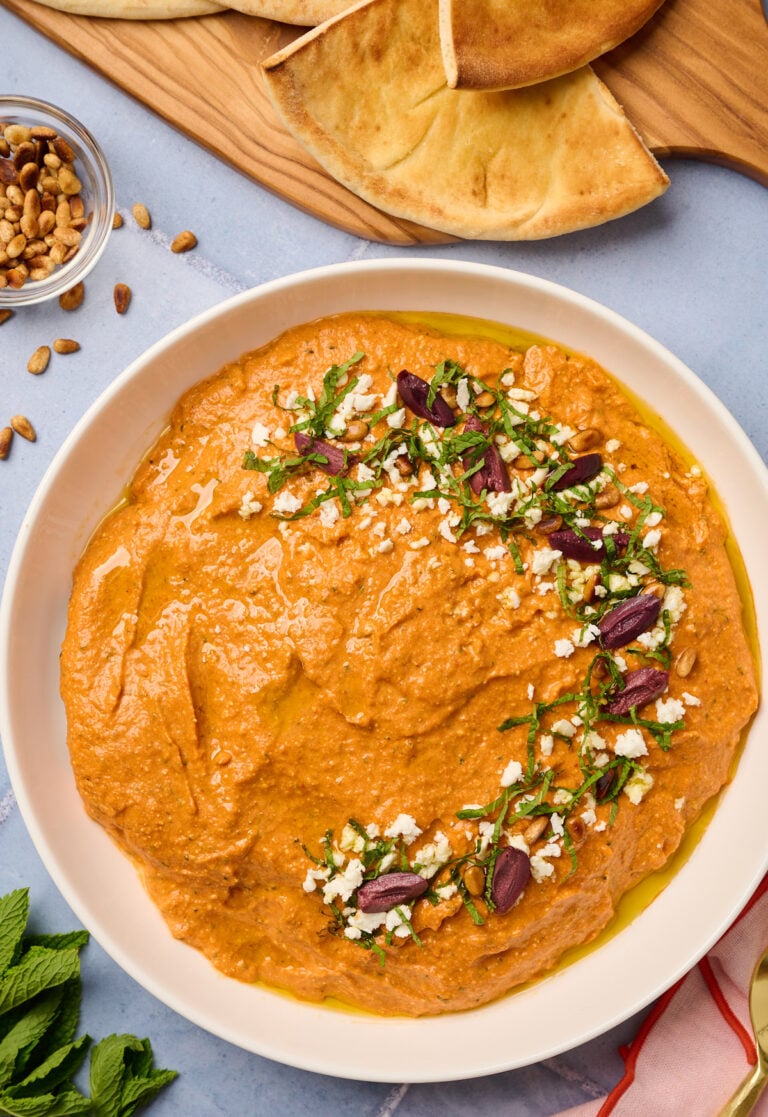
This spicy feta dip, also called tirokafteri, is creamy, tangy, salty, and gently spicy with roasted red peppers, harissa, olive oil, and fresh mint. Using already-roasted peppers, it comes together in about 10 minutes with no cooking required. Serve it chilled or at room temperature with pita, vegetables, grilled proteins, or as a spread for sandwiches. For a full mezze spread, serve it with other dips and spreads like tzatziki, hummus, roasted eggplant dip, or whipped feta.
I first fell for this spread while waitressing at a tiny Greek restaurant in the West Village during culinary school, then tasted versions across the Greek islands. Some were fiery and rustic, others were smooth and mellow, but the best ones always had the same balance: salty feta, bright acidity, peppery heat, and enough richness to make you keep going back for one more dip.
My tirokafteri recipe has a secret twist: harissa paste for deeper, smokier, more layered heat. Traditional tirokafteri usually gets its punch from garlic, red wine vinegar, hot peppers or chili flakes, paprika, and herbs. Harissa brings many of those flavors together, with roasted peppers, toasted spices, and subtle sweetness. Blend everything at room temperature, then finish the dip with fresh mint for brightness. If your feta is especially firm, I like to warm it gently before blending for a silkier dip, but this chef tip is entirely optional.
In This Post
- Spicy Feta Dip (Tirokafteri)
- What Is Tirokafteri?
- Ingredients for Spicy Feta Dip
- How to Make Tirokafteri
- Troubleshooting Spicy Feta Dip
- Variations & Heat Ladder
- What to Serve with Spicy Feta Dip
- Make-Ahead, Storage, and Freezing
- FAQs
- More Greek Dips and Mezze Recipes
Spicy Feta Dip (Tirokafteri)
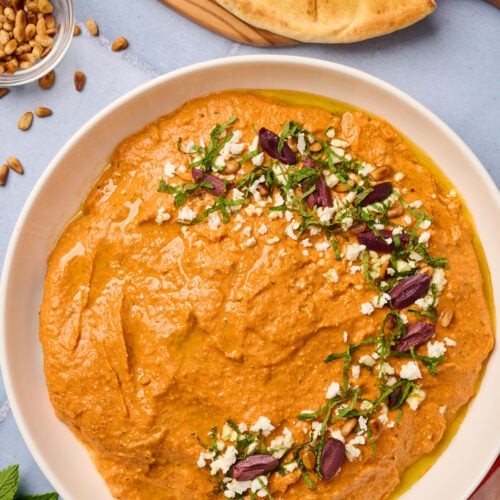
Spicy Feta Dip (Tirokafteri)
Equipment
Ingredients
- ¾ cup roasted red bell peppers, homemade or jarred and drained
- 1.5 tablespoons pepper liquid or pepper “lacquer”
- 5 ounces block feta, drained and patted dry if packed in brine
- 2 to 2.5 tablespoons harissa paste
- 2.5 tablespoons fresh mint leaves, minced, plus more for garnish
- Kosher salt, to taste
- Extra-virgin olive oil, for drizzling
- Optional garnishes: crumbled feta, chopped mint, toasted pine nuts, sliced Kalamata olives
Instructions
- Drain jarred roasted peppers well. If your feta is packed in brine, drain and pat it dry so excess moisture does not thin the dip. Crumble the feta into large pieces.
- In a food processor, combine the feta, roasted peppers, pepper lacquer, harissa paste, and fresh mint. Blend until smooth, creamy, thick, and spreadable, scraping down the sides as needed.
- Taste and season with kosher salt only after blending. If the dip is too thick, add water or pepper lacquer 1 teaspoon at a time until you reach your desired texture. If it is too loose, pulse in a bit more feta.
- Spoon the dip into a shallow bowl, drizzle with extra-virgin olive oil, and finish with any optional garnishes. Serve with warm pita, grilled bread, crisp vegetables, or as part of a mezze spread.
Notes
- Feta: I like to use a good-quality block of Greek feta for its creamy texture and tangy bite. A block with or without brine works well. Avoid pre-crumbled feta, which can make the dip dry or grainy. If your feta seems especially firm or dry, blend in 1 to 2 teaspoons of water or pepper lacquer, or a small spoonful of Greek yogurt.
- Optional warming: For especially firm feta, gently warm it before blending for a silkier texture. Drain and pat brine-packed feta dry first. Microwave in 15 to 20 second bursts until pliable, or place in an oven-safe dish in a preheated 375°F oven for 8 to 10 minutes, just until softened but not melted. Warming adds time and is entirely optional.
- Pepper lacquer: Reserve the flavorful liquid from homemade roasted peppers and use it to add depth, sweetness, and a smoother texture.
- No harissa? Replace it with 1 to 2 minced garlic cloves, ½ fresh hot chili, 1 tablespoon red wine vinegar, and an optional pinch of smoked paprika. Remove the chili seeds for a milder dip, or leave some in for extra heat.
- Make-ahead: Make the dip 1 to 2 days ahead and refrigerate in an airtight container. Stir well before serving and refresh with olive oil, mint, or garnish.
- Storage: Refrigerate in an airtight container for 3 to 5 days. Freeze for 1 to 2 months, then thaw overnight in the refrigerator and whisk or pulse with 1 to 2 teaspoons of warm water or olive oil to bring it back together.
- Freezing tip: Leave out the fresh mint and olive oil garnish before freezing. Add them just before serving for the best texture and flavor.
Nutrition
What Is Tirokafteri?
Tirokafteri is a spicy Greek feta dip made with brined feta, roasted red peppers or hot peppers, olive oil, garlic, vinegar, and herbs. The name comes from the Greek words for cheese and spicy, which is exactly what the dip should taste like: salty, tangy, creamy, and peppery with enough heat to wake everything up. You may also see this spicy feta dip called htipiti or ktipiti, depending on the region or recipe.
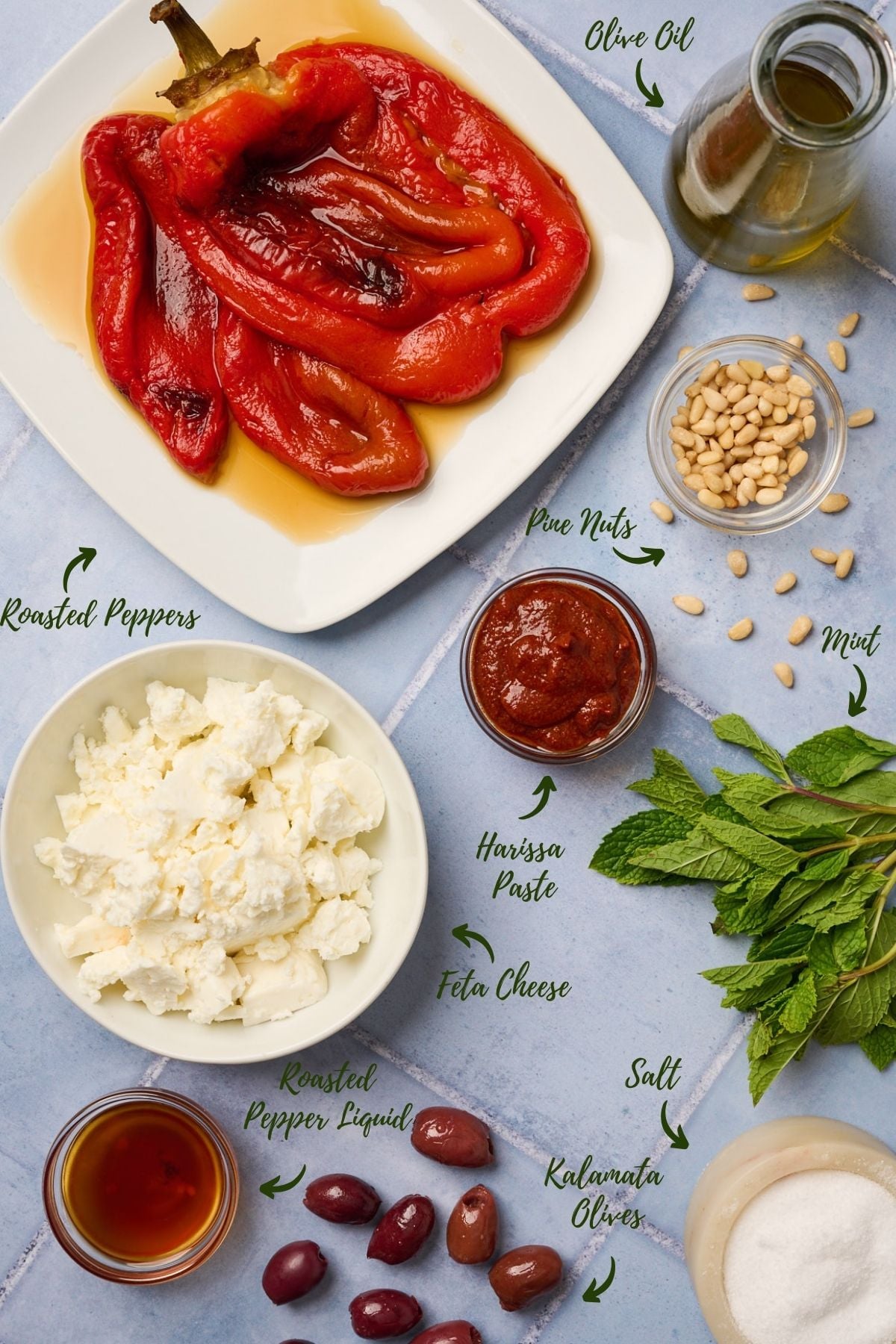
Ingredients for Spicy Feta Dip
Good-quality ingredients make all the difference in this simple dip.
Roasted Red Peppers: Homemade roasted red peppers give the dip the best sweetness and depth, especially if you save a little of the pepper “lacquer” for blending. High-quality jarred roasted peppers also work well; just drain them first so the dip does not turn loose or watery.
Feta: I like to use a good-quality block of Greek feta for its creamy texture and tangy bite. Choose a block with or without brine rather than pre-crumbled feta, which can make the dip dry or grainy. Drain and pat brine-packed feta dry before blending, or before warming it if you choose that optional step, so excess moisture does not thin the dip. If your feta feels especially firm or dry, add a teaspoon or two of water or pepper lacquer, or a small spoonful of Greek yogurt, as you blend.
Harissa Paste: Use homemade harissa paste or a brand you like. Taste the dip after blending before adjusting the heat.
No harissa? No problem! See the no-harissa version in Variations & Heat Ladder, which uses garlic, chili, vinegar, and optional smoked paprika instead.
Fresh Mint: Mint brightens the salty, creamy feta and lifts the smoky heat from the harissa. Parsley or dill also work if that is what you have, but mint gives the dip the freshest finish.
Kosher Salt: Season after blending, not before. Feta can vary a lot in saltiness, so taste first and add only what the dip needs.
Extra-Virgin Olive Oil: I like to drizzle olive oil over the finished dip rather than blend it in. This keeps the texture creamy and lets the olive oil sit on top as a rich finish.
Optional Garnishes: Finish with crumbled feta, chopped mint, toasted pine nuts, sliced Kalamata olives, or a small spoonful of pepper lacquer.
How to Make Tirokafteri
This creamy, thick, spreadable dip comes together in minutes with the help of a food processor.
Prep the peppers and feta: Drain jarred roasted peppers well, or use peppers you have roasted ahead of time. Reserve a spoonful or two of pepper lacquer, if available. Drain and pat brine-packed feta dry to keep excess moisture from thinning the dip, then crumble the feta into large pieces.
Optional tip: If your feta feels especially firm, gently warm it before blending. Microwave in 15 to 20 second bursts until pliable, not melted. You can skip this step and blend without warming the feta.
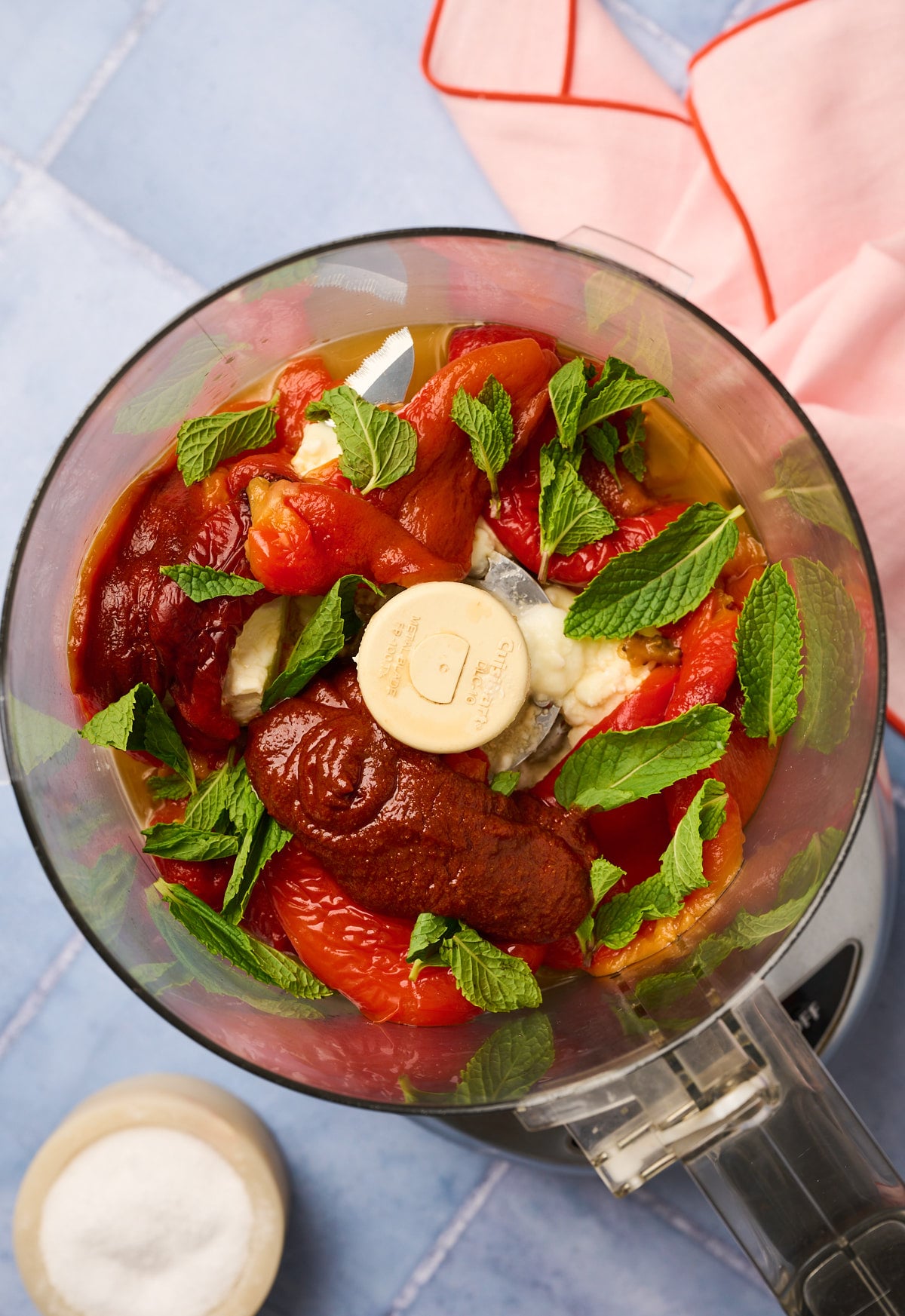
Blend everything together: Add the feta, roasted peppers, 1 to 2 tablespoons pepper lacquer, harissa paste, and fresh mint to a food processor. Blend for a few seconds, scrape down the sides, then keep blending until the dip is creamy, thick, and easy to spread.
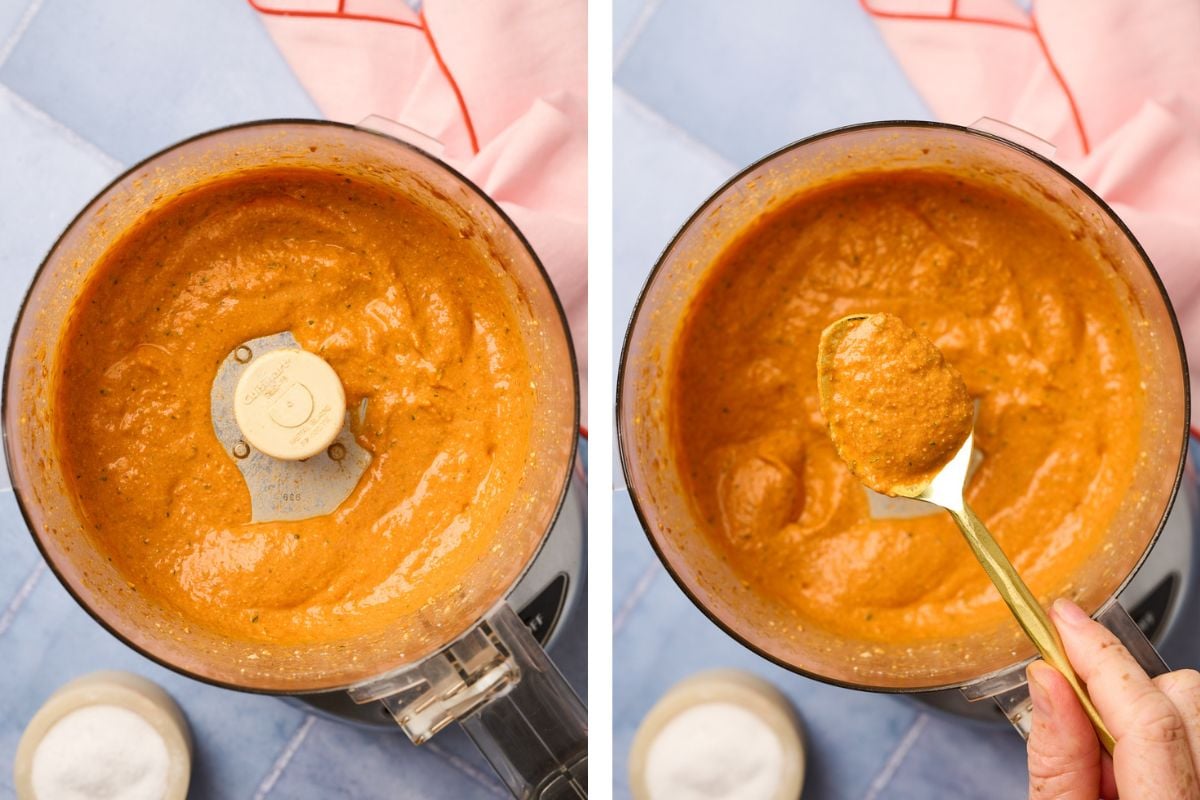
Check the texture and season: The dip should be smooth and creamy, thick enough to hold its shape on a spoon but soft enough to swipe easily through pita or bread. Taste after blending, then season with kosher salt only if needed.
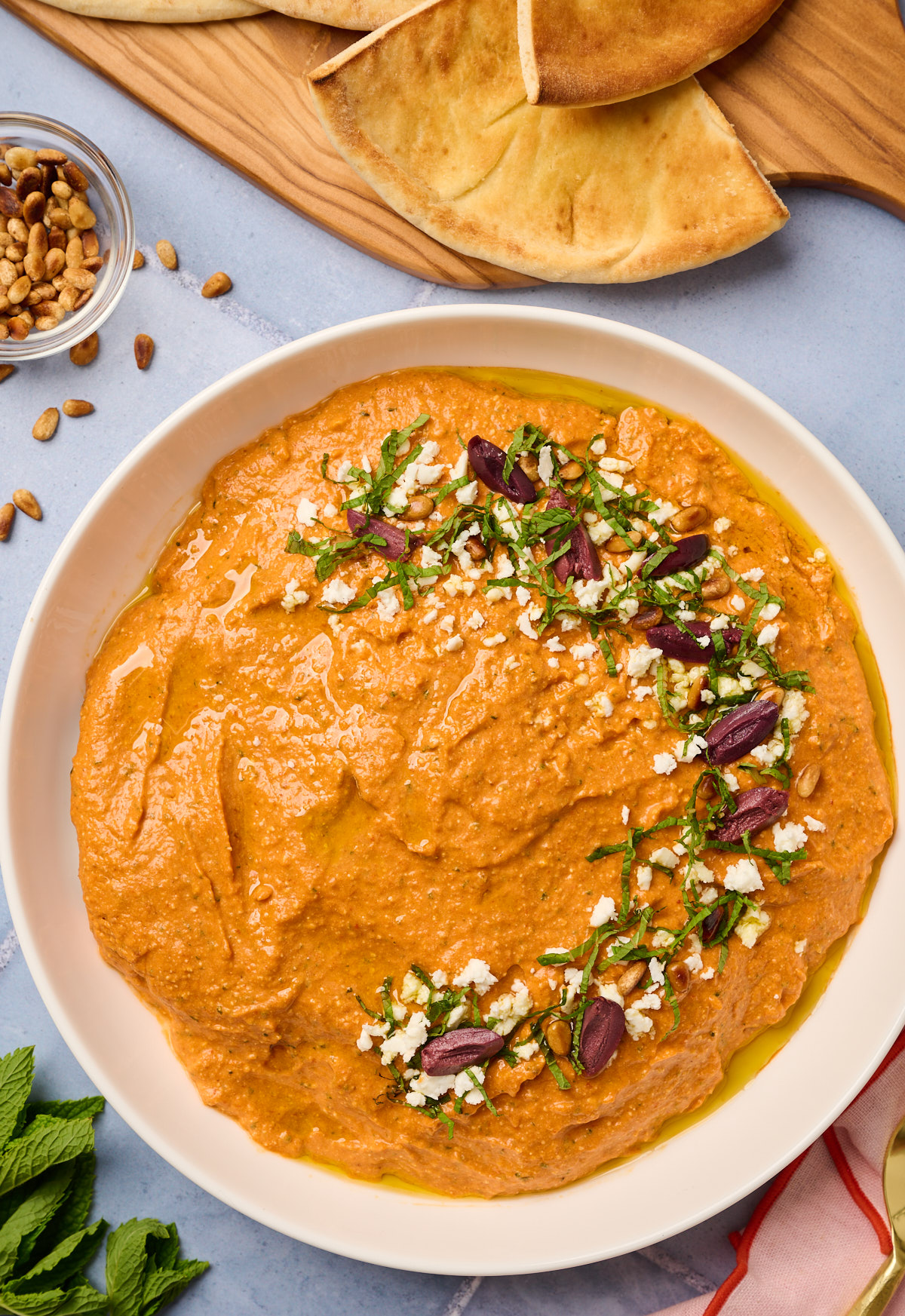
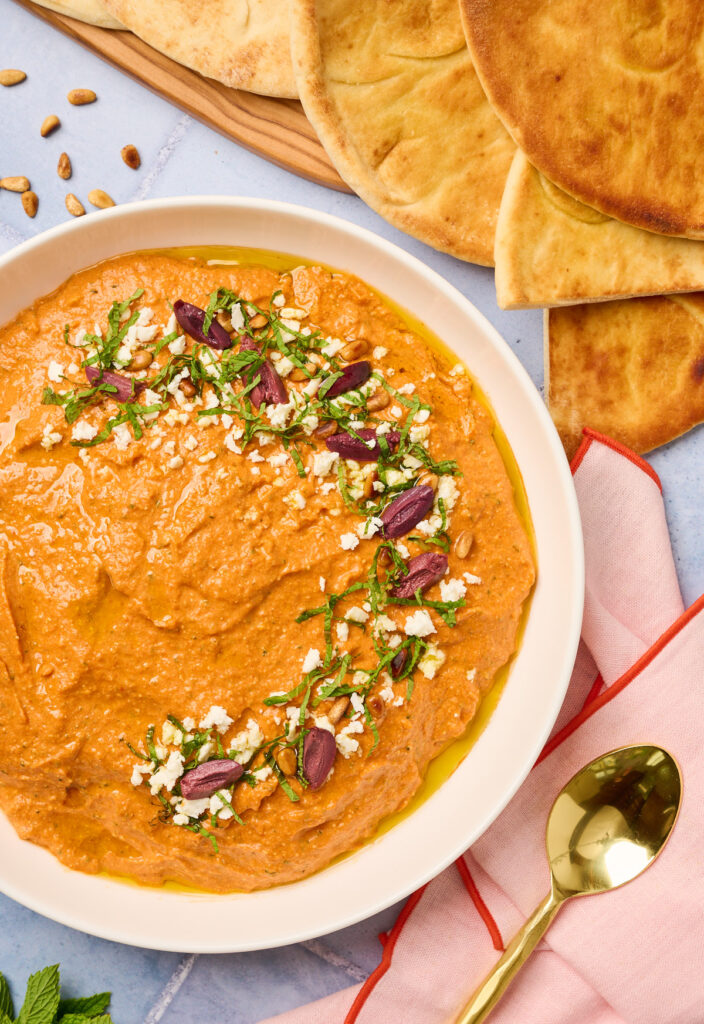
Serve: Spoon the tirokafteri into a shallow bowl and use the back of a spoon to make a swirl. Finish with a generous drizzle of extra-virgin olive oil, then garnish with crumbled feta, chopped mint, toasted pine nuts, or sliced Kalamata olives. Serve warm, chilled, or at room temperature with toasted pita, grilled bread, or crunchy vegetables.
Troubleshooting Spicy Feta Dip
The saltiness of your feta, sweetness of your peppers, and heat of your harissa can vary. Here’s how to adjust the flavor and texture of your dip.
Too salty? Blend in more roasted red pepper or a small spoonful of Greek yogurt, then taste again. A few extra mint leaves can also soften the salty edge.
Too thick? Add 1 to 2 teaspoons pepper lacquer or water and blend briefly. You can also pulse in a little more roasted pepper for a looser, sweeter dip.
Too spicy? Add more feta or a small spoonful of Greek yogurt to mellow the heat. A little extra roasted pepper can also soften the spice while keeping the dip flavorful.
Not spicy enough? Add ½ to 1 teaspoon more harissa and pulse briefly. If you are using the fresh-chili substitute, include some seeds or add a pinch of cayenne.
Bitter notes? The peppers were likely over-charred. Balance the bitterness with ½ teaspoon honey or a little extra mint, then blend just to combine.
Variations & Heat Ladder
You can make this dip milder, hotter, or extra creamy, depending on what you have and how spicy you like it.
Mild: Start with less harissa than the recipe calls for, then taste and add more as needed. For a cooler, creamier finish, blend in extra feta or 1 to 2 tablespoons Greek yogurt.
Medium: Use the recipe’s 2 to 2½ tablespoons harissa, adjusting to taste since heat varies by brand.
Hot: Add more harissa a little at a time, tasting as you go. You can also add a pinch of cayenne for sharper heat.
No Harissa Version: For a more traditional flavor combination, replace the harissa with 1 to 2 minced garlic cloves, ½ fresh hot chili, 1 tablespoon red wine vinegar, and an optional pinch of smoked paprika. Remove the chili seeds for a milder dip, or leave some in for extra heat.
Extra Creamy Version: Blend in a small spoonful of Greek yogurt or a little extra feta. If the dip gets too thick, loosen it with a splash of pepper lacquer or water.
Optional Flavor Twists: Add extra chopped mint for freshness, a pinch of smoked paprika for smokiness, or ½ to 1 teaspoon red wine vinegar or lemon juice for more brightness.
Safety Tip: When handling fresh chilies, wear gloves, avoid touching your eyes, and wash your hands, knife, and cutting board well.
What to Serve with Spicy Feta Dip
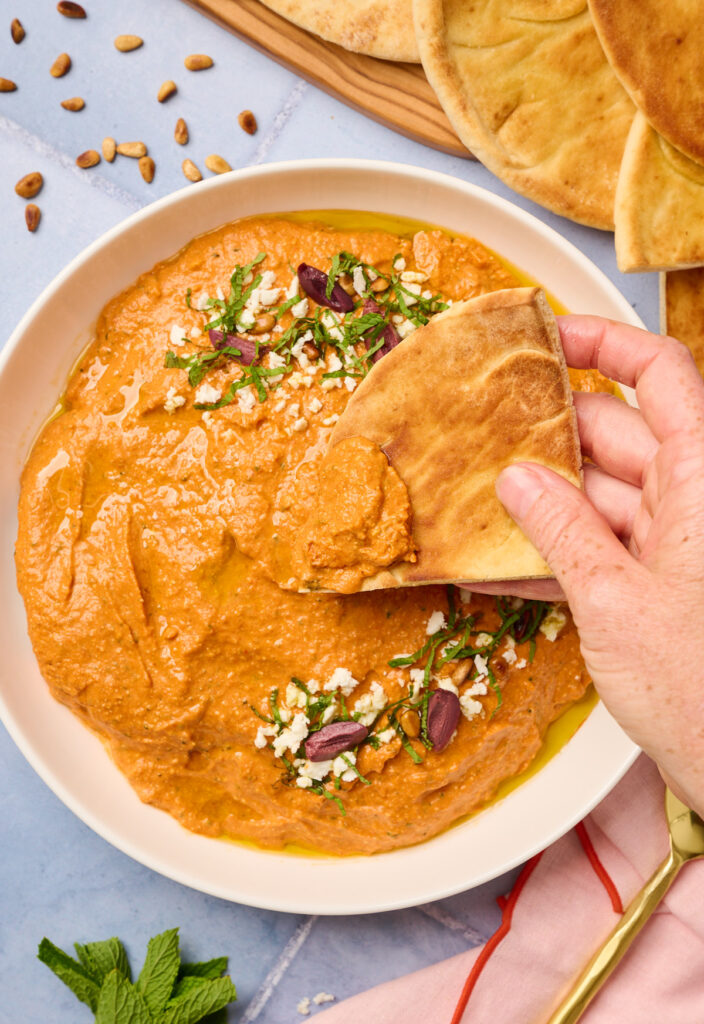
This spicy feta dip is best served mezze-style with warm, scoopable sides and a few fresh, briny, or grilled elements to balance the creamy heat. I love it with freshly warmed pita, grilled bread, baked pita chips, crostini, or crisp vegetables.
For a full mezze platter, pair tirokafteri with other Mediterranean dips and small bites like tzatziki, homemade hummus, melitzanosalata, whipped feta, olives, roasted peppers, roasted tomatoes, tomato confit, fresh cucumbers, and warm pita. It also works beautifully alongside grilled Greek lamb, grilled chicken, falafel, fried cheese saganaki, or a simple Greek salad.
You can also use it as a spread for sandwiches, wraps, or pita pockets when you want something creamy, salty, and spicy in place of mayo or plain feta.
Make-Ahead, Storage, and Freezing
This spicy feta dip keeps well, so you can make it ahead for meal prep, a soirée, or a mezze platter!
Make-ahead: You can make tirokafteri 1 to 2 days in advance. I love how the feta, peppers, harissa, and mint meld as the dip sits! Stir well before serving and refresh it with a drizzle of olive oil.
Refrigerator: Store the dip in an airtight container in the refrigerator for 3 to 5 days. Some natural separation can happen as it sits, so stir it well before serving.
Freezer: Tirokafteri can be frozen, although the texture may need a little help after thawing. Portion it into small freezer-safe jars or containers and freeze for up to 1 to 2 months. Thaw overnight in the refrigerator, then whisk vigorously or pulse in the food processor with 1 to 2 teaspoons of warm water or olive oil to bring it back together.
Freezing tip: If you plan to freeze the dip, leave out the fresh mint and olive oil garnish. Add them just before serving for the best texture and flavor.
FAQs
Here are answers to common questions about tirokafteri.
Is tirokafteri the same as htipiti or kopanisti?
They are related Greek cheese spreads, but the names can vary by region and recipe. Tirokafteri usually refers to a spicy feta dip, while htipiti or ktipiti is often used for similar whipped or mashed feta spreads. Kopanisti can refer to a specific spicy Greek cheese or a style of spicy cheese spread.
Can I make spicy feta dip without harissa?
Yes! Skip the harissa and use the No Harissa Version in Variations & Heat Ladder for the garlic, chili, vinegar, and optional smoked paprika amounts. You can leave out the chili seeds for less heat.
Should spicy feta dip be served warm or cold?
Both work. Serve it warm or at room temperature for a softer, creamier mezze-style dip, or chilled for a firmer, more spreadable texture.
What feta is best for tirokafteri?
I like a good-quality block of Greek feta, with or without brine, rather than pre-crumbled feta. See Ingredients for Spicy Feta Dip for preparation tips and how to adjust the texture if your feta is especially firm or dry.
Can I make tirokafteri ahead of time?
Yes! Make tirokafteri 1 to 2 days ahead. Give it a good stir and a fresh drizzle of olive oil before serving; the Make-Ahead, Storage, and Freezing section has more tips for keeping it creamy.
More Greek Dips and Mezze Recipes
For something creamy and classic, serve this tirokafteri alongside homemade hummus with warm pita, crisp vegetables, and olives.
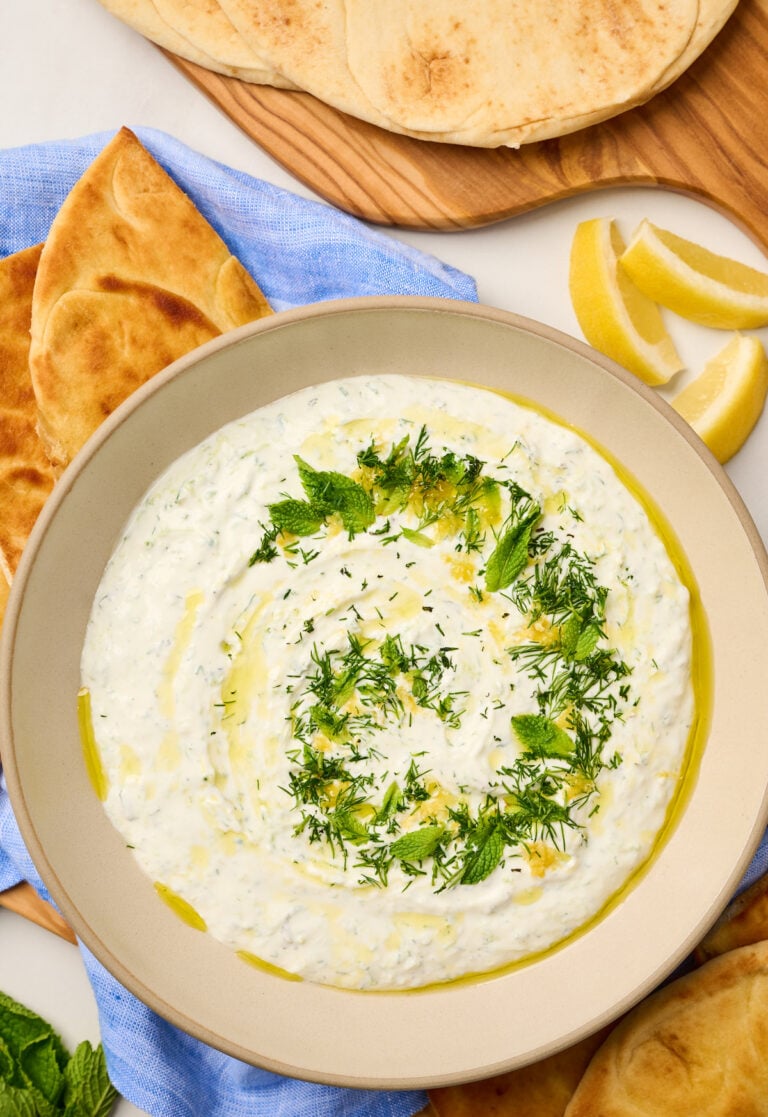
To cool down the salty heat, add a bowl of tzatziki for a tangy, herb-filled contrast.
If you want something nutty and versatile on the table, tahini sauce is perfect with falafel, roasted vegetables, grain bowls, or grilled meats.
For freshness and crunch, tabouli brings herbs, acidity, and texture that balance the richness of the feta.
I love this tirokafteri because the salty feta, sweet peppers, and harissa make every bite creamy and spicy! Since roasted red peppers are the base of the dip, I like adding extra to the mezze board for sweetness, a pop of color, and depth. Serve it with warm pita, and enjoy every dip!