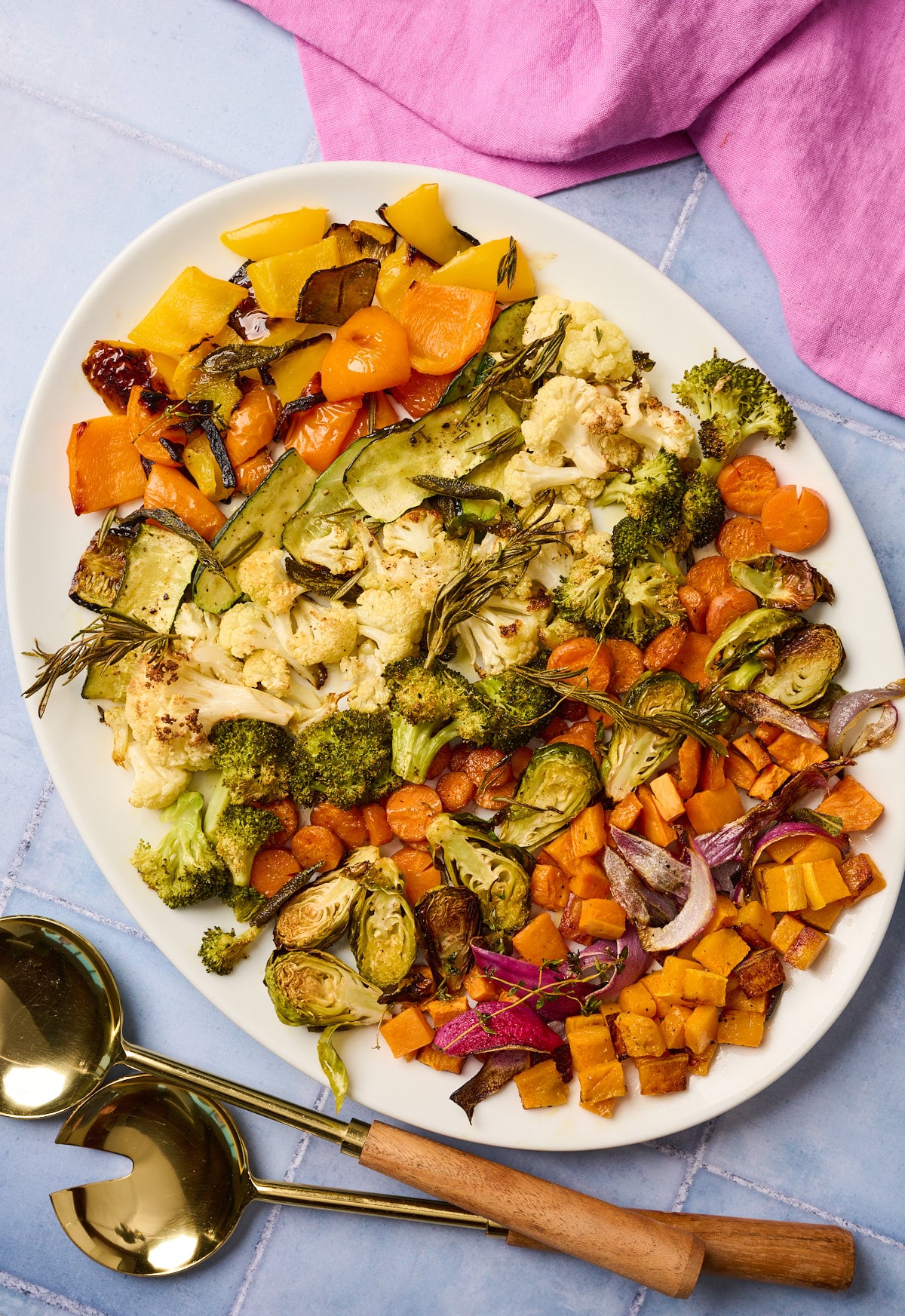
Roasted vegetables are the ultimate healthy, versatile side dish—perfect for meal prep or entertaining. This easy, chef-tested recipe guarantees golden, caramelized vegetables with rich flavor and perfect texture every time.
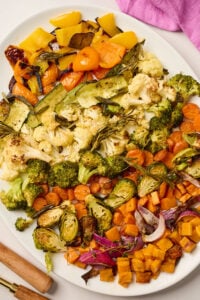
This one-pan recipe comes together with a colorful and versatile mix of bell peppers, zucchini, broccoli, cauliflower, Brussels sprouts, carrots, sweet potatoes, and red onion, all brought to life with good olive oil, fresh herbs, and a simple salt and pepper seasoning.
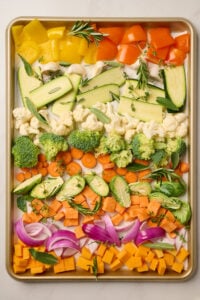
As a culinary professional, my goal is always smart preparation—not more work. That’s why this recipe is a game-changer: we’re skipping the extra mixing bowl and seasoning everything directly on the sheet pans. By arranging the vegetables in distinct zones based on their cooking times, you gain complete control. The reason this recipe is chef-tested for one-pan success is that we intentionally cut the harder, denser vegetables like sweet potatoes and butternut squash into smaller ½-inch cubes. This technique allows them to become perfectly tender in the same amount of time as the larger, quicker-cooking 1-inch pieces of bell pepper, and florets of broccoli and cauliflower. This method allows you to easily remove faster-cooking vegetables like zucchini and red onion, while the other continue to roast. It’s the ultimate one-pan technique for foolproof results and effortless cleanup.
A Chef’s Guide to Perfect Roasted Vegetables
Mastering roasted vegetables is less about guesswork and more about understanding the science and chef-driven techniques that make them golden, crisp, and intensely flavorful. These are the exact principles I use in professional kitchens and with private clients.
The Best Oven Temperature for Roasting
425°F is the sweet spot. This high heat activates the Maillard reaction—a chemical process that creates those crave-worthy browned, nutty flavors on the outside while keeping the inside tender. Roasting at lower temperatures risks steaming your vegetables instead of caramelizing them.
How to Cut Vegetables for Even Cooking
Uniform size equals even cooking. In my kitchen, I always cut heartier vegetables like sweet potatoes and squash into smaller ½-inch cubes, while quick-cooking ones like broccoli florets and bell peppers can be cut into slightly larger 1-inch pieces. This intentional sizing ensures everything cooks at the same rate in one pan.
The Secret to Crispy (Not Soggy) Vegetables
Two rules here:
- Dry your vegetables completely after washing—any moisture creates steam that blocks browning.
- Give them space. Always spread veggies in a single layer on the sheet pan. Overcrowding leads to steaming, not roasting. If necessary, use two pans to keep them crisp and caramelized.
Why Tossing Midway Matters
Toss or flip the vegetables halfway through roasting to expose new surfaces to the hot pan and circulating air. This promotes even browning on all sides and ensures a better texture and deeper flavor.
How to Layer Seasoning Like a Chef
Start with olive oil, kosher salt, and freshly ground black pepper before roasting—this foundational layer draws out moisture and enhances caramelization. After roasting, add a fresh element: a handful of chopped herbs like parsley or basil, or a splash of lemon juice or vinegar to brighten and balance the flavor.
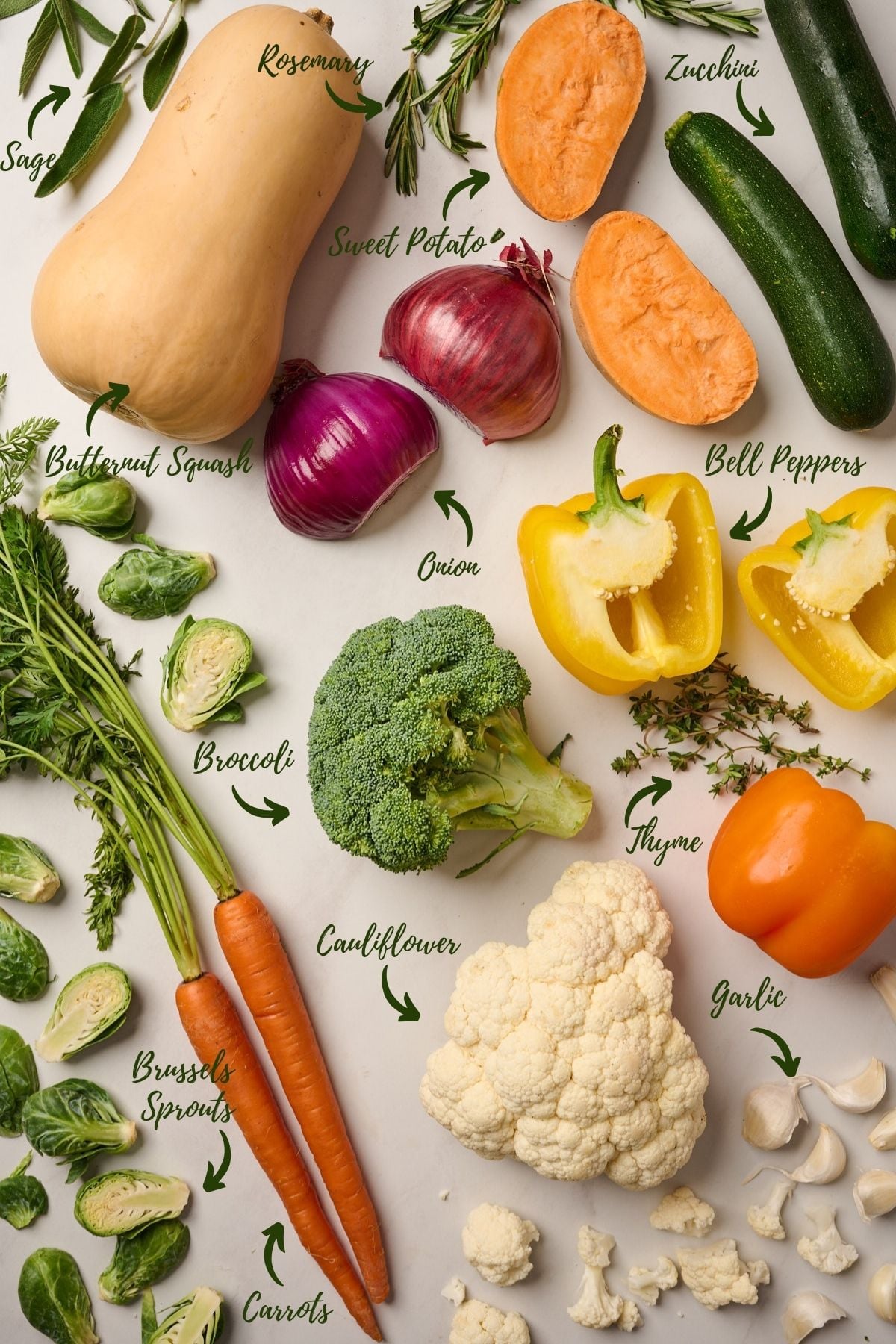
Roasted Vegetable Ingredients (with Chef Notes)
In my professional kitchen, we always approach vegetables based on density, moisture, and how they respond to high heat. This curated mix ensures balanced flavor, texture, and even roasting.
Hearty Root Vegetables Sweet Potatoes: Naturally creamy and sweet, they caramelize beautifully. A key chef’s tip is to cube them into ½-inch pieces so they cook at the same rate as softer vegetables.
Carrots: Roasting concentrates their sugars—cut thinner or halve lengthwise to match other vegetables’ timing.
Cruciferous Vegetables Broccoli & Cauliflower: Roast up crisp-tender with browned florets. The reason this is chef-tested is that we include the stems, cut small, and they’re just as flavorful.
Brussels Sprouts: Halved and placed cut-side-down, they crisp at the base and turn rich and nutty.
Quick-Cooking Vegetables Bell Peppers (Capsicum): Naturally sweet and vibrant, they soften without losing structure.
Zucchini (Courgette): Caramelizes quickly. In my private client work, I place it near the pan’s edge so it’s easy to remove early. Red Onion: Turns silky and sweet when roasted—ideal for layering into bowls or wraps.
Aromatics & Seasoning Garlic: Roast whole cloves in their skin. Once soft, they squeeze out like mellow, rich confit.
Extra Virgin Olive Oil: Essential for even roasting and caramelization.
Kosher Salt & Black Pepper: Salt draws out moisture to help with crisping; pepper adds a subtle bite.
Chef Finishes Hardy Herbs (Rosemary, Thyme, Sage): These withstand high heat and infuse flavor throughout.
Acid Finish: A splash of lemon juice or vinegar adds brightness and balance post-roast.
How to Make Roasted Vegetables (Narrative with Process Photos)
These steps go beyond basic instructions—they show how to think like a chef while roasting. Look for color, texture, and key visual cues throughout the process.
Preheat the Oven to Kickstart Caramelization
Set your oven to 425°F (218°C). This high heat activates the Maillard reaction—the chemical browning that gives vegetables their golden color and deep flavor. Lower heat won’t cut it; instead of crisping, your vegetables will steam and turn mushy.
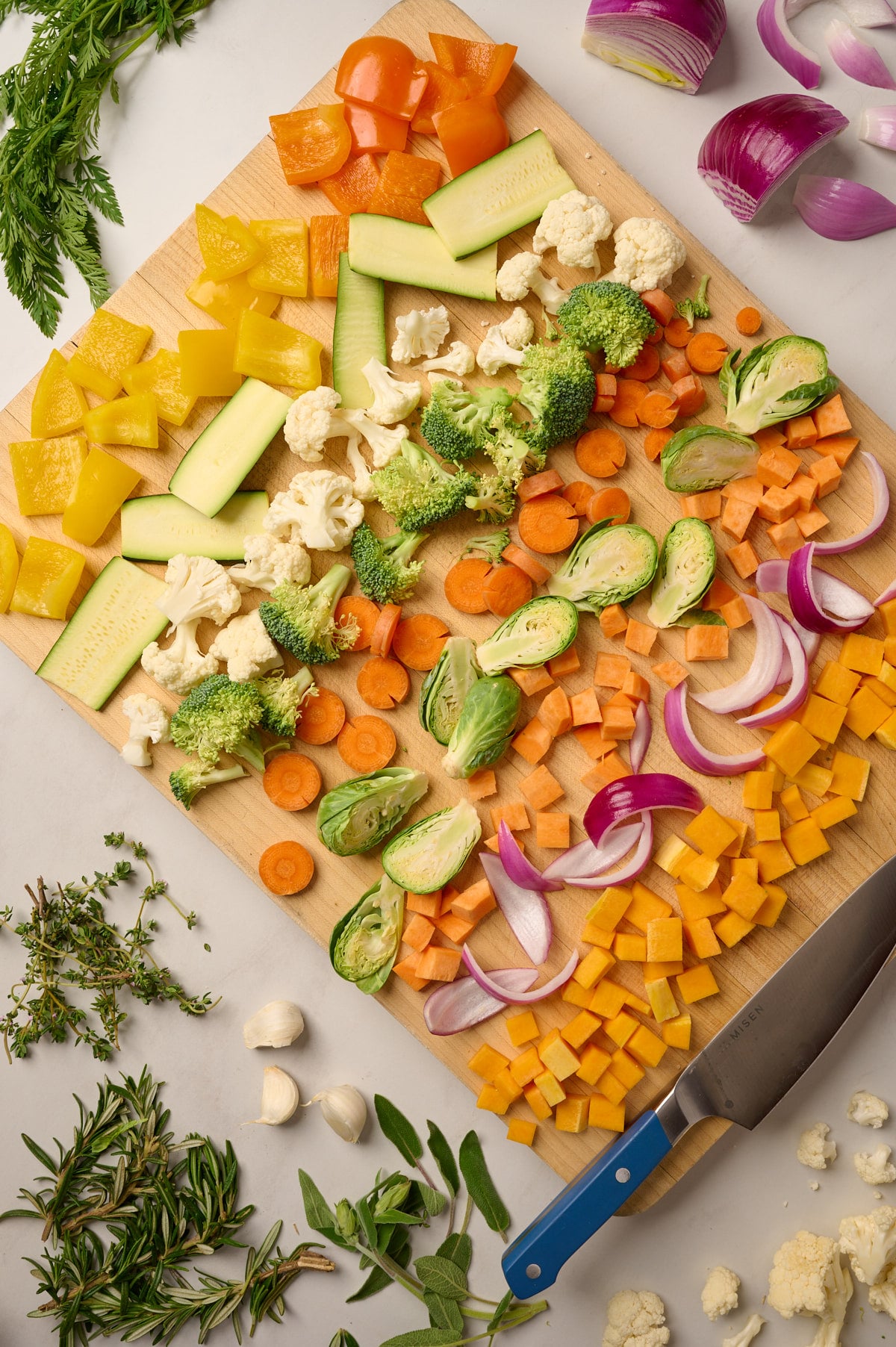
Wash, Dry, and Cut for Even Roasting
Chef’s Tip: Always dry vegetables thoroughly after washing. Even a little water on the surface will cause them to steam in the oven, preventing that golden, crispy exterior.
Cut vegetables according to density:
- Harder veggies like sweet potatoes and butternut squash should be cut smaller (about ½ inch).
- Softer vegetables like zucchini and bell peppers can be left larger (about 1 inch).
Uniform size = uniform cooking.
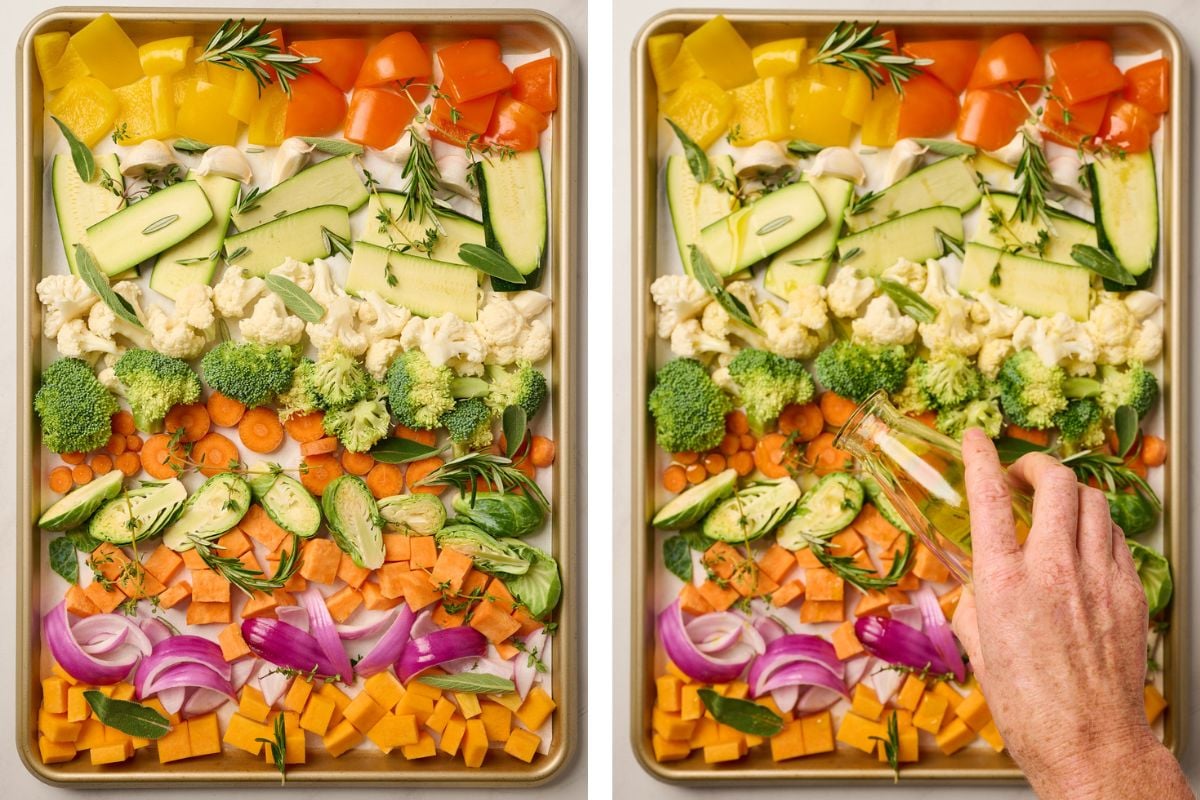
Arrange Vegetables by Density and Cook Time
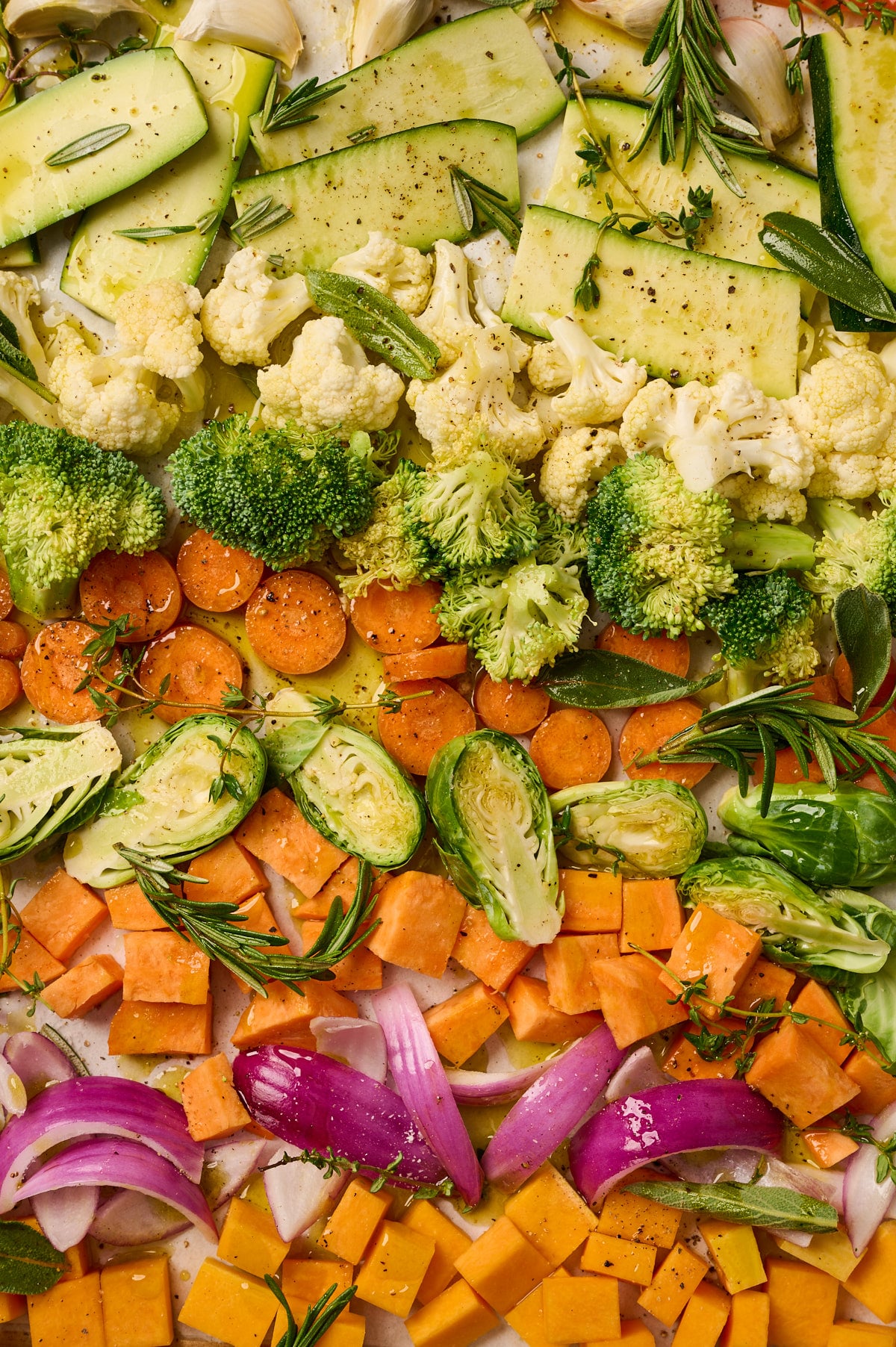
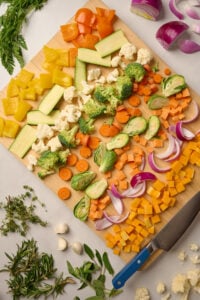
Line three half-sheet trays with parchment paper. Group vegetables by type and density—placing quicker-cooking ones like bell peppers and zucchini together, and heartier ones like cauliflower, broccoli, carrots, Brussels sprouts, sweet potatoes, and squash in their own zones. Why this works: This layout gives you control. You can monitor different groups and pull individual vegetables off the tray as needed, without disrupting the rest. It also keeps textures distinct and ensures nothing overcooks.
Season Well and Layer in Aromatics
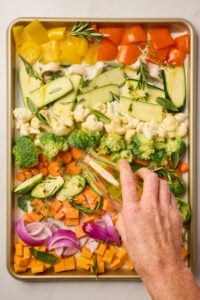
Nestle whole, unpeeled garlic cloves across the trays, then scatter rosemary, thyme, and sage evenly over the vegetables. These hearty herbs can withstand the heat and infuse the entire tray with a rich, earthy aroma as they roast.
Lightly drizzle the vegetables with olive oil — no tossing needed since everything is arranged in a single layer. Chef’s Tip: For precision and control, hold your thumb over the spout of your olive oil bottle or cruet to drizzle just enough without over-oiling.
Finish by seasoning with kosher salt and freshly ground black pepper.
Roast, Rotate, and Finish Strong
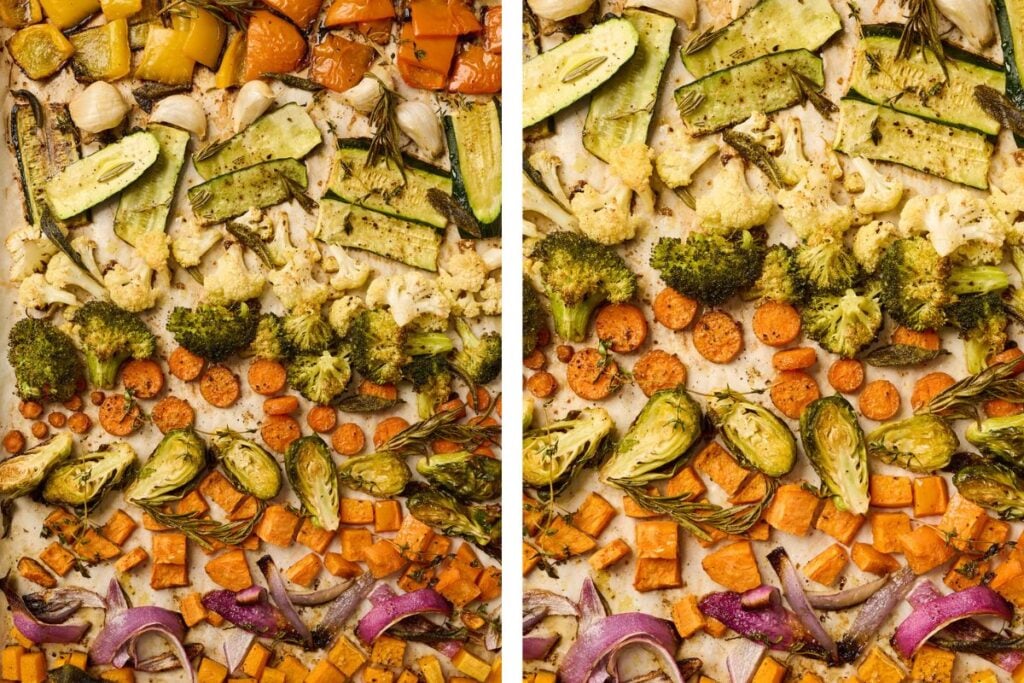
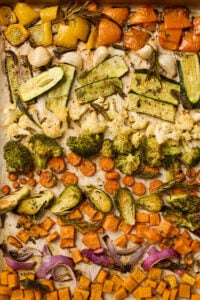
Roast for 20–30 minutes, tossing halfway.
Sensory cue: You’re looking for browning on the bottoms and caramelized edges.
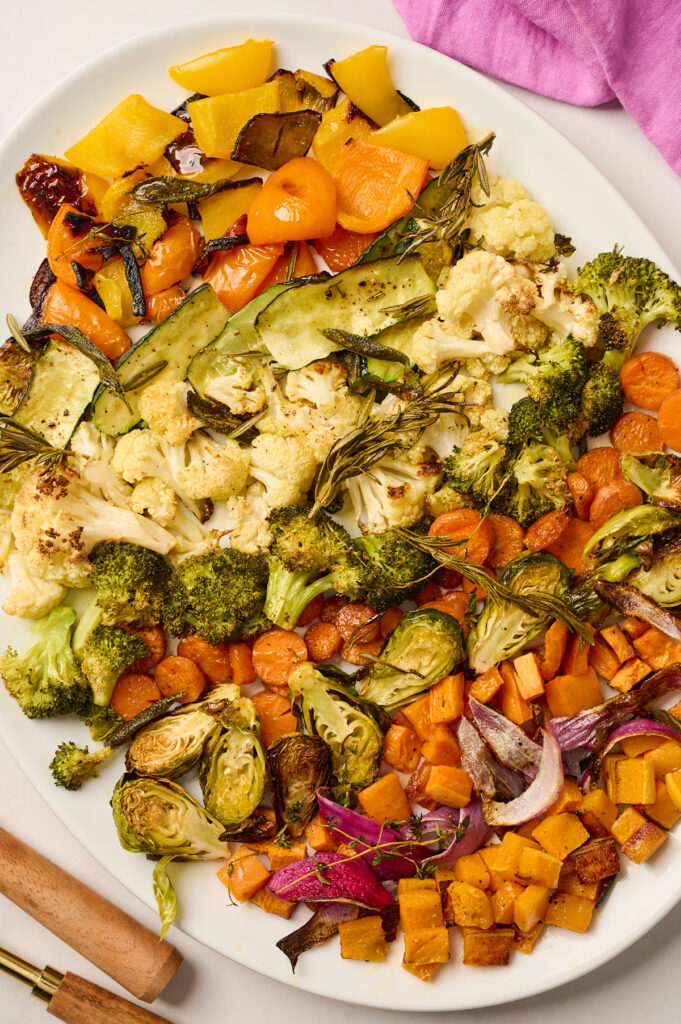
Once out of the oven, squeeze roasted garlic from the skins and toss it with the vegetables. Finish with lemon juice or vinegar to brighten every bite.
Easy Roasted Vegetables Recipe
Ingredients
- 2 bell peppers (any color), cut into 1-inch pieces
- 2 zucchinis, cut into 3 inch strips
- 1 head cauliflower, cut into florets
- 1 head broccoli, cut into florets
- 2 carrots, cut into ½ inch circles
- 1 lb Brussels Sprouts, halved lengthwise
- 2 sweet potatoes, diced into ½ inch cubes
- 1 red onion, diced into ½- ¾ inch petals
- 1 Butternut squash, diced into ½ inch cubes
- 1 head garlic, cloves separated, skin on
- 8 sprigs fresh thyme
- 6 sprigs fresh rosemary
- 8-10 sage leaves
- 1/4-1/2 cup extra virgin olive oil
- Kosher salt and freshly ground black pepper, to taste
Instructions
- Preheat Oven: Set oven to 425°F (218°C). Position racks in the upper and lower thirds. Line two half-sheet trays with parchment paper.
- Prep Vegetables: Wash, dry, and chop all vegetables. Chef’s Tip: Thoroughly drying vegetables prevents steaming and ensures crisp edges.

- Arrange on Trays: Spread vegetables in a single layer on trays, grouping similar types together. Why this works: Softer veggies like zucchini can be removed early without disturbing others. Avoid overcrowding—use a third tray if needed.
- Season and Toss: Add garlic cloves and herbs, drizzle with olive oil, and sprinkle with salt and pepper. Gently toss directly on the tray until coated.
- Roast and Rotate: Roast for 20–30 minutes. Halfway through, rotate pans and toss vegetables to ensure even browning.
- Check for Doneness: Vegetables should be fork-tender, deeply golden, and caramelized at the edges. Zucchini and broccoli may finish sooner—remove them early if needed.
- Finish and Serve: Squeeze roasted garlic from skins and mix into the vegetables. Add a splash of lemon juice or vinegar just before serving for brightness.
Notes
- Sensory Cues: Look for crispy edges, browned bottoms, and a fragrant, roasted aroma.
- Troubleshooting: If veggies look soggy, you may have overcrowded the pan or didn’t dry them thoroughly—use extra trays and blot dry next time.
- The “Why”: High heat + space = caramelization. This combo creates the nutty, sweet flavor and crisp texture that defines great roasted vegetables.
- Flavor Variations: Finish with fresh parsley, chopped basil, or a spoonful of pesto. For a Mediterranean twist, sprinkle with oregano or feta.
Nutrition
Roasted Vegetable Variations
This base recipe is designed to be endlessly adaptable. Once you understand how various vegetables, herbs, and seasonings respond to high heat, you can mix and match with confidence. The key is adjusting the cut size and placement for even cooking.
Use whatever vegetables you have on hand—this is a great way to clean out the fridge while minimizing waste. I also love making a big batch at the start of the week for easy additions to bowls, salads, soups, and eggs.
Here are a few chef-tested ways to switch things up:
Swap in Other Vegetables: Try cherry tomatoes, white or red potatoes, beets, parsnips, rutabaga, turnips, or radishes.
Chef’s Tip: No matter what you add, cut everything into similar sizes to ensure even roasting. Root vegetables should be smaller; quick-cook veggies can be larger.
Add a Pop of Acidity: After roasting, brighten the dish with a splash of balsamic vinegar, apple cider vinegar, red wine vinegar, or a squeeze of fresh lemon juice.
Why it works: Acidity balances the sweetness from caramelized vegetables and adds lift to the dish.
Use Fresh Herbs for Finishing: While hardy herbs like rosemary can handle the oven, delicate herbs like parsley, basil, cilantro, or dill should be added after roasting. They bring a burst of freshness and color to the final plate.
Turn Up the Heat: For spice lovers, add red pepper flakes, or roast jalapeños or Serrano peppers right alongside your veggies. You’ll get a gentle heat that blends beautifully into the mix.
How to Use and Serve Roasted Vegetables
These roasted vegetables are sweet, healthy, and spectacularly versatile—perfect for adding to just about any savory meal. Below are some of my favorite ways to use them throughout the week:
Add to a Salad: Sometimes you just want to bulk up a basic salad and make it more filling. Toss a generous spoonful into this Japanese cucumber salad, or my hearty Brussels sprouts salad with miso and Parmigiano. They’re also delicious in colorful, fresh options like cucumber tomato salad, corn salad, Farro Salad, or this seasonal burrata salad.
Top or Mix into a Grain, Rice, or Pasta Bowl: These veggies are a dream in bowls—layer them over farro, bulgur wheat, steamed rice, or pearl couscous. Drizzle with a creamy sauce like tahini dressing, avocado dressing, dill sauce, or a bright basil vinaigrette to tie everything together.
Add to Soup or Egg Dishes: Stir roasted vegetables into this Kabocha squash soup to add body and flavor, or fold them into my squash blossom frittata for an elegant, seasonal brunch.
Serve with Protein: They make a beautiful side for almost any protein. I especially love them with soft-boiled eggs, pan-seared salmon, or this medium-rare duck breast recipe for a restaurant-worthy plate at home.
Storage and Reheating (Chef’s Tips for Best Texture)
I always roast extra vegetables so I have quick, flavorful components ready for busy weeknights. They store and reheat beautifully—especially if you follow a few chef-approved tricks for preserving texture and flavor.
To Store: Let the vegetables cool completely, then transfer them to an airtight container. They’ll keep in the refrigerator for up to 5–7 days. A key chef’s tip is to avoid sealing them while warm—this traps steam and softens the texture.
To Reheat: For the crispiest results, reheat on a sheet tray in a 350°F oven for 8–10 minutes. This helps revive caramelization and preserves texture. In a pinch, the microwave works—but expect softer edges and less crispness.
To Freeze (Optional): Freezing works, but it’s not ideal for tender vegetables like zucchini, which can become mushy after thawing. If you freeze, store them in a single layer first to avoid clumping, then transfer to a sealed container. These are best repurposed in soups, frittatas, or grain bowls where texture matters less.
Roasted Vegetables FAQ
Roasting vegetables sounds simple, but getting that perfect caramelization without sogginess takes a few pro-level tricks—here are the most common questions I get, answered with chef-tested tips.
This is one of the most common issues—and it’s easy to fix. Excess moisture or overcrowding the pan usually causes sogginess.
Chef’s Tip: In my kitchen, we always pat vegetables dry after washing. Even a little surface water will turn to steam in a hot oven, which prevents browning. Also, spread the vegetables in a single layer with space between them. If they’re stacked or touching, they’ll steam instead of roast. Use two sheet pans if needed.
You can—but the texture won’t be the same. Frozen vegetables contain more moisture, often skipping the crisping phase and going straight to soft.
The chef-tested workaround: Roast them from frozen (don’t thaw) at a slightly higher heat (around 450°F) to help drive off excess moisture quickly. They’re best used in soups, frittatas, or grain bowls rather than served on their own.
For maximum crispness, there are a few tricks:
*Use high heat (425°F or above)
*Don’t overcrowd the pan.
*Dry your vegetables thoroughly.
Optional Chef Move: In the last 3–5 minutes, switch to a high broil setting to crisp the edges even further.
*Alternatively, reheat or finish in an air fryer for that extra golden crunch.
More Favorite Vegetable Sides
If you’re looking for more delicious ways to enjoy vegetables throughout the week, here are some of my favorite chef-tested sides that highlight seasonal produce and bold flavor:
- Add a spoonful of Tomato Confit to toast, pasta, or roasted meats for a rich, jammy boost of umami.
- These tender Roasted Beets bring vibrant color and earthy sweetness to salads and grain bowls.
- Squash Blossoms are a beautiful seasonal treat — try them lightly pan-fried or stuffed for an elegant appetizer.
- Quick and flavorful, Baby Bok Choy sautéed with garlic makes a perfect Asian-inspired side in under 10 minutes.
- Wilted with aromatics, this Swiss Chard Recipe is a nourishing and colorful way to enjoy leafy greens.
- Serve this bold and savory Miso Eggplant alongside rice or noodles for a Japanese-inspired twist.
- For a no-fuss, nutrient-packed option, try Sautéed Kale — great with eggs, grains, or legumes.
- My spicy, fermented Kimchi Recipe adds crunch, heat, and depth to any meal (or enjoy it straight from the jar!).
- Sweet and smoky, Roasted Peppers are delicious folded into pastas, sandwiches, or served with cheese.
- This bright and creamy Vegan Potato Salad skips the mayo but keeps all the flavor.
- For rustic comfort, make this buttery Turnip Recipe — great with hearty mains or on its own.
- These crispy Carrot Chips are an addictive snack or fun topping for soups, salads, and bowls.