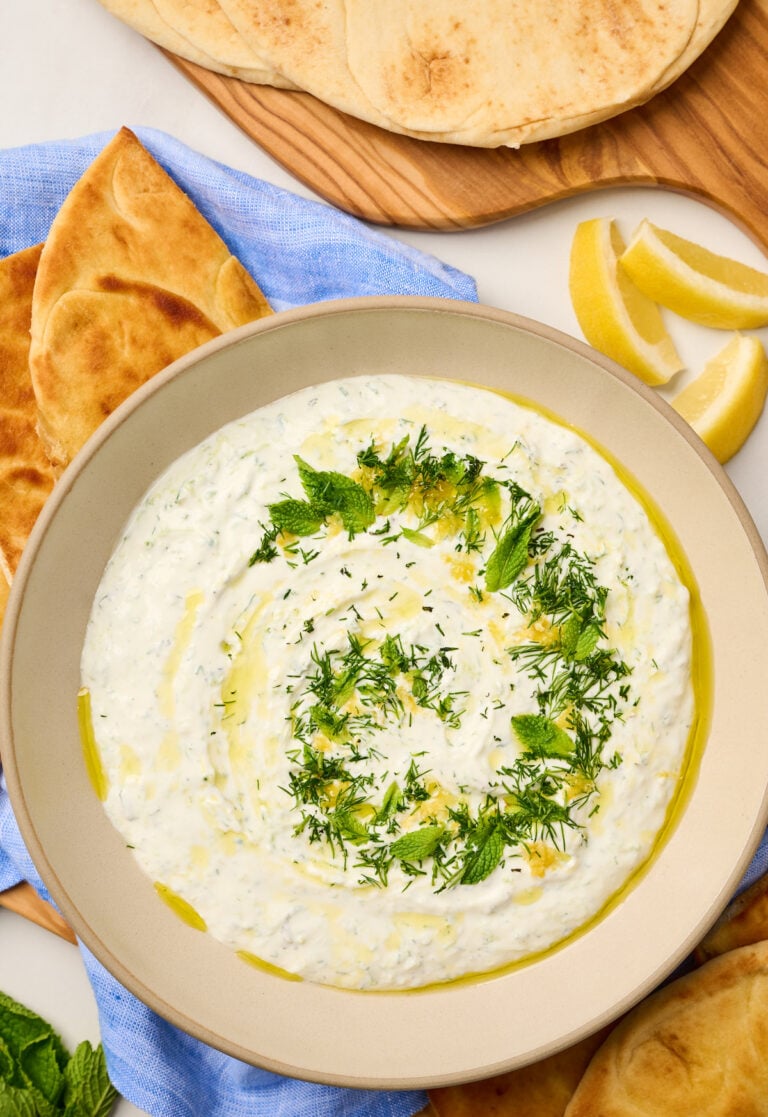
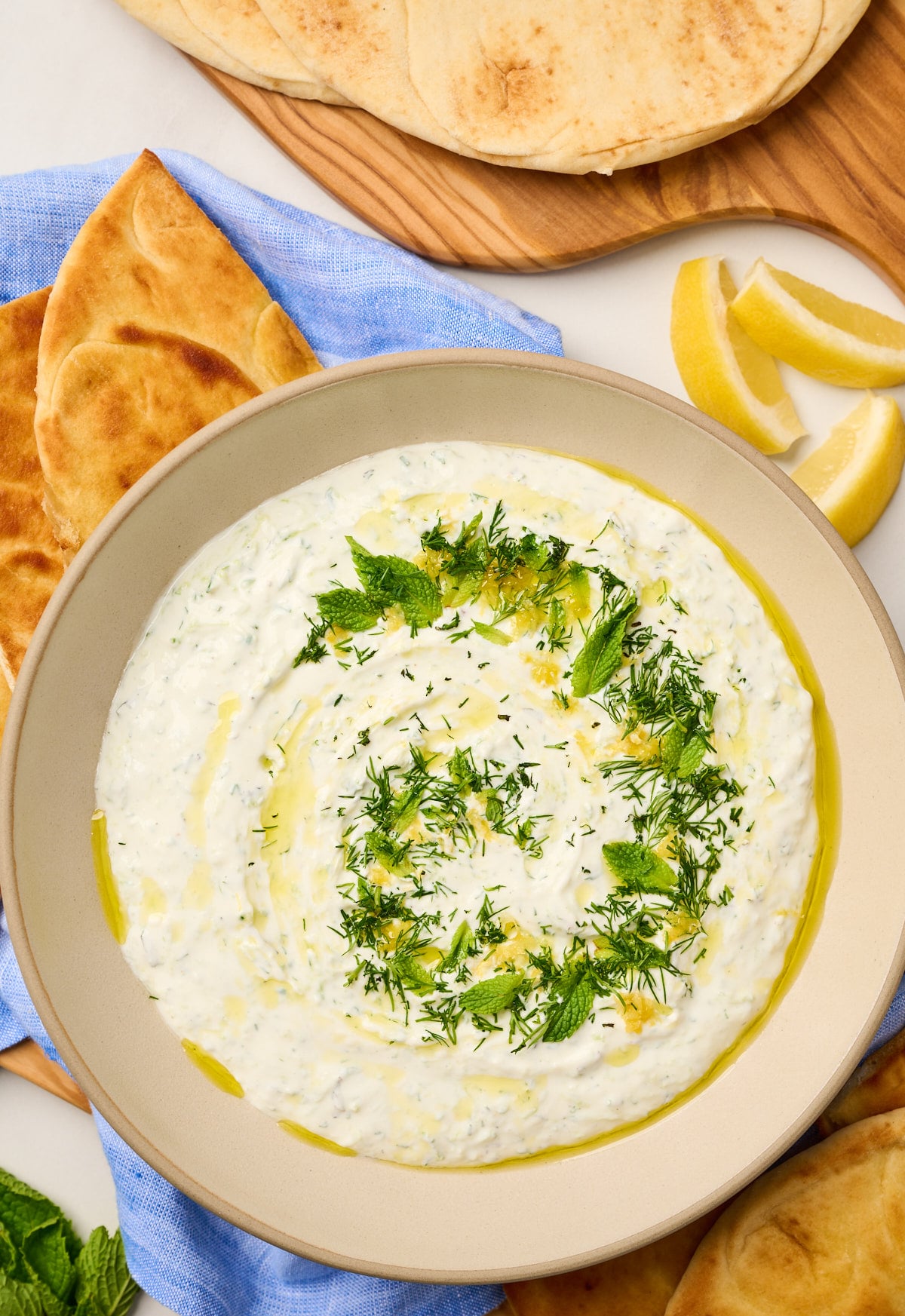
Cool, thick, and refreshing, homemade tzatziki sauce is a classic Greek staple you’ll absolutely want to spoon onto everything! This creamy, herbaceous sauce comes together in about 15 minutes with no cooking required and instantly brightens warm pita, crisp vegetables, grilled meats, sandwiches, and more.
Several trips traveling and island-hopping throughout Greece gave me the opportunity to enjoy tzatziki where it originated. Drawing on those experiences and my 19+ years as a professional chef, I’ve learned that truly thick, scoopable tzatziki hinges on one essential step: controlling the cucumber moisture before it’s added to the yogurt. Salting, draining, and thoroughly squeezing the grated cucumber prevents a watery sauce and creates that rich, silky body and wonderfully thick texture.
It’s the perfect sauce for long, hot days when you want something quick, cooling, and bursting with fresh summer flavor.
Table of Contents
- What Is Tzatziki Sauce?
- Key Ingredients for the Best Tzatziki
- How to Keep Tzatziki from Getting Watery
- How to Make Tzatziki Sauce
- Easy Tzatziki Sauce Recipe
- What to Serve with Tzatziki
- Make-Ahead & Storage Tips
- Tzatziki FAQs
- More Dips, Sauces, and Spreads
What Is Tzatziki Sauce?
Tzatziki is a traditional cold Greek yogurt-and-cucumber sauce made with garlic, olive oil, and fresh herbs, typically dill and mint. The strained yogurt gives it a signature tang and a rich, substantial texture that makes it a true sauce or dip, not a loose, pourable dressing.
Traditionally, tzatziki is made with strained sheep’s-milk yogurt, although goat’s-milk yogurt and sheep-and-goat blends are also used regionally, reflecting local dairy traditions throughout Greece. Today, strained cow’s-milk yogurt is the most common choice in Greece and abroad, and it’s what I use in this recipe. Choose whichever variety you prefer, as long as it is full-fat and strained. “Greek yogurt” simply describes its concentrated, strained consistency, not the type of milk used to make it.
Key Ingredients for the Best Tzatziki
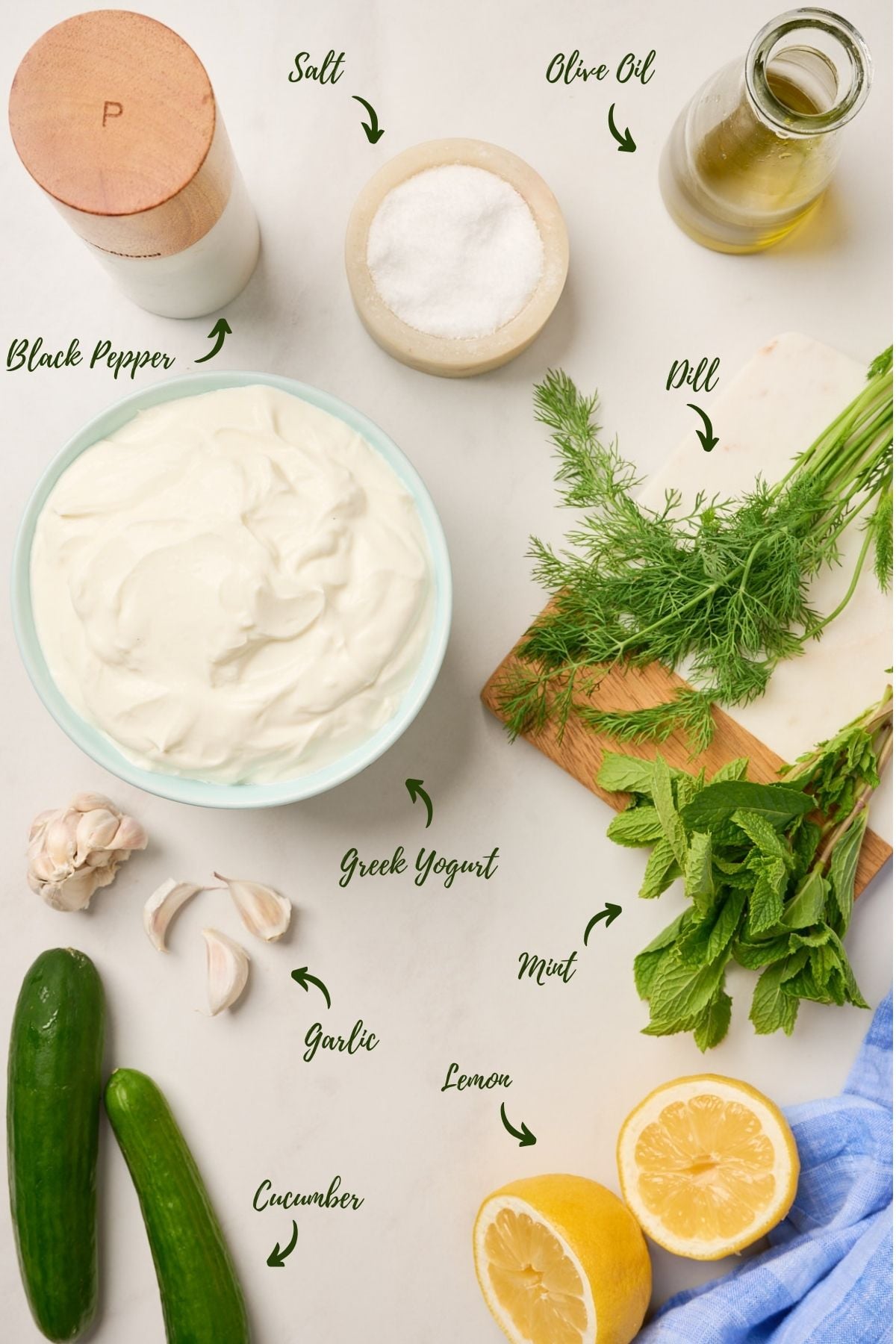
Tzatziki has a short ingredient list, so every choice matters. The right yogurt and cucumber create the foundation, while fresh herbs, garlic, lemon, and olive oil build its bright, savory flavor.
Best Yogurt to Use
Choose full-fat strained Greek yogurt that mounds on a spoon and holds soft peaks. This concentrated consistency is more important to the finished texture than the type of milk used. Icelandic-style skyr is a suitable substitute, although it is not traditional and may taste slightly less rich.
For a dairy-free version, use plain, unsweetened Greek-style almond, cashew, or mild coconut yogurt. If it appears loose, strain it through cheesecloth for 20 to 30 minutes before using.
Best Cucumber to Use
Persian cucumbers are my first choice because their thin skins and tiny seeds require very little preparation. English cucumbers also work well and generally do not need to be peeled or seeded. If the center appears especially watery or contains large seeds, scoop it out before grating. Peel and seed standard garden cucumbers, which have thicker skins and a higher water content.
Measure the grated cucumber before salting and draining so the yogurt-to-cucumber ratio remains accurate.
Garlic, Dill, Mint, Lemon, and Olive Oil
Garlic: Raw garlic gives tzatziki its characteristic bite. For a gentler flavor, let the grated or minced garlic sit in the lemon juice for three to five minutes before mixing.
Dill and mint: Fresh dill adds a grassy, savory flavor, while mint brings a clean, cooling finish. I use both for balance and chop them just before mixing to preserve their color and aroma.
Lemon: Fresh lemon juice sharpens the yogurt’s tang, while the zest adds fragrance without additional acidity (make sure to zest the lemon first before you juice it). Red wine vinegar can replace the juice, but use slightly less because its flavor is sharper.
Kosher salt: Salt seasons the yogurt and helps draw excess moisture from the cucumber. Add it in stages, then adjust the final seasoning after the ingredients are combined.
Extra-virgin olive oil: A fruity olive oil rounds out the acidity and gives the finished sauce a silky finish and lovely presentation.
How to Keep Tzatziki from Getting Watery
Watery tzatziki almost always starts with cucumber that has not been drained thoroughly. Cucumbers naturally contain a great deal of water, and grating breaks open their cells. As you grate, you’ll even notice liquid pooling on your cutting board. If that cucumber is added without being thoroughly drained, the moisture seeps into the yogurt as the sauce chills and rests, causing it to loosen and separate.
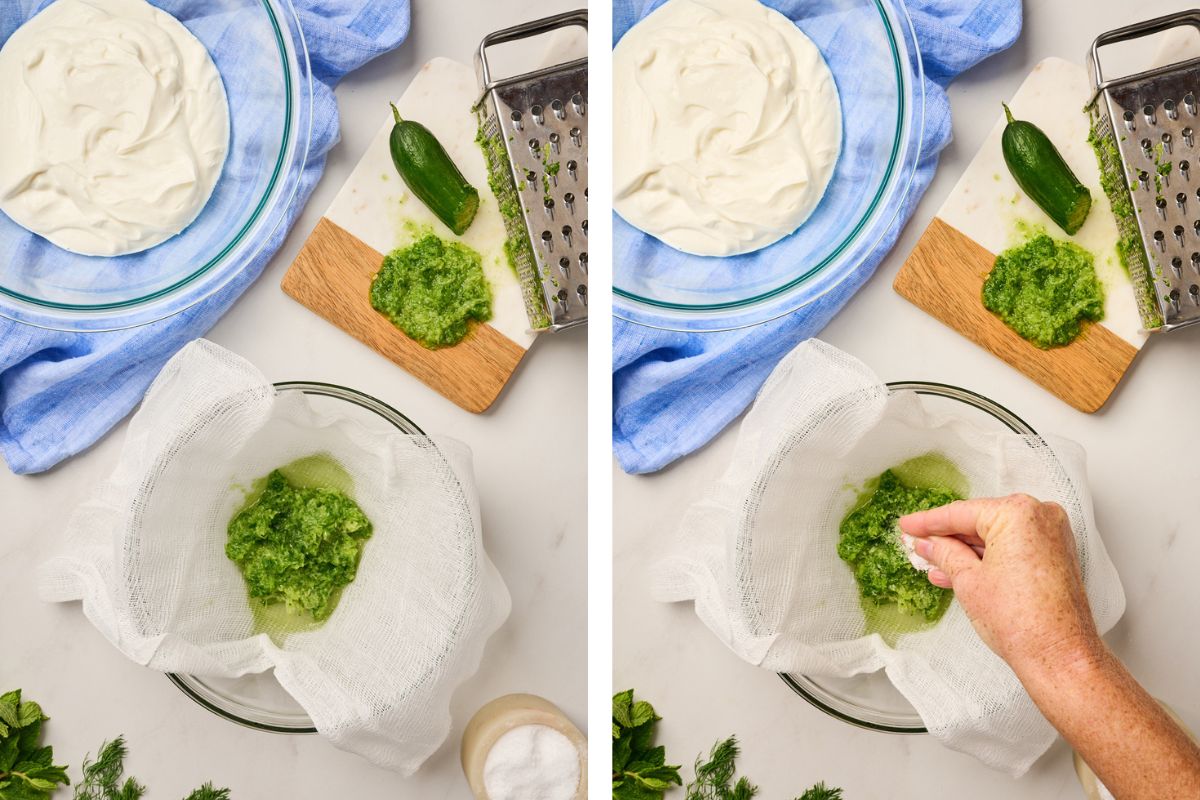
To prevent this, place the grated cucumber in several layers of cheesecloth, a clean kitchen towel, or a fine-mesh sieve. Sprinkle it with salt and let it rest for 5 to 10 minutes. Through osmosis, the salt draws moisture from the cucumber cells. Gather and squeeze the cloth, or press the cucumber firmly against the sieve, until it feels compact and barely damp. When pressed hard, it should produce no steady drips and, at most, only a drop or two.
Removing this moisture upfront prevents pooling, protects the sauce’s consistency, and keeps the garlic, herbs, and lemon from becoming diluted. After 19+ years as a professional chef, this is the one tzatziki-making step I never skip. It’s the simple technique that makes this recipe work beautifully every time.
How to Make Tzatziki Sauce
Follow these four simple steps to make fresh, beautifully balanced tzatziki every time.
Place the Yogurt and Prep the Cucumber
Spoon the strained Greek yogurt into a large mixing bowl. Coarsely grate the cucumber and place it in cheesecloth, a clean kitchen towel, or a fine-mesh sieve. Sprinkle with a generous pinch of kosher salt and let it rest for 5 to 10 minutes while you prepare the remaining ingredients.
Prep Garlic, Herbs, and Lemon
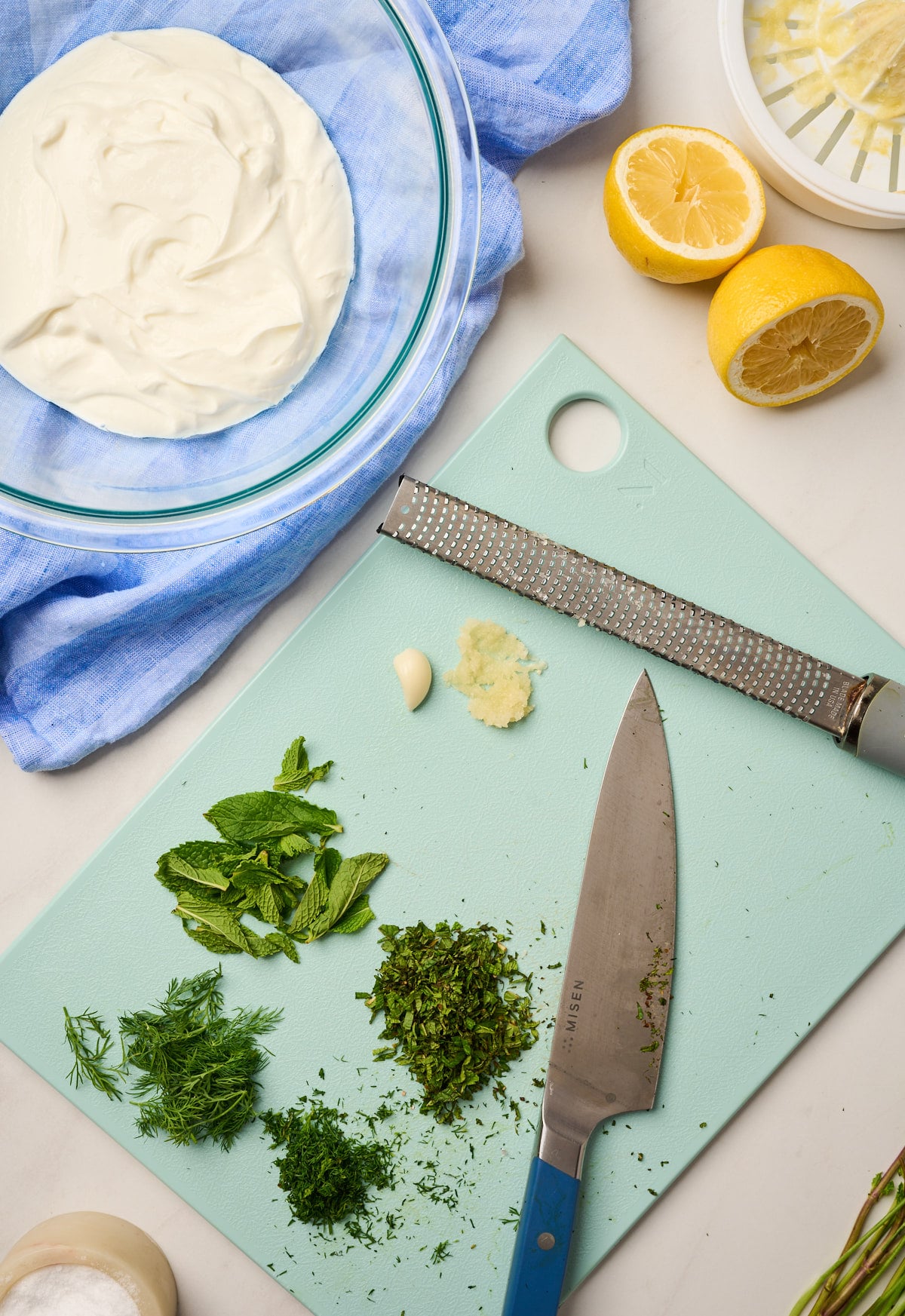
Finely grate the garlic with a Microplane for a smooth texture, then finely chop the dill and mint. Zest and juice the lemon, reserving a little zest and a few herbs for garnish. If you prefer a gentler garlic flavor, let the grated garlic sit in the lemon juice for 3 to 5 minutes.
Squeeze and Combine
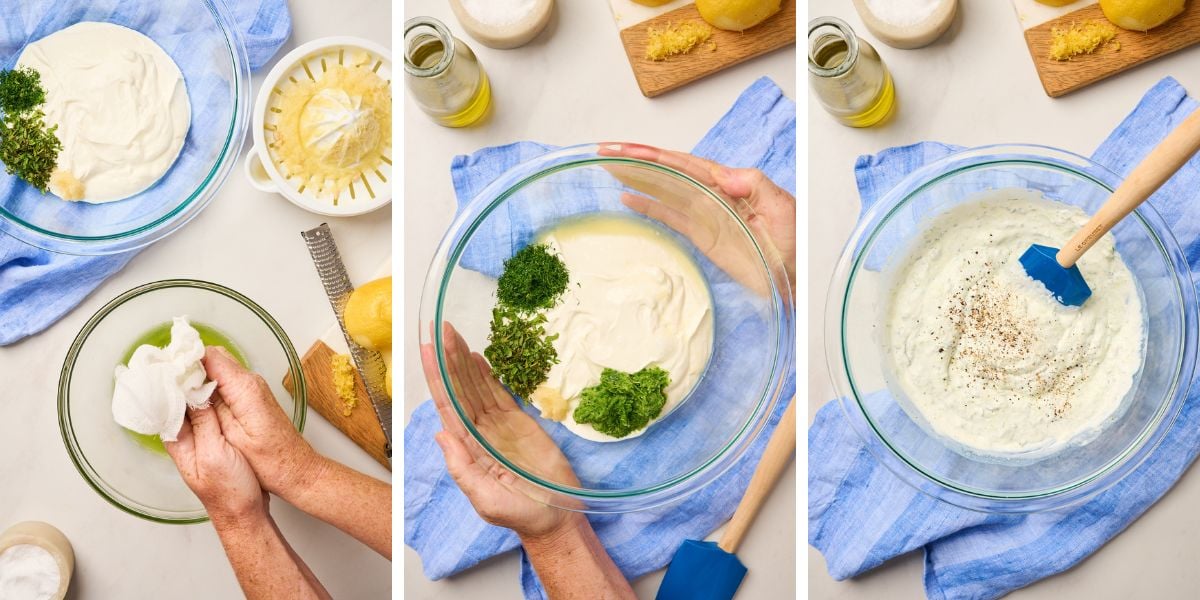
Gather the cloth around the cucumber and squeeze firmly to remove the released liquid. If using a sieve, press the cucumber firmly against the mesh. It is ready when it feels compact and barely damp. Add it to the yogurt along with the garlic, herbs, and lemon juice, then fold gently until evenly incorporated.
Season, Chill, and Garnish
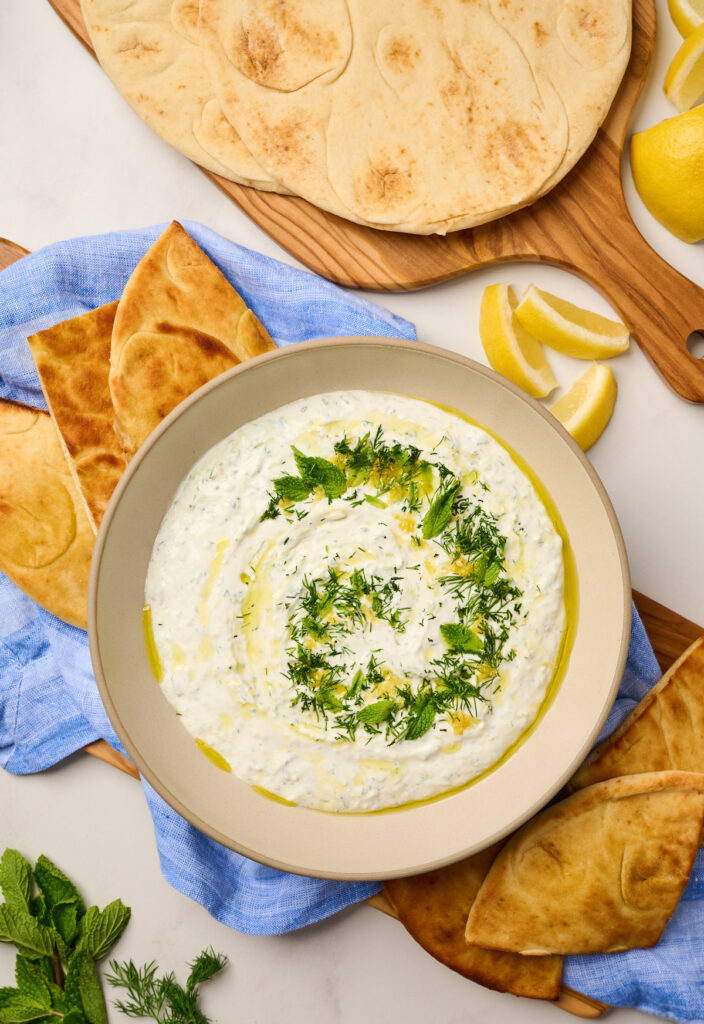
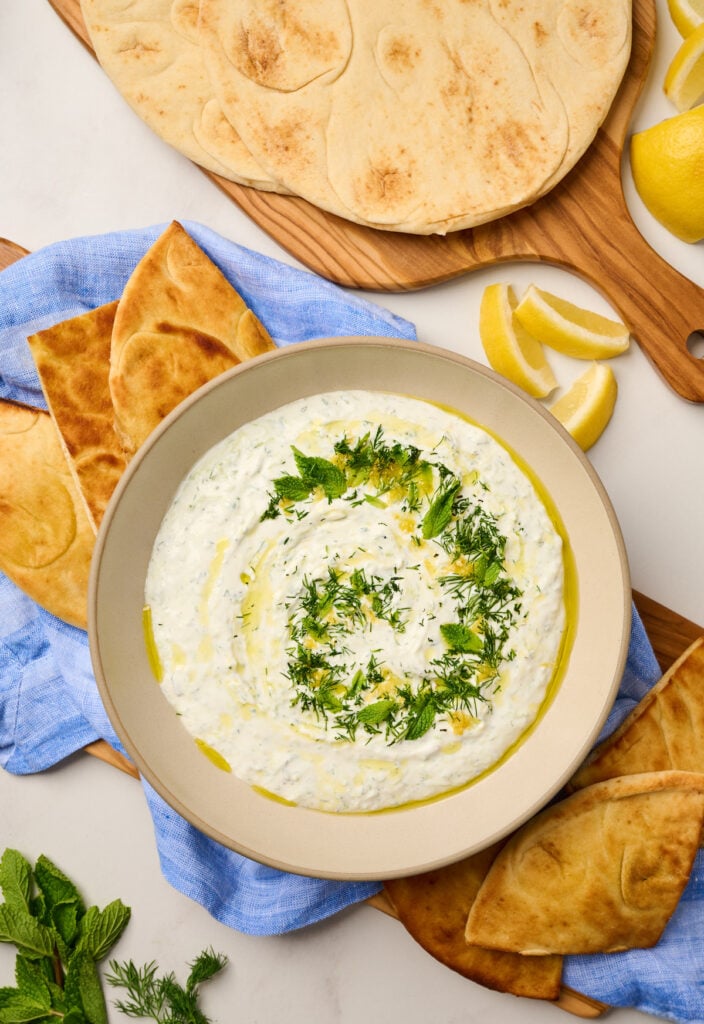
Season with kosher salt and freshly cracked black pepper. If time allows, refrigerate the tzatziki for 30 minutes so the flavors can meld. Transfer it to a serving bowl and finish with extra-virgin olive oil, fresh herbs, and the reserved lemon zest.
⭐️⭐️⭐️⭐️⭐️ “Perfect texture and flavor. The moisture control tip is a game changer.” — Molly Gilmore
Easy Tzatziki Sauce Recipe

Easy Tzatziki Sauce Recipe
Equipment
Ingredients
- 2 cups full-fat strained Greek yogurt, preferably cow’s-milk Greek yogurt such as Fage 4%, or sheep’s-milk yogurt if available
- 1 cup grated cucumber, measured before salting and squeezing
- 2 large or 3 small garlic cloves, minced
- 1 tablespoon fresh dill, finely chopped, plus more for garnish
- 2 tablespoons fresh mint, finely chopped, plus more for garnish
- 1 tablespoon fresh lemon juice, plus zest for garnish
- 1/2 teaspoon kosher salt, divided
- Freshly cracked black pepper, to taste
- Extra-virgin olive oil, for drizzling
Instructions
- Place the Greek yogurt in a large mixing bowl.
- Grate the cucumber and place it in cheesecloth, a clean kitchen towel, or a fine-mesh sieve. Sprinkle with a generous pinch of salt and let it rest for 5 to 10 minutes.
- Finely grate or mince the garlic. Finely chop the dill and mint. Zest the lemon, reserving some zest for garnish, then juice the lemon.
- Squeeze the salted cucumber for 30 to 60 seconds, or until it feels compact and barely damp. When pressed hard, it should release no steady drips and, at most, only a drop or two.
- Add the drained cucumber, garlic, herbs, lemon juice, remaining salt, and black pepper to the yogurt. Stir gently until just combined.
- Taste and adjust seasoning as needed. If time allows, chill for 30 minutes before serving.
- Transfer to a serving bowl. Top with extra-virgin olive oil, reserved lemon zest, and fresh herbs. Serve chilled.
Notes
- Drain and squeeze the salted cucumber until compact and barely damp before adding it to the yogurt. This keeps the tzatziki thick and prevents separation.
- For the best flavor, chill the sauce for 30 minutes before serving so the garlic, herbs, and lemon can meld.
- Persian and English cucumbers work best. If using standard garden cucumbers, peel them and remove the seeds before grating.
- Full-fat strained Greek yogurt gives the best body and tang. Sheep’s-milk yogurt or a sheep-and-goat blend offers a richer, more traditional option when available. For dairy-free tzatziki, use an unsweetened Greek-style plant yogurt and strain it first if it appears loose.
- Store in an airtight container in the refrigerator for 3 to 4 days. Do not freeze.
Nutrition
What to Serve with Tzatziki
As a professional chef, I consider tzatziki one of the most versatile sauces to keep in the refrigerator. Serve it chilled as a dip, spread, or cooling finishing sauce to add creamy, tangy, herbaceous flavor to everything from mezze platters to grilled proteins and vegetables.
Pita, Veggies, and Mezze
Serve tzatziki with warm pita, olives, sliced cucumbers, cherry tomatoes, radishes, carrots, or crisp romaine leaves. It also belongs on a Greek-inspired mezze platter with red pepper spread, tirokafteri, whipped feta, and crispy pan-fried saganaki.
Chicken, Lamb, Salmon, and Bowls
Spoon tzatziki over grilled lamb, salmon, roasted chicken, grilled chicken, or chicken souvlaki. It also works beautifully as a finishing sauce for grain bowls, rice bowls, falafel bowls, or a quick lunch with shredded chicken, poached chicken , or a soft-boiled egg.
Salads and Vegetables
Use tzatziki in place of a creamy dressing on mixed greens, cucumber tomato salad, corn salad, or grain salads like tabbouleh. It also pairs well with roasted beets, roasted peppers, roasted vegetables, sautéed kale, air fryer broccoli, and other simply cooked vegetables.

Make-Ahead & Storage Tips
Tzatziki is an excellent make-ahead sauce because the garlic, herbs, and lemon have time to infuse into the yogurt as it chills. For the best flavor, refrigerate it for at least 30 minutes before serving, or prepare it up to 2 days in advance.
Store homemade tzatziki in an airtight container in the refrigerator for 3 to 4 days. A little liquid may rise to the surface as it sits. This is normal, especially with yogurt-based sauces. Simply stir it back in before serving to restore the creamy texture.
Freezing is not recommended. The cucumber and yogurt contain too much water, which causes the sauce to separate and turn grainy after thawing. For the best texture, keep tzatziki refrigerated and serve it cold.
Tzatziki FAQs
These quick answers cover the most common tzatziki questions, from yogurt and cucumber choices to garlic strength, dried herbs, texture, and storage.
Can I use regular yogurt?
Regular, unstrained yogurt is not the best choice for tzatziki because it contains too much water and can make the sauce thin. For the best texture, use full-fat strained Greek yogurt. If regular yogurt is your only option, strain it through cheesecloth for 30 to 60 minutes before mixing.
Do I need to peel or seed the cucumber?
Persian cucumbers do not need to be peeled or seeded. English cucumbers usually do not need peeling either, but you can scoop out the center if the seeds look especially large or watery. If using standard garden cucumbers, peel them and remove the seeds before grating.
Can I use dried dill?
Fresh dill gives tzatziki the brightest flavor, but dried dill works in a pinch. Use about one-third the amount of dried dill as fresh. For example, use 1 teaspoon dried dill in place of 1 tablespoon fresh. Let the tzatziki chill for at least 30 minutes so the dried herb can soften and bloom in the yogurt.
How do I make tzatziki less garlicky?
Start with 1 small garlic clove, then add more to taste. For a gentler flavor, let the grated garlic sit in the lemon juice for 3 to 5 minutes before mixing it into the yogurt. Chilling the tzatziki for 30 to 60 minutes also helps soften the garlic’s sharpness.
Can I make tzatziki thinner, like cacık?
Yes. For a looser, spoonable sauce similar to Turkish cacık, whisk in 1 to 2 tablespoons of cold water, reserved whey, or lemon juice until it reaches your preferred consistency. Add the liquid gradually so the sauce does not become too thin.
Can I freeze tzatziki?
Freezing is not recommended. Yogurt and cucumber both contain a lot of water, so the sauce tends to separate and become grainy after thawing. For the best texture, store tzatziki in the refrigerator and enjoy it within 3 to 4 days.
More Dips, Sauces, and Spreads
If you love keeping flavorful dips and sauces on hand, try these fresh, vibrant recipes next.
For another classic mezze staple, my Silky Homemade Hummus is velvety smooth and perfect with warm pita, crisp vegetables, and Mediterranean spreads.
If you want another Greek dip with a bolder flavor, try Tirokafteri , a creamy spicy feta dip that pairs beautifully with pita, grilled meats, and vegetables.
For a nutty, versatile drizzle, my Tahini Sauce is perfect for falafel, grain bowls, roasted vegetables, salads, and grilled proteins.
For gatherings, my chunky, fresh Guacamole is always a reliable dip for chips, tacos, and vegetable platters.