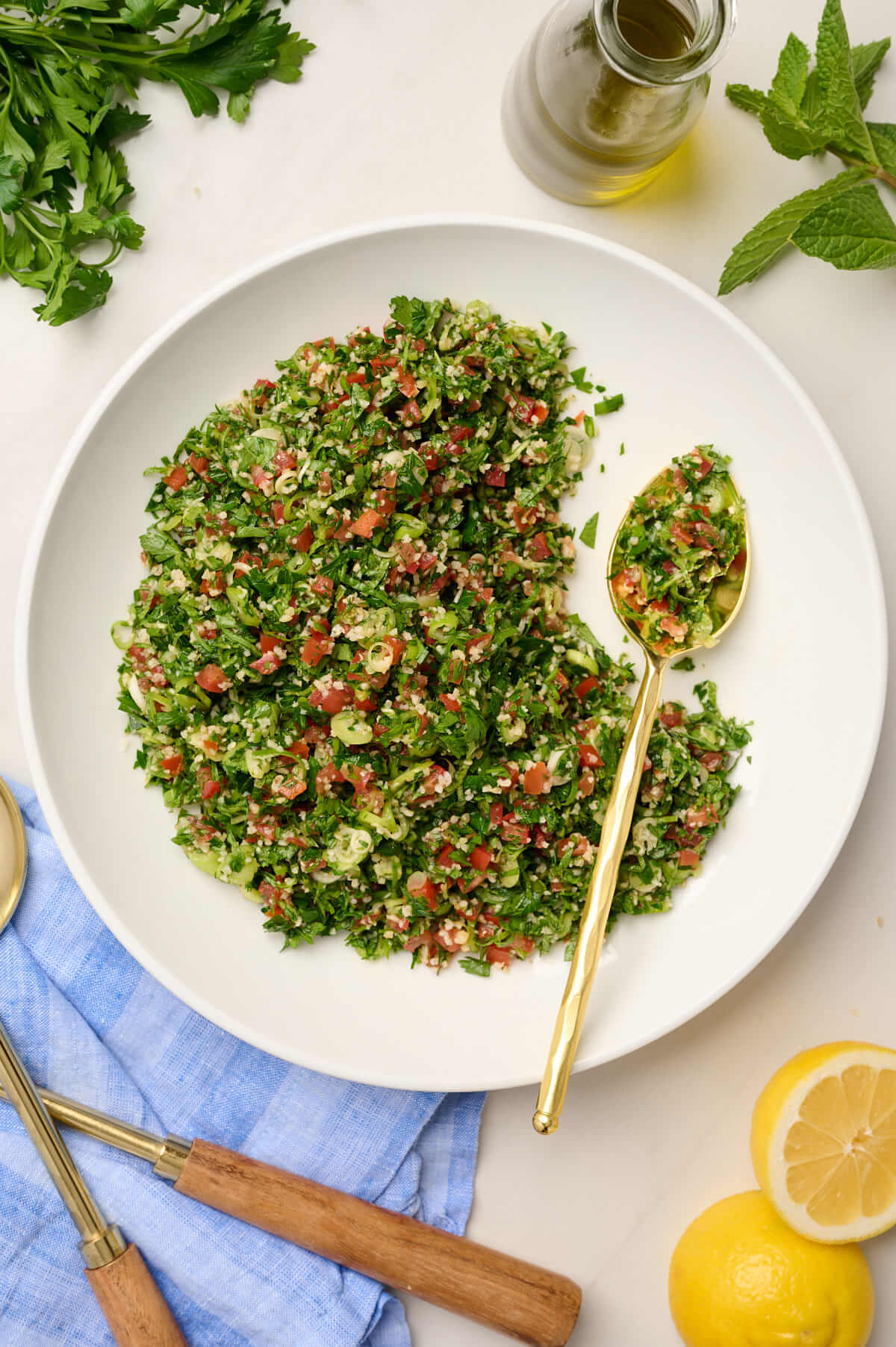
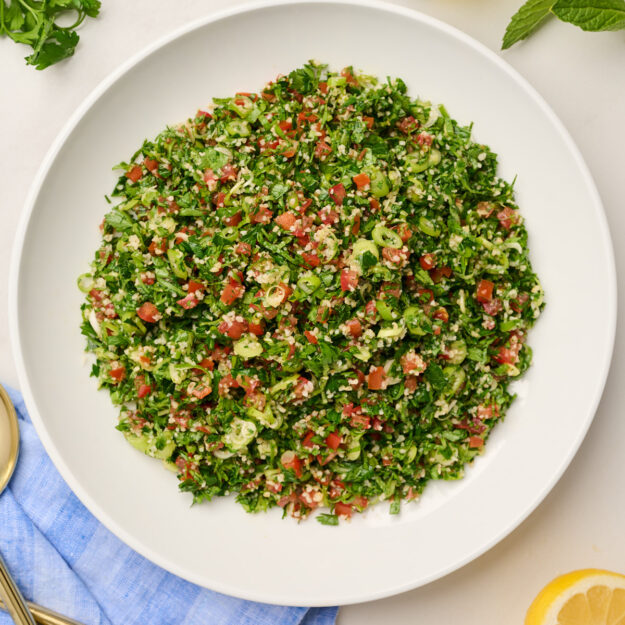
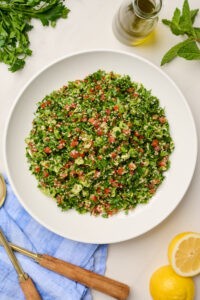
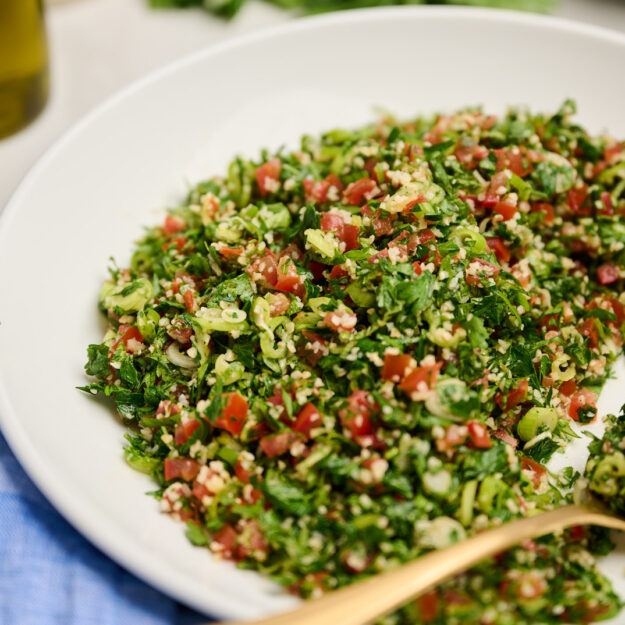
This tabouli (aka tabouli salad / tabbouleh) is a bright Middle Eastern herb salad made with parsley, mint, tomatoes, fine bulgur, lemon, and olive oil. It takes about 15 minutes of prep, plus a 30-minute rest (recommended), and it’s chef-tested to stay fluffy—not watery—thanks to tomato de-seeding, gentle herb handling, and properly drained bulgur.
What’s the Difference Between Tabouli and Tabbouleh?
There isn’t a true difference—tabouli and tabbouleh are simply two common spellings of the same dish. “Tabbouleh” is a common transliteration from Arabic, while “tabouli” is a popular Western spelling.
Why You’ll Love This Tabouli Salad
This classic Tabouli Salad (Tabbouleh) is vibrant and refreshing, with fresh parsley as the undeniable star. Better yet, it’s one of those rare dishes that improves with time as the zesty flavors meld and deepen in the fridge.
It comes together with finely chopped parsley, fresh mint, juicy tomatoes, scallions, fine bulgur wheat, and a bright dressing made with fresh lemon juice and extra-virgin olive oil.While tabbouleh is a quintessential Lebanese dish, my fondest memories come from my time in Israel, where it’s a beloved staple. Those experiences—and my training as a professional chef—taught me that the secret is precision: hand-chopping herbs to prevent bruising, salting and de-seeding tomatoes to eliminate sogginess, and prepping fine bulgur with care (see my guide on How to Cook Bulgur Wheat).
Chef’s Secret: Even the simplest salad demands timing, knife work, and moisture control—what separates good from great.
Looking for something specific? Choose your path:
- Jump to Why You’ll Love This Tabouli Salad
- Jump to Chef’s Ingredient Notes for Tabouli Salad
- Jump to What Is Bulgur?
- Jump to How to Make Tabouli Salad
- Jump to Tabouli Salad Recipe Card
- Jump to Tabbouleh Variations (Chef-Approved)
- Jump to What to Serve with Tabouli Salad
- Jump to Make-Ahead and Storage Tips
- Jump to Tabouli Salad FAQ
- Jump to More Salad Recipes
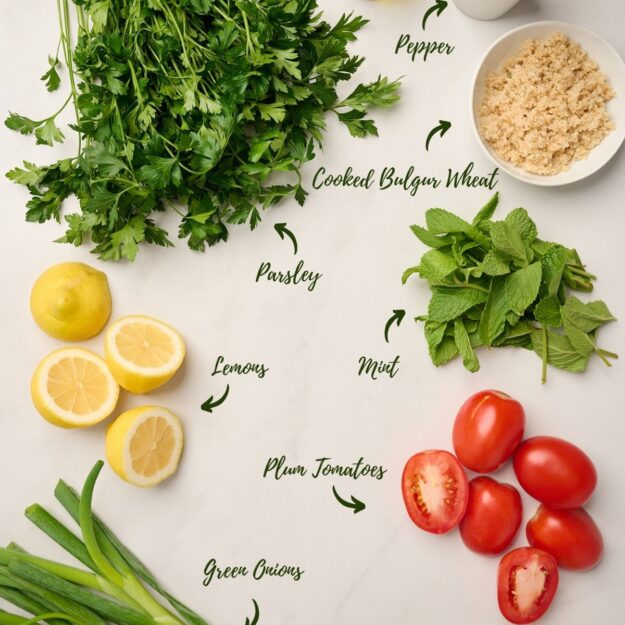
Chef’s Ingredient Notes for a Perfect Tabouli Salad
For the complete ingredient list, jump to the recipe card below. These chef-tested notes help you prep ingredients for the best tabouli salad flavor and texture.
Pro Tip: Tabouli rewards precision—especially with moisture control and knife work.
Fine bulgur (#1 grind): Softens with a quick soak—no cooking required. Drain well and squeeze dry; grains should feel springy, not mushy. Don’t rinse unless dusty. (Medium/coarse bulgur must be steamed or simmered—see my How to Cook Bulgur Wheat guide)
Flat-leaf parsley: Dry thoroughly and hand-chop with a sharp knife to avoid bruising (which causes bitterness and sogginess). Skip the food processor.
Fresh mint: Chiffonade right before mixing so it stays green and aromatic.
Roma tomatoes: Firm and low-moisture. Salt and de-seed to remove excess water and intensify flavor—prepped pieces should feel firm, not slippery.
Fresh lemon juice: Brightens everything—use fresh-squeezed for the cleanest flavor.
Extra-virgin olive oil: Choose a fruity, balanced oil that tastes delicious on its own; low-quality oil can taste bitter or dull.
What Is Bulgur?
Bulgur is a whole grain made from cracked wheat berries that have been par-cooked, then dried. Because it’s par-cooked, bulgur is quick to prepare—especially the fine grind used in tabouli.
Bulgur comes in different grinds:
- Fine (#1): Traditional for tabouli and gives the lightest texture.
- Medium/Coarse: Larger grains with more chew; typically steamed or simmered like rice.
Bulgur isn’t the same as raw cracked wheat. Raw cracked wheat is not par-cooked and requires longer cooking to become tender. For a deeper dive (and how-to for every grind), see my How to Cook Bulgur Wheat guide.
How to Make Tabouli Salad
Use this step-by-step guide for chef technique and sensory cues—then jump to the recipe card below for exact quantities.
Chef-Tested Checklist: 3 Rules for Fluffy, Non-Soggy Tabouli
- Squeeze bulgur until springy (no clumps, no gummy texture)
- Salt + de-seed tomatoes (removes excess moisture and concentrates flavor)
- Dry herbs completely (wet parsley = watery tabouli)
Step 1 — Prep Tomatoes (Salt + De-seed)
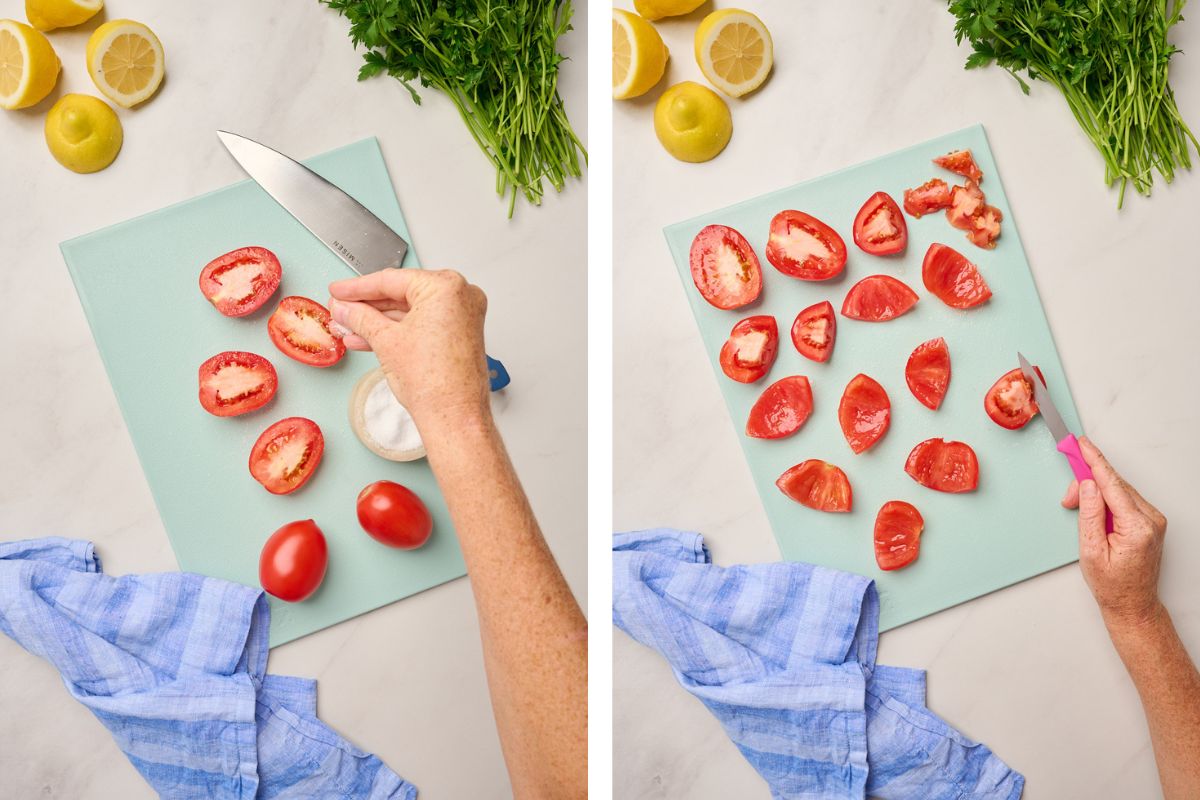
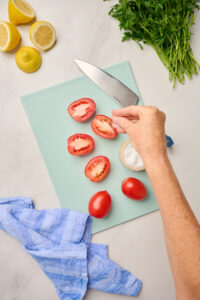
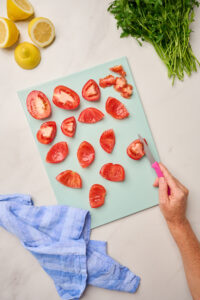
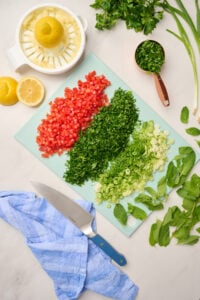
Salt and de-seed tomatoes: Cut Roma tomatoes in half lengthwise and sprinkle the cut sides with salt. This crucial step draws out excess moisture, preventing a watery salad. After a minute or two, beads of moisture will form as the salt works its magic. Quarter the tomatoes, then use a paring knife to remove the core, seeds, and membranes.
Chef’s tip: If the tomatoes are extra juicy, rest them cut-side down on paper towels for 5 minutes before seeding.
Sensory cue: Properly prepped tomatoes feel firm (not slippery) and hold their shape when diced.
Step 2 — Soak and Drain Bulgur
Fine bulgur softens quickly—no cooking required—but it must be thoroughly drained.
Why water (not lemon) for soaking: Hydrating bulgur in water keeps the grain neutral and evenly tender. Lemon juice can partially “pickle” the exterior, making the texture slightly firm or uneven. For the brightest flavor, add the lemon in the dressing after the bulgur is fully hydrated and well-drained.
- Soak: Place fine bulgur in a bowl, cover with tepid water, and soak just until tender.
- Drain: Drain well, then gently squeeze out excess moisture using clean hands, a towel, or cheesecloth.
Sensory cue: The bulgur should feel springy and light, not wet, gummy, or clumped together.
Chef’s tip: If it clumps when squeezed, it’s still holding water—squeeze once more.
Step 3 — Chop Herbs (No Food Processor)
Parsley is the star, and knife work is what keeps tabouli light and fluffy.
- Dry first: Wash herbs, then dry thoroughly (a spinner helps).
- Parsley stems: Use the tender upper stems (they’re flavorful and soften into the salad), but trim off thick lower stems, which can be fibrous and throw off the delicate texture.
- Chop with restraint: Use a sharp knife and keep passes to a minimum to prevent bruising.
- Mint last: Chiffonade mint right before mixing to keep it aromatic and green.
- Green onions & lemons: Thinly slice the green onions and juice the lemons.
Sensory cue: Herbs should look finely cut and feathery, not crushed or wet.
Why no food processor: High-speed blades bruise herbs, releasing bitterness and creating a heavier, wetter texture.
Step 4 — Mix, Rest, and Adjust Seasoning
Tabouli should be airy—mixing technique matters as much as ingredients.
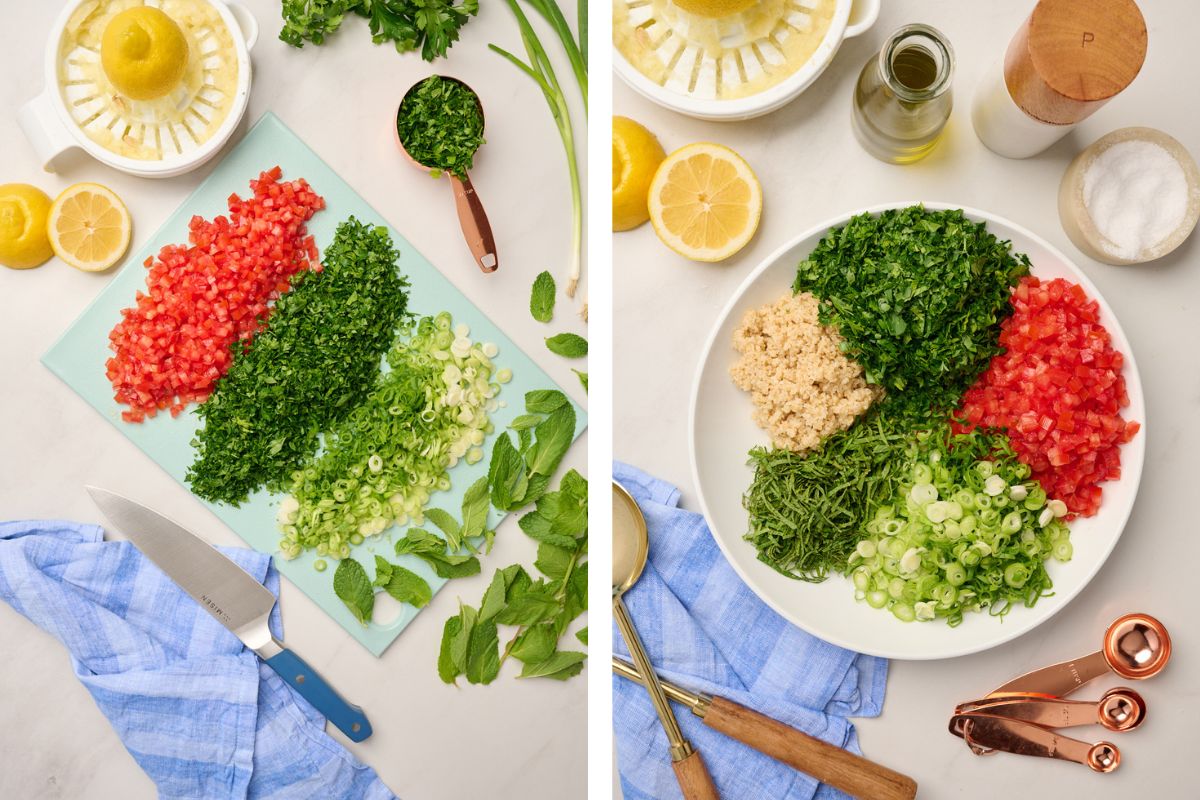
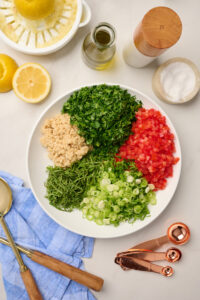
- Fold, don’t stir: Combine bulgur, herbs, tomatoes, and scallions, then gently lift and fold from the bottom up.
- Dress and season: Add lemon juice and olive oil, then salt and pepper to taste.
- Rest: Refrigerate for 30 minutes so flavors meld and bulgur absorbs the dressing.
How to adjust before serving:
- If it tastes flat → add a pinch of salt
- If it tastes dull → add a squeeze of lemon
- If it looks wet → drain any pooled liquid, then fold gently to re-fluff
Chef’s tip: Taste again after resting—tabouli often needs a final small pinch of salt or lemon once everything settles.
Tabouli Salad Recipe Card
Tabouli Salad Recipe
Equipment
Ingredients
- 1/2 cup fine bulgur wheat
- 4 large Roma tomatoes
- 1 1/2 cup flat-leaf parsley (about 2–3 packed bunches), finely chopped
- 2 tbs fresh mint, finely sliced (chiffonade)
- 4 green onions, white and green parts, finely sliced
- 1/3 cup fresh lemon juice (about 2–3 lemons; most lemons yield 2–3 tablespoons each, depending on size and freshness)
- 4 tbs Extra virgin olive oil (choose a high-quality oil)
- 1/2 tsp Kosher salt (plus additional salt to sprinkle on the tomatoes)
- Freshly cracked black pepper to taste.
Instructions

- Soak bulgur: Soak fine bulgur in water for 5–7 minutes. Drain thoroughly, then gently squeeze out excess water using your hands, a towel, or cheesecloth.
- Prep tomatoes: Slice tomatoes in half lengthwise. Sprinkle the cut sides with salt and let sit for 5–7 minutes. Quarter, then remove the core, seeds, and membranes with a paring knife. Discard. Dice the tomato flesh.
- Prep herbs + aromatics: Chop parsley, chiffonade mint, thinly slice green onions, and juice the lemons. Chef’s Tip: Hand-chop herbs with a sharp knife and make sure they’re thoroughly dried.
- Mix: Add bulgur, tomatoes, herbs, and green onions to a large bowl. Add lemon juice, olive oil, and ½ teaspoon salt. Mix gently but thoroughly. Add black pepper to taste.
- Rest: Cover and refrigerate 30 minutes for best flavor. Serve chilled or at room temperature.Chef’s Note: Drain any excess liquid before storing to keep tabouli fluffy and prevent sogginess.
Notes
- Bulgur type: This recipe uses fine bulgur (soaked). For medium- or coarse-grain bulgur, see my How to Cook Bulgur Wheat guide.
- Prevent soggy tabouli: Dry herbs thoroughly, salt and de-seed tomatoes, and squeeze bulgur until springy.
- Avoid bitter tabouli: Don’t over-chop herbs (bruising) and use a high-quality olive oil. Resting helps flavors mellow.
- Storage: Store leftovers in an airtight container in the fridge for up to 3 days. The texture softens over time—drain excess liquid before refrigerating. Freezing is not recommended.
Nutrition
Tabbouleh Variations (Chef-Approved)
While this recipe is designed to deliver a classic, authentic tabouli (tabbouleh), its bright, parsley-forward base is also an ideal canvas for thoughtful variations. Once you’ve mastered the technique, use the options below to customize flavor, texture, or dietary needs—without losing the spirit of the dish.
Classic Lebanese-Style (Parsley-Forward)
For the most traditional feel, keep tabouli parsley-heavy with minimal add-ins.
- Stick to fine bulgur, tomatoes, scallions, parsley, mint, lemon, and olive oil.
- Keep the chop fine and the texture light—tabouli should taste herbaceous and refreshing, not chunky.
Gluten-Free (Bulgur Swaps)
This is the most common (and most useful) variation. Replace bulgur with one of the following:
- Quinoa (best substitute): Use 1½ cups cooked quinoa in place of ½ cup dry bulgur. Its texture is surprisingly similar, and it absorbs the lemon dressing beautifully. For more grain prep, see my How to Cook Bulgur Wheat guide.
- Cauliflower rice (grain-free/low-carb): Substitute an equal amount of finely riced raw cauliflower for a crisp, fresh texture—no cooking required.
Make It More Filling (Add-Ins)
Turn tabouli into a more filling lunch or dinner with these additions:
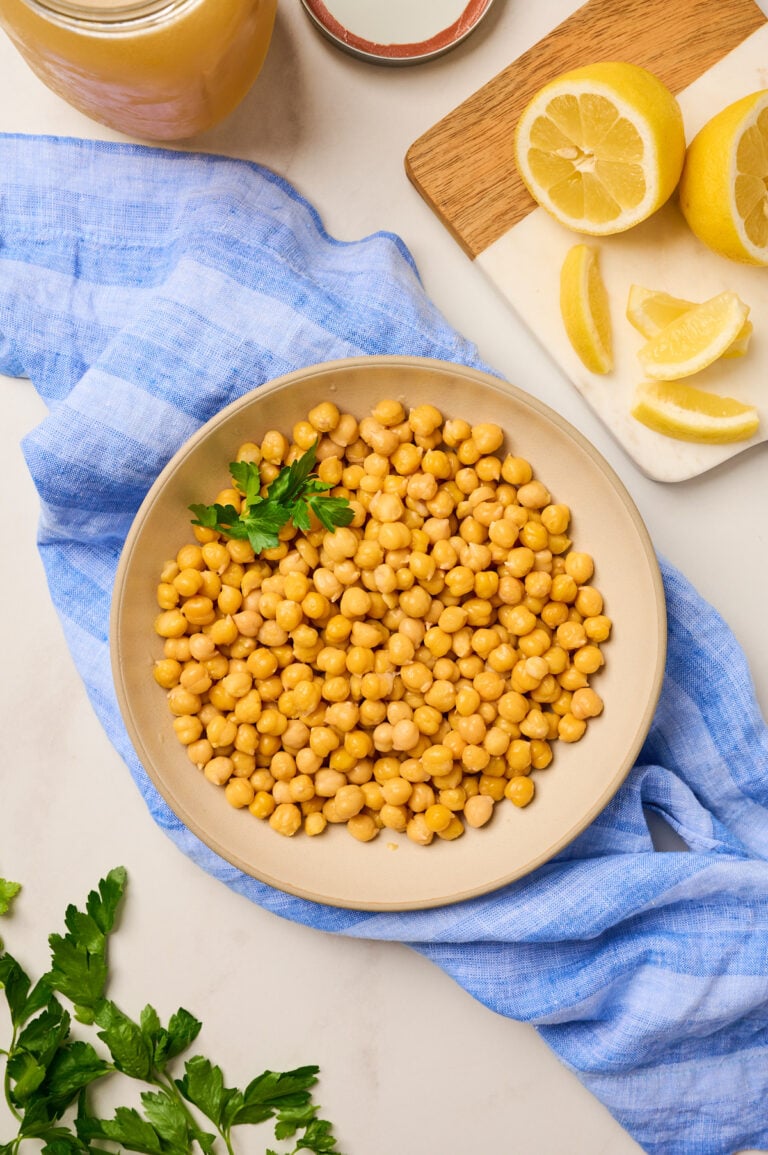
- Chickpeas: Fold in 1 (15-ounce) can chickpeas, rinsed and drained, for plant-based protein and a satisfying bite. (For from-scratch, see my How to Cook Chickpeas guide.)
- Feta: Add crumbled feta right before serving for a creamy, salty contrast to the bright lemon and herbs.
- Couscous (not traditional): Couscous is wheat (so it’s not gluten-free), but it can work in a pinch—expect a softer, more pasta-like texture than bulgur.
Crunchy Twist (Not Traditional) + Extra Flavor
These additions bring texture and visual pop—use them as optional “finishing touches”:
- Cucumber (not traditional, but popular): Add 1 finely diced Persian or English cucumber for clean crunch.
- Pomegranate arils: Sprinkle a handful over the top for sweet-tart bursts and color.
- Toasted pine nuts: Add a small handful for buttery richness and contrast.
Chef Spice Option (Use a Light Hand)
Classic tabouli doesn’t need spice, but a tiny pinch can add subtle depth.
- Seven-spice (Lebanese 7-spice): Add a pinch for warm, aromatic complexity.
- Allspice or cinnamon: Add just a pinch—enough to round the flavor, never enough to announce itself.
Chef’s Tip: If you add extra ingredients (especially cucumber or chickpeas), taste and adjust with a final squeeze of lemon and a pinch of salt before serving to keep the salad bright.
What to Serve with Tabouli Salad
Tabouli salad is perfect as part of a mezze spread, and it also pairs beautifully with a simple protein for a light, satisfying meal. Here are my favorite ways to serve it.
Mezze Dips & Sauces
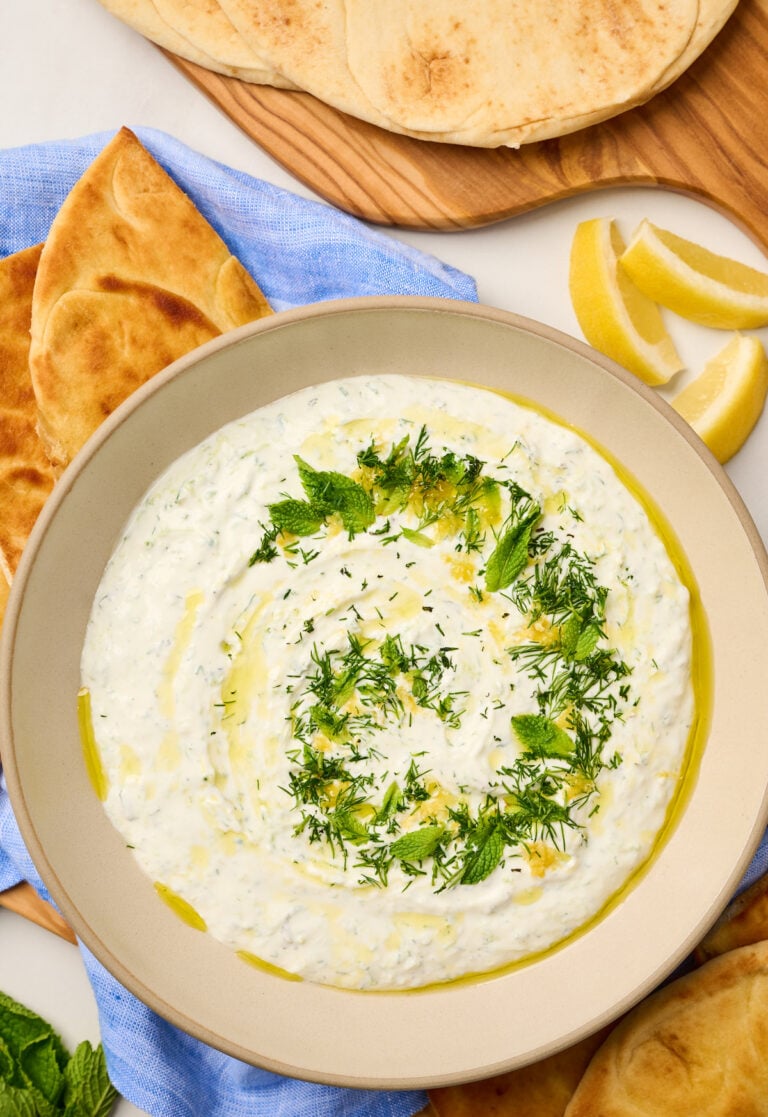
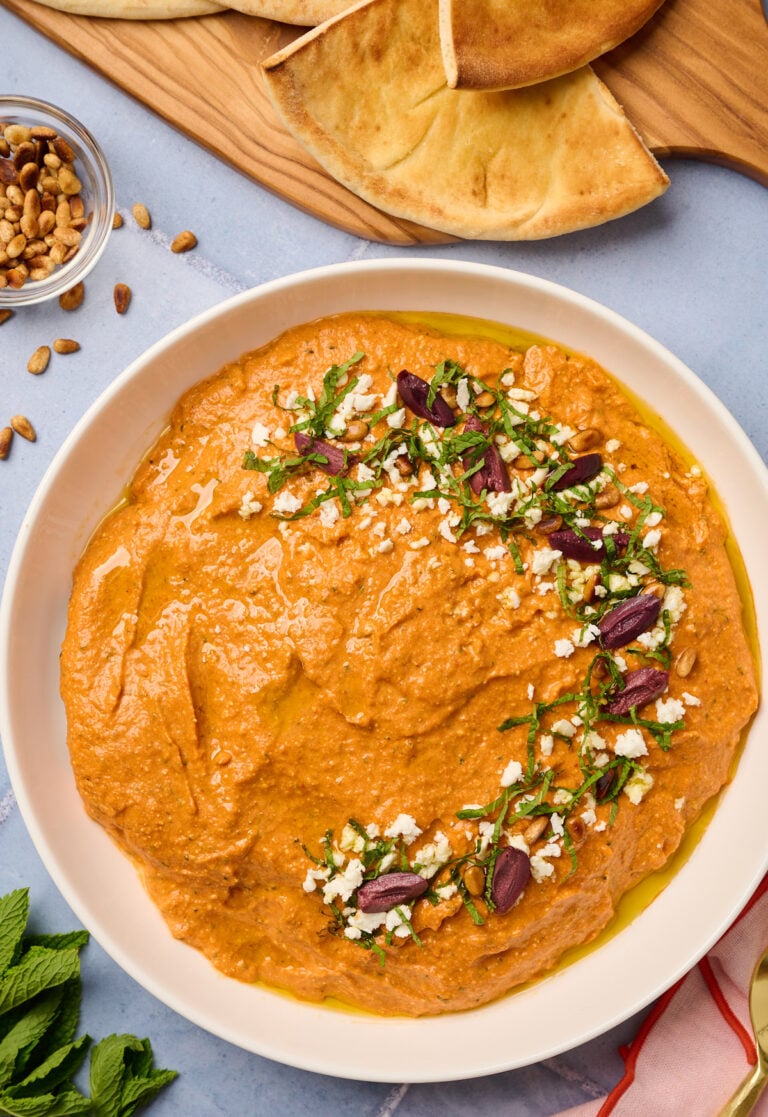
Serve tabouli alongside creamy, flavorful dips to round out the spread: homemade hummus, tirokafteri (roasted pepper and feta with a little bite), and cool, refreshing tzatziki.
Vegetable Sides
Tabouli loves anything roasted or charred. Try it with roasted beets, air-fryer broccoli, roasted peppers, roasted tomatoes, or a tray of mixed roasted vegetables. I also love a drizzle of tahini sauce over the vegetables for a classic mezze-style pairing.
Proteins (to make it a meal)
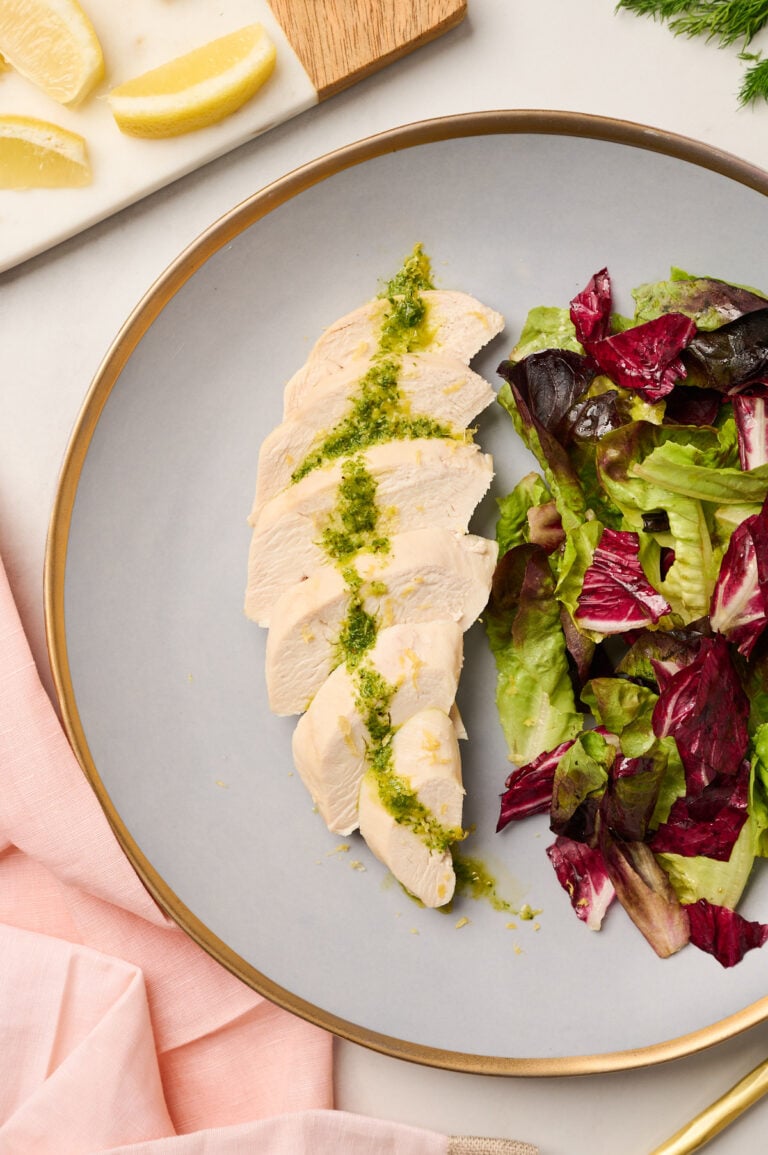
For a complete meal, pair tabouli with pan-seared salmon, duck breast, poached chicken, or vegetarian saganaki (crispy fried cheese). The bright lemon and herbs cut through richer proteins beautifully.
Serving Style (traditional touch) For a fresh mezze presentation, serve tabouli with romaine leaves as edible scoops.
Make-Ahead and Storage Tips
Tabouli is an ideal make-ahead salad, and it holds up well in the fridge for lunches, mezze spreads, and entertaining.
Make Ahead (Same Day)
For the best flavor, make tabouli at least 30 minutes before serving so it can rest. You can prepare it up to 4 hours in advance—just cover and refrigerate.
Pro Chef Tip: Before serving, gently fold the salad to redistribute the dressing and restore its fluffiness.
To Store Leftovers
Store any leftover tabouli in an airtight container in the refrigerator for up to 3 days. While the flavors will remain vibrant, please note that the fresh herbs will naturally lose their crispness over time. Why drain before storing? As the salad rests, the tomatoes and herbs will continue to release moisture. Removing excess liquid keeps the flavors concentrated and prevents dilution.
Make Ahead (Next Day) (Best Texture Plan)
If you want the freshest texture the next day, prep components separately and combine shortly before serving.
Option A (Fully mixed): You can make the full salad a day ahead—just expect the herbs to soften slightly. Drain any excess liquid before serving and brighten with a squeeze of lemon if needed.
Option B (Best texture):
- Store chopped herbs + tomatoes + green onions in one airtight container.
- Store soaked/drained bulgur + lemon juice + olive oil separately.
- Toss everything together about 1 hour before serving, then let it rest and taste again for salt/lemon.
Storage
Store leftover tabouli in an airtight container in the refrigerator for up to 3 days. The flavors will stay vibrant, but the herbs naturally lose crispness over time.
Why drain before storing? As the salad rests, tomatoes and herbs continue releasing moisture. Draining excess liquid keeps flavors concentrated and prevents dilution (and sogginess).
Freezing
Freezing is not recommended. The delicate texture of fresh parsley, mint, and tomatoes does not hold up well after thawing.
Tabouli Salad FAQ
Chef Insight: These answers are drawn from real-world kitchen troubleshooting—use them to master tabouli with confidence.
Why is my tabbouleh soggy?
It’s almost always excess moisture from one (or more) of these three areas:
- Wet herbs: Wash herbs, then dry thoroughly (a salad spinner works best).
- Watery tomatoes: Salt and de-seed tomatoes before dicing to remove excess liquid.
- Damp bulgur: After soaking, drain well and squeeze bulgur until springy and dry.
Can I use a food processor to chop the parsley?
I don’t recommend it. High-speed blades bruise the leaves, releasing bitterness and creating a wet, uneven texture. For a light, fluffy tabouli, hand-chop with a sharp knife.
Flat-leaf vs. curly parsley—what’s best?
- Flat-leaf (Italian): Traditional and more flavorful.
- Curly: Milder with more volume.
- For the most authentic flavor, choose flat-leaf.
What kind of mint should I use?
Spearmint is traditional, but most grocery-store “mint” is spearmint or peppermint—both work well and add the essential cooling freshness.
Can I use dried mint instead of fresh?
Fresh mint is best, but yes in a pinch. Use 1 to 1½ teaspoons dried mint in place of 1 tablespoon fresh, and add it to the dressing so it can rehydrate for 5–10 minutes before mixing. (Start small—dried mint can taste stronger.)
Is tabouli served cold or at room temperature?
Either works. Tabouli is typically served chilled or at cool room temperature. For best flavor, let it rest first, then serve chilled or bring it out for a few minutes before serving.
Is it better to make tabbouleh ahead of time?
Yes. Resting lets the bulgur absorb the dressing and the flavors deepen.
Chef’s Tip: For the best texture the next day, store herbs/veg separately from bulgur/dressing, then toss together about 1 hour before serving.
How many cups equal one serving of tabouli?
A typical serving is about ½ cup as a side dish. If you’re serving tabouli as part of a mezze plate or as a light main, plan on ¾ to 1 cup per person.
Can I make tabouli without bulgur?
Yes. You can make tabouli without bulgur by swapping in a gluten-free option like quinoa or cauliflower rice. Jump to: Gluten-Free (Bulgur Swaps) in the Variations section above for exact swap amounts and tips.
How do I fix tabouli that tastes flat?
Start small and adjust in this order:
- Add a pinch of salt
- Add a squeeze of lemon
- Rest 10 minutes, then taste again. Tabouli often “wakes up” after a short rest once seasoning is balanced.
Can I make tabouli without bulgur?
Yes. You can make tabouli without bulgur by swapping in a gluten-free option like quinoa or cauliflower rice.
Jump to: Gluten-Free (Bulgur Swaps) in the Variations section above for exact swap amounts and tips.
Is tabouli the same as bulgur?
No—tabouli is the salad. Bulgur is just one of its core ingredients.
Is bulgur the same as cracked wheat?
Not exactly. Bulgur is cracked wheat that’s been par-cooked and dried, so it becomes tender much faster. Raw cracked wheat isn’t par-cooked and usually requires longer cooking.
Is tabouli salad healthy?
Yes. Bulgur is a whole grain rich in fiber, and the fresh herbs and vegetables make this salad bright, satisfying, and nutrient-dense.
More Favorite Salad Recipes
If you’ve enjoyed the fresh flavors of this tabouli, try one of these next:
- My Japanese cucumber salad is crisp and refreshing alongside grilled meats and mezze.
- This Brussels sprouts salad is hearty, crunchy, and great for make-ahead meals.
- A bright corn salad is perfect for summer gatherings and potlucks.
- Keep it simple with cucumber tomato salad, a quick side for almost any dinner.