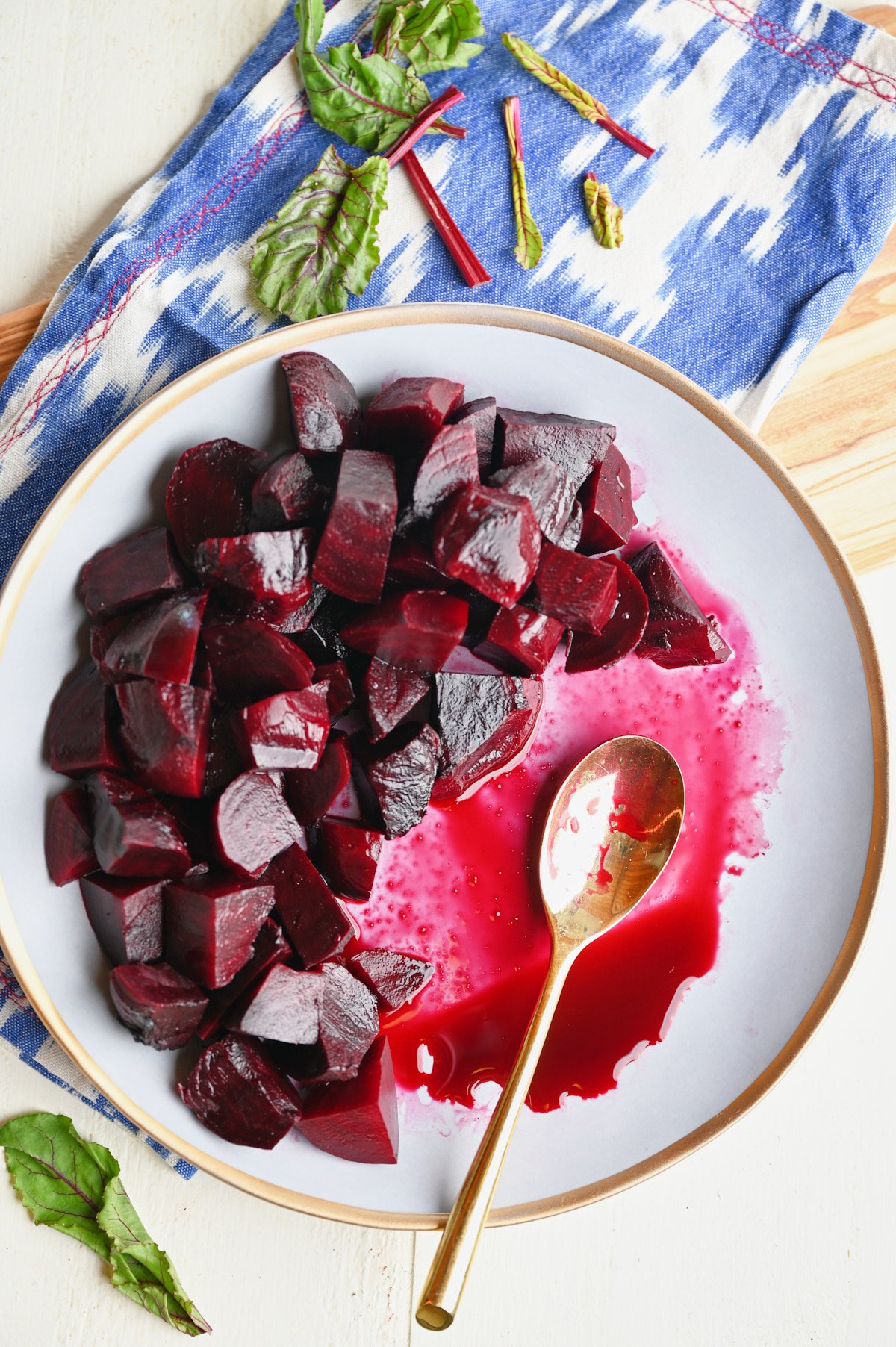
This chef-tested recipe for salt-roasted beets is a game-changer for getting the most delicious, most tender results every time. It’s a simple, hands-off technique that unlocks the beets’ deep, earthy, and sweet flavor better than any other method.
This recipe comes together with just three essential ingredients: whole fresh beets, kosher salt, and a splash of high-quality red wine vinegar.
I first learned the power of this roasting method while working “behind the line” at Lupa in NYC. Unlike boiling, which leaches flavor, or foil-roasting, which steams the beets, a salt bed cooks them evenly from the inside out. This unique process draws out moisture and concentrates their natural sugars, resulting in an incredibly sweet and rich flavor. To finish, a simple toss in red wine vinegar provides a bright, acidic note that makes their sweetness pop! This method is perfect for meal-prepping beets—elevate grain bowls all week or create a stunning farro salad.
The Salt-Roasting Method: A Chef’s Secret
Roasting beets on a bed of salt is a chef’s trick that transforms their flavor and texture. Unlike foil roasting, which traps steam and can water down flavor, the salt acts as a thermal conductor, holding and radiating heat evenly so the beets cook gently and uniformly. It also draws out just enough surface moisture through osmosis to concentrate flavor without drying the flesh. This creates the ideal environment for the beets’ natural sugars to caramelize, enhancing their earthy sweetness while keeping the interior tender and moist.
Keeping the skin on is essential—it acts as a natural barrier that locks in juices and protects the flesh during cooking. Once roasted, the skins slip off effortlessly, revealing deeply flavored, candy-sweet beets ready to slice, season, or store.
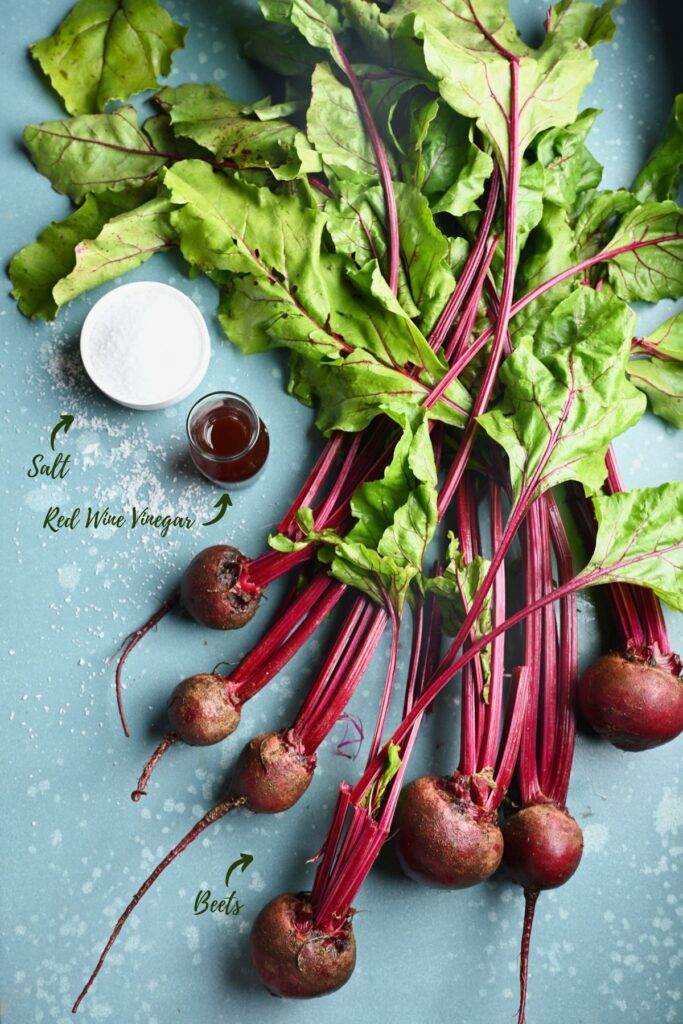
A Chef’s Notes on Key Ingredients
A pro tip from my time working behind the line at Lupa is that you can make the simplest recipes shine by perfecting the details. Here are some of my key takeaways:
Beets: While any color of beet works, the key is consistency and proper handling.
- Choose Uniform Size: Select beets that are roughly the same size to ensure they all cook through at the same rate.
- Prevent Color Bleeding: If you use a mix of red and golden beets, store them in separate containers after roasting and slicing. The red beets will bleed and stain the others if they’re mixed.
- Protect Your Board and Hands: Be aware that red beets will temporarily stain wooden cutting boards and your hands. For this reason, you might want to wear gloves while peeling and cutting. The best way to remove beet stains from your hands is to rub them with lemon juice or vinegar, then wash with warm soapy water. For cutting boards, sprinkle coarse salt or baking soda, scrub with half a lemon, and rinse—this lifts the pigment and deodorizes at the same time.
Kosher Salt: For this method, a coarse kosher salt is essential. The larger salt crystals create a bed that allows the beets to roast evenly without becoming salty. The salt works to draw out excess water, which intensely concentrates the beets’ natural sugars and earthy flavor.
Red Wine Vinegar: Don’t skip the final toss in vinegar. The acidity brightens the deep, earthy flavor of the roasted beets and makes their natural sweetness pop. As a test, try one beet piece without vinegar and one with—the difference is uncanny!
How to Roast Beets (Step-by-Step)
This is my chef-tested process for achieving sweet, tender roasted beets. Follow these steps, paying attention to sensory cues for the best results.
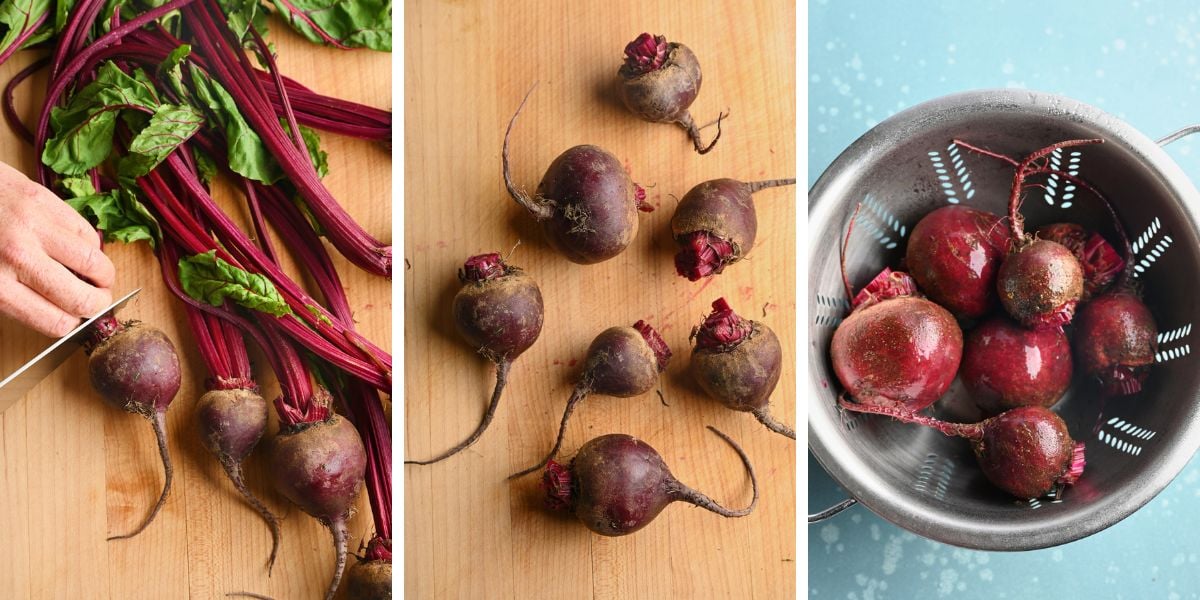
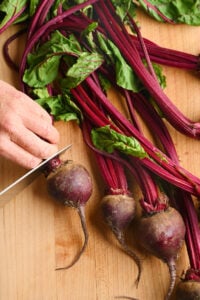
1. Prep the Beets and Salt Bed: Preheat your oven to 400°F. Trim the greens (save them for another use!) and rinse the beets—don’t dry them, as moisture helps the salt adhere. Line a baking sheet with kosher salt, place the damp beets on top, and sprinkle more salt over them.
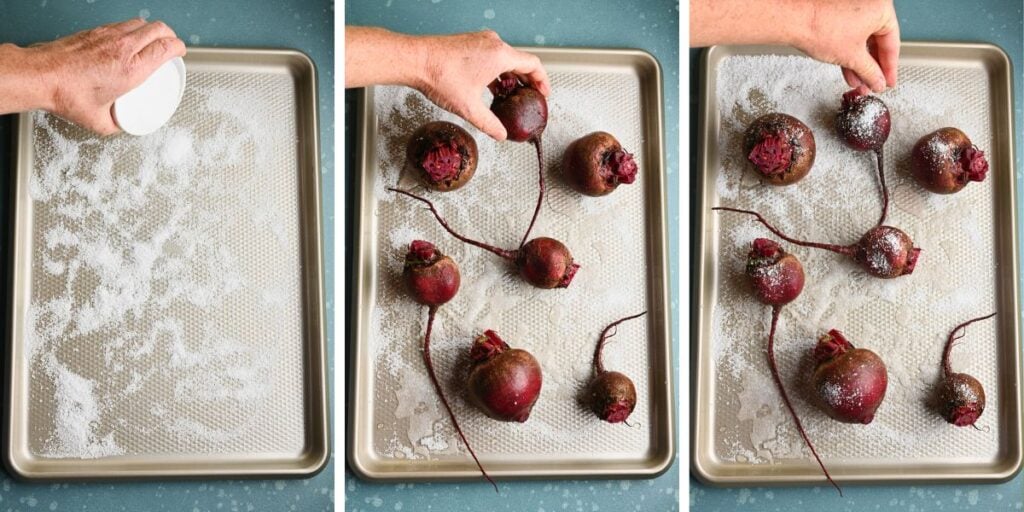
2. Roast Until Tender: Roast for 35–55 minutes, depending on beet size. To check doneness, a paring knife should slide into the center with almost no resistance, like piercing a cooked potato. If you feel resistance, continue roasting 10 minutes longer and test again.
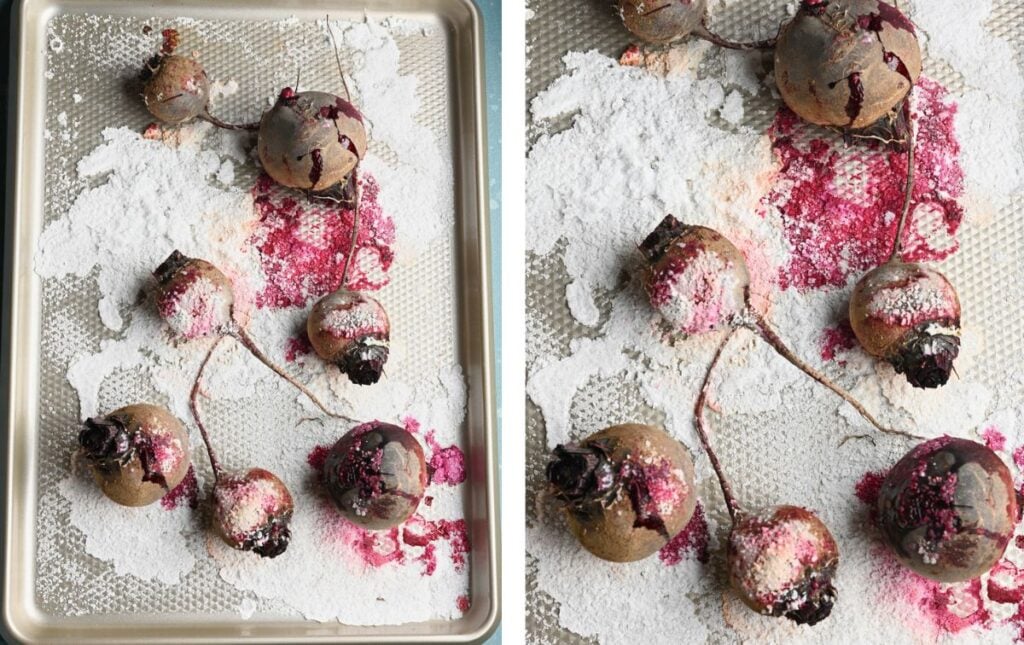
3. Peel While Warm: Let the beets cool just enough to handle, but peel while still warm—the heat helps the skin slip off effortlessly. Using a paring knife or paper towel, rub the skins away. Place peeled beets on a clean cutting board, not back in the salt.
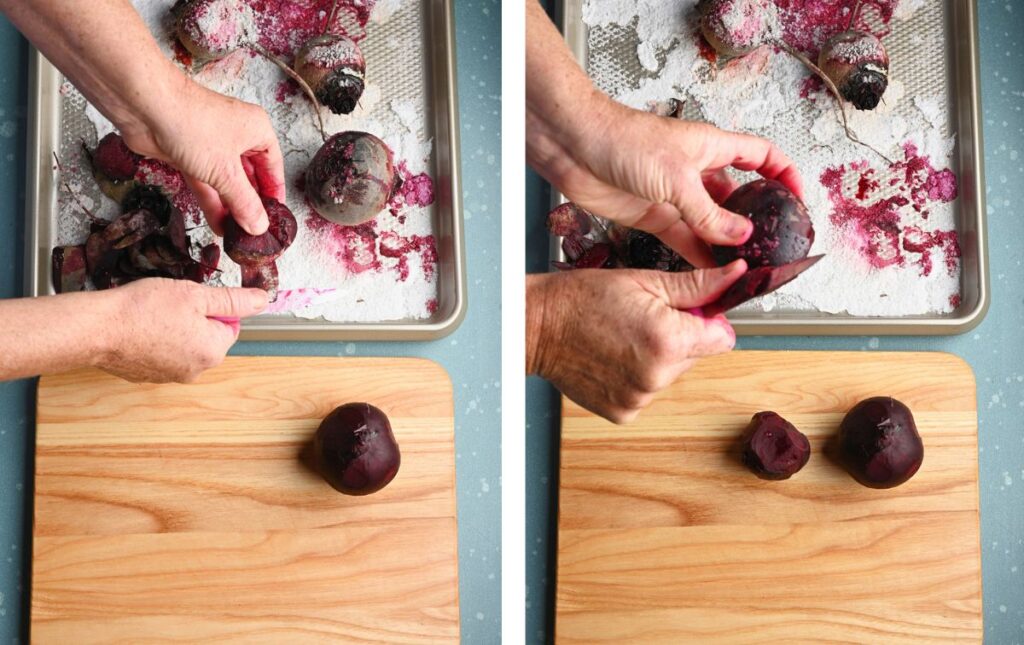
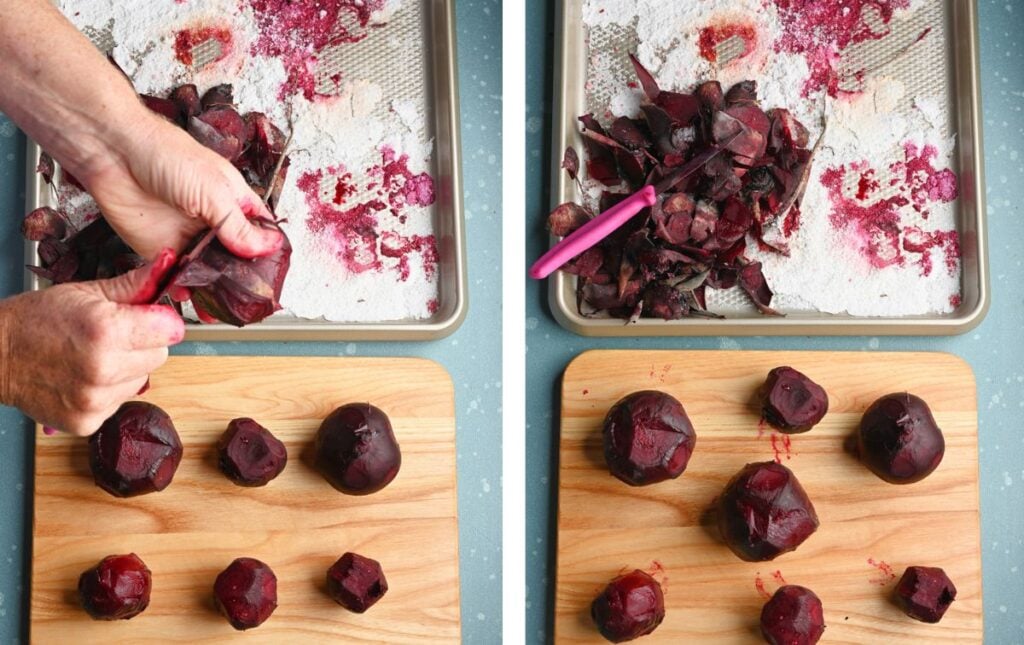
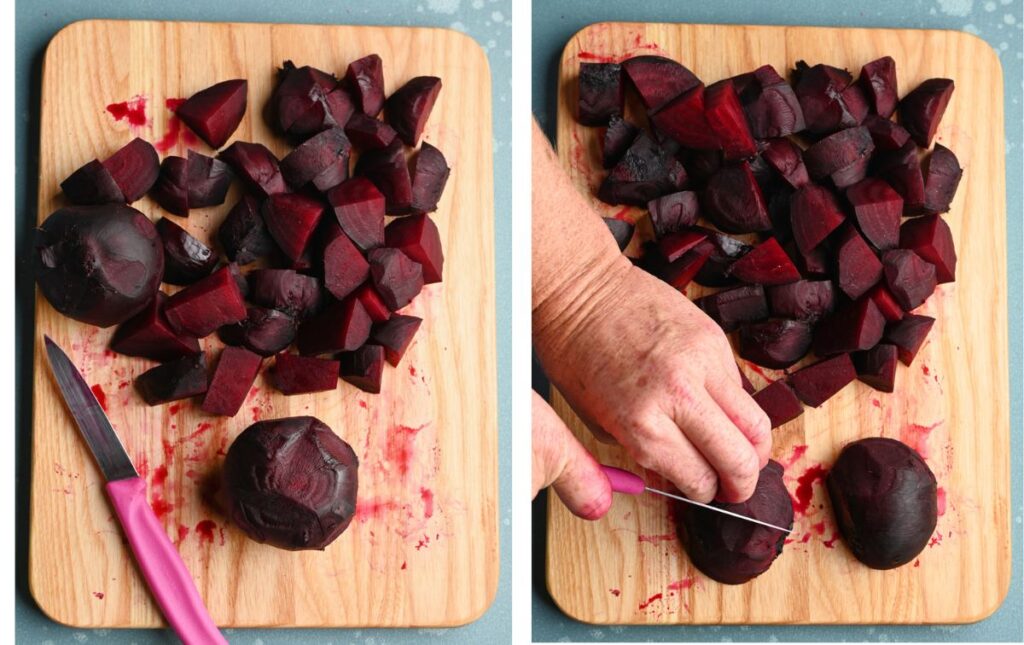
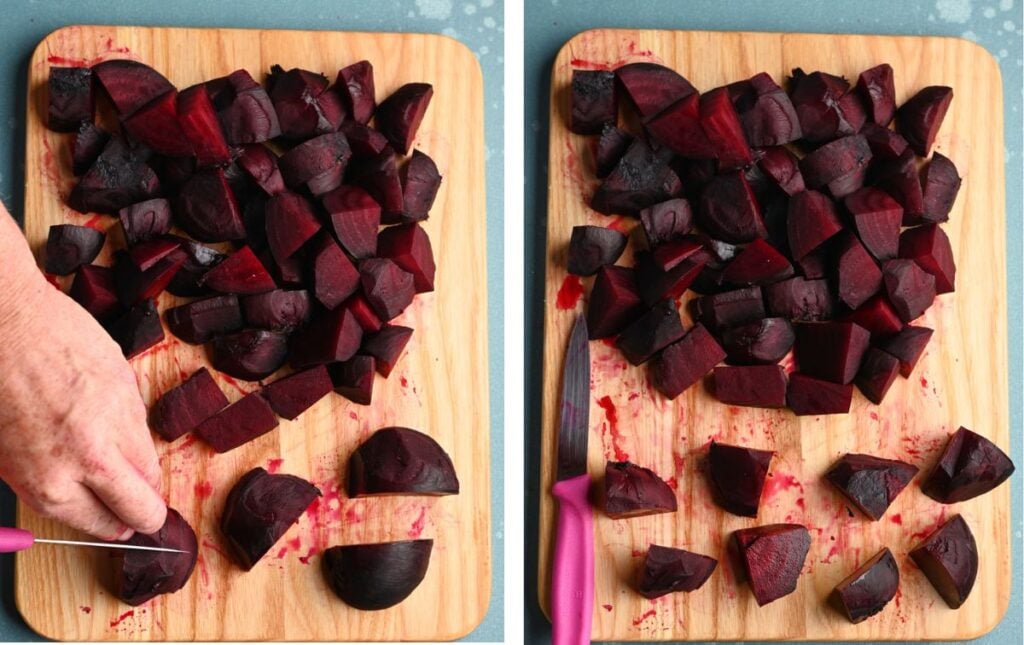
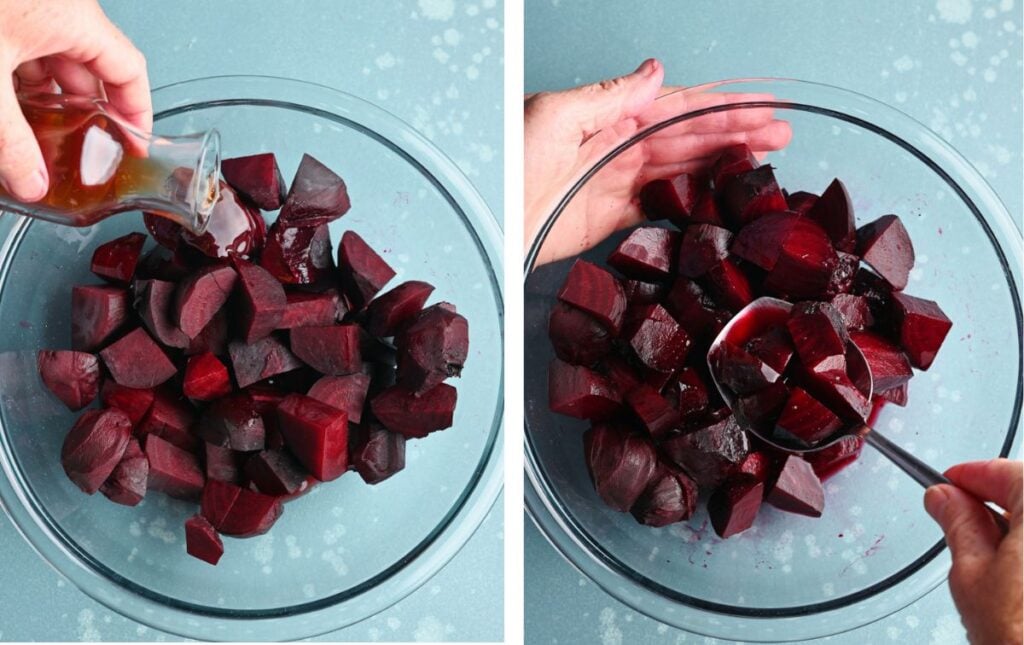
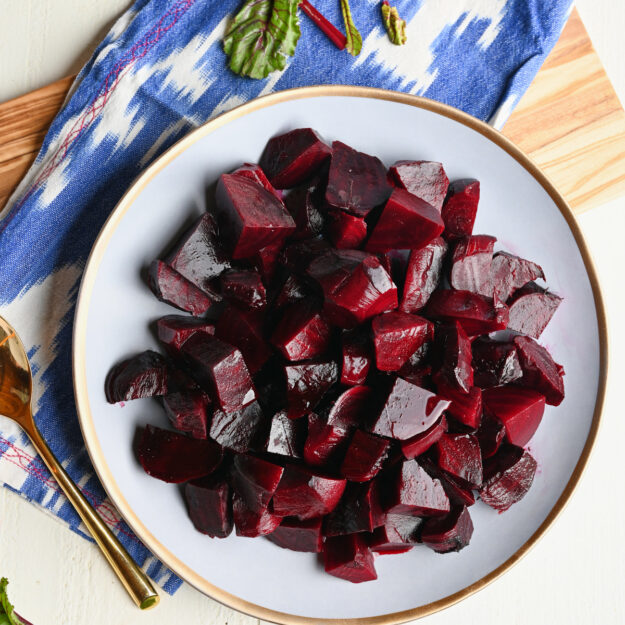
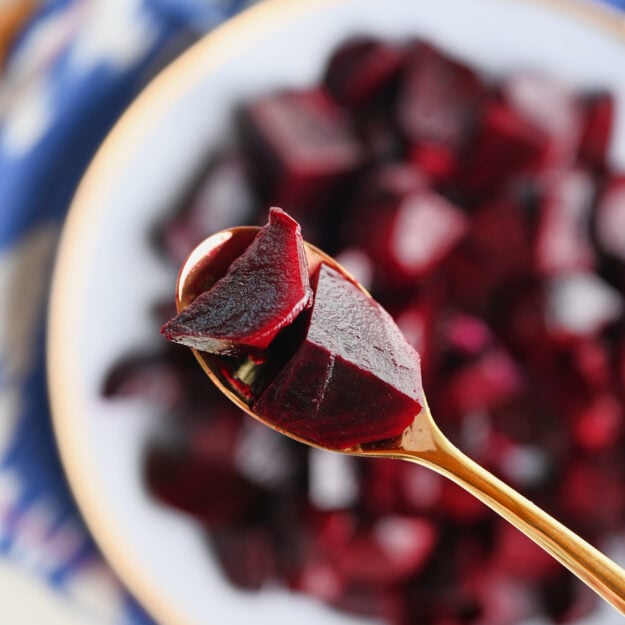
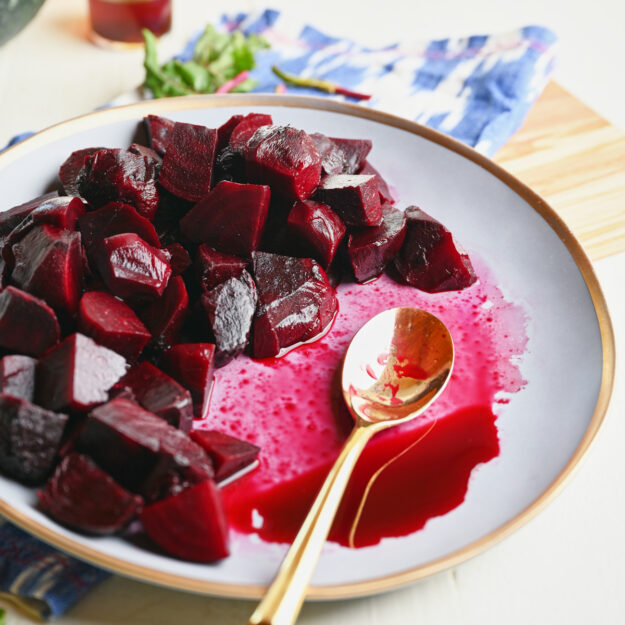
4. Cut and Season: Cut into quarters or eighths, then toss immediately with red wine vinegar. Seasoning while warm allows the beets to absorb the bright acidity more effectively—the key to making their natural sweetness pop.
Expert Tips for the Best Roasted Beets
Here are a few extra chef-tested tips to ensure your roasted beets are perfect every time.
- A Note on Freshness: If you’re using very fresh, farmers-market beets with the greens still attached, check them for doneness about 10-15 minutes earlier. They tend to have a higher water content and cook faster than beets that have been in storage.
- Experiment with Flavors: Red wine vinegar is a classic pairing, but feel free to experiment. A sharp apple cider vinegar or a sweeter balsamic vinegar both work beautifully. You can also add aromatics like a sprig of rosemary, thyme, or a few strips of orange peel to the beets as they marinate in the vinegar.
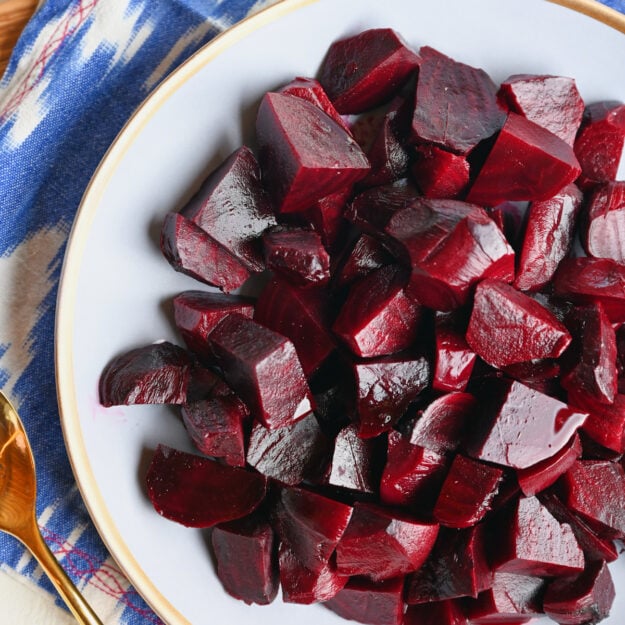
- For the Best Flavor, Let Them Marinate: As good as they are fresh from the oven, these beets are even better the next day. Storing them in the vinegar allows the flavors to meld and deepen. This makes them the perfect make-ahead component for weekly meal prep.
Frequently Asked Questions (FAQs)
From a chef’s perspective, a few key details make all the difference when roasting beets. I’ve gathered the most common questions to help demystify the process.
This recipe uses a salt-roasting method instead of foil. A bed of kosher salt radiates heat evenly and draws out moisture, which concentrates the beets’ natural sugars for a sweeter, deeper flavor than steaming them in foil pouches.
No, it’s not necessary and not recommended for this method. The skins protect the beets as they roast, locking in moisture and flavor. Once they are cooked and slightly cooled, the skins will slip off effortlessly.
Stored in an airtight container in the refrigerator, these roasted beets will last for up to a week. Their flavor deepens as they marinate in the vinegar, making them ideal for meal prep.
Absolutely! Beet greens are delicious and packed with nutrients. They can be washed and sautéed with garlic and olive oil for a simple, tasty side dish, similar to Swiss chard.
Beets are a nutrient-dense root vegetable, high in vitamins, minerals, and antioxidants while being low in calories. They are known to support digestive health, brain health, and athletic performance.
Perfectly Sweet Roasted Beets Recipe
Ingredients
- 8 medium red beets (about 2 lbs), greens removed
- 1 cup Kosher salt, divided
- 1/4 cup red wine vinegar
Instructions
- Preheat Oven and Trim Beets: Preheat the oven to 400°F and trim off beet green (save for another use).

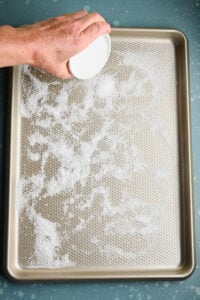
- Prepare Salt Bed: Line a baking sheet with ¾ cup of the kosher salt in an even layer.
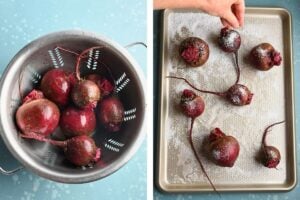
- Prep Beets: Rinse the beets under running water (do not dry them) and place them in a single layer on the salt bed. Sprinkle the remaining ¼ cup of salt on top of the wet beets.

- Roast: Place the baking sheet in the oven and roast for 35-55 minutes. Beets are done when a paring knife slides into the center with almost no resistance, like piercing a cooked potato.

- Cool Slightly: Remove the beets from the oven and let them cool for 10-15 minutes, or until you can handle them safely.
- Peel: While still warm, use a paring knife or a paper towel to gently peel or rub off the skins. Place the peeled beets on a clean cutting board and discard the salt bed when finished.
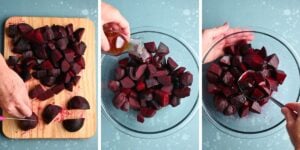
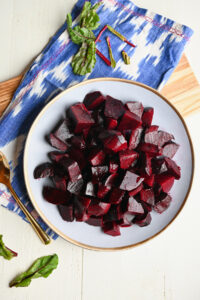
- Cut & Season: Cut the peeled beets into quarters or eighths. Place them in a large bowl and toss with the red wine vinegar until evenly coated.

- Serve or Store: Serve immediately or transfer to an airtight container and refrigerate.


Notes
- Beet Selection: For the most even cooking, it is critical to select beets that are all roughly the same, uniform size.
- Cooking Time: Roasting time will vary based on the exact size and freshness of your beets. Very fresh beets may cook 10-15 minutes faster. If a beet is still firm in the center, return it to the oven for another 10 minutes.
- Using Mixed-Color Beets: If you use a mix of red and golden beets, store them in separate containers after tossing with vinegar to prevent the red beet color from bleeding.
- Staining: Red beets will temporarily stain hands and cutting boards. Wear gloves while peeling if desired.
- Storage & Flavor: These beets can be stored in an airtight container in the refrigerator for up to one week. The flavor actually improves as they marinate in the vinegar for a day or two.
Nutrition
How to Serve Roasted Beets
In all my years as a culinary producer, I’ve learned that a simple, well-made component like roasted beets can elevate any plate. Here are a few creative ideas for serving them.
- Create a Vibrant Mezze Platter: Pair the sweet, earthy beets with a creamy dip for a stunning appetizer. They are fantastic served alongside my recipe for homemade hummus, this spicy feta dip tirokafteri, or a cool and refreshing tzatziki sauce.
- Build a Hearty Grain Bowl: For a healthy and satisfying lunch, mix the roasted beets into a bowl of nutty bulgur wheat. Drizzle everything with a rich and flavorful tahini dressing to bring it all together.
- Pair with a Simple Protein: The sweetness of the beets is a perfect match for rich proteins. Serve them as a side dish with perfectly cooked pan seared salmon or create a luxurious meal with this recipe for medium-rare duck breast.
- As a Simple Vinaigrette-Dressed Side: The easiest way to enjoy roasted beets is to serve them on their own. Simply toss them fresh herbs like dill, mint, parsley, or basil, and some crumbled goat cheese or feta cheese for a classic and delicious side dish.
Storage Instructions
As a chef, I love this recipe, as their flavor improves as they marinate in vinegar, making them the perfect meal recipe to hav ein yulr fridge throughout the week.
- Refrigerator (Best Method): For the best flavor and texture, store the roasted beets in an airtight container in the refrigerator for up to 7 days. Ensure they are coated in the vinegar, and you can add a drizzle of olive oil to help keep them moist.
- A Note on Freezing: From a chef’s perspective, I do not recommend freezing these beets. While some sources suggest freezing them, I disagree because freezing roasted beets damages their cell structure: the water inside the cells expands into ice crystals, rupturing the walls. When thawed, the beets release excess moisture, leaving them soft, watery, and with a diluted flavor instead of their naturally firm, sweet texture.
More Favorite Vegetable Sides
In all my years as a professional chef, I’ve found that having a few go-to vegetable recipes can transform any meal. Here are some of my favorites.
- Slow-cook cherry tomatoes in olive oil for a jammy Tomato Confit, perfect with grilled fish.
- Serve savory Miso Eggplant with rice for a flavorful Japanese-inspired side or main dish.
- Discover how to make sweet, tender Roasted Peppers for sandwiches, salads, or antipasto.
- My Roasted Vegetables guide shows how to achieve delicious caramelization with any seasonal veggies.
- Try this Baby Bok Choy for tender-crisp greens ready in under 10 minutes.
- This simple Sautéed Kale is perfect with eggs, alongside a main protein, or as a flavorful base for a grain bowl.