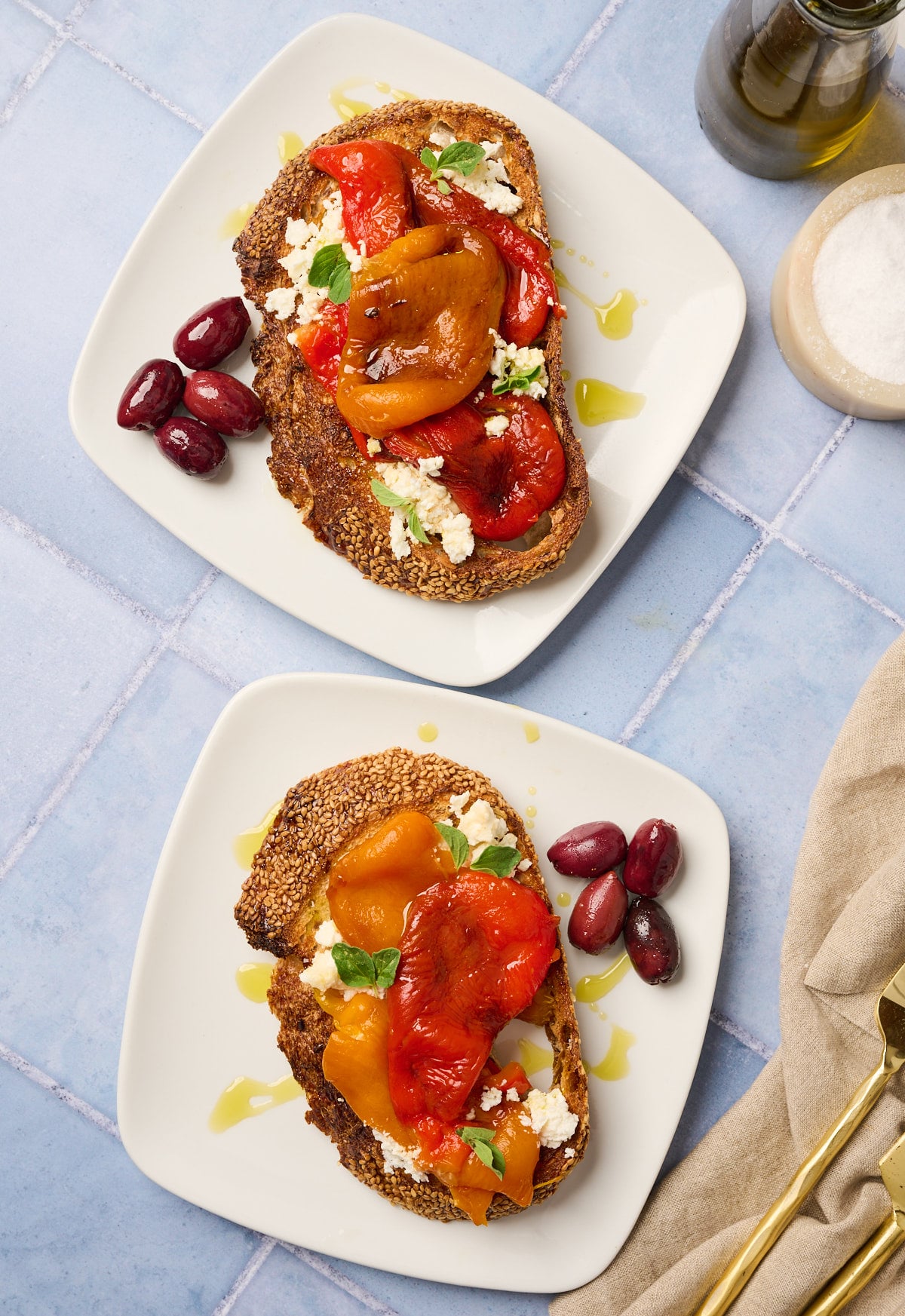
Naturally sweet, silky, and full of flavor, these roasted peppers are made with fresh bell peppers, olive oil, and salt. Roast them in the oven for a softer, sweeter result, or over a flame for a smoky, charred flavor.
As a professionally trained chef, I’ve roasted peppers in restaurant kitchens and on culinary TV shows, and this is the method I come back to most. The key is to roast the peppers until the skins are fully blistered and separating from the flesh—browned and papery in the oven, or blackened and charred over a flame—then steam them while they’re hot so the skins slip right off.
The best part is the liquid that collects as the peppers steam. I call it pepper lacquer. My executive chef at Lupa called it “liquid gold,” and it becomes the base for marinating and storing them.
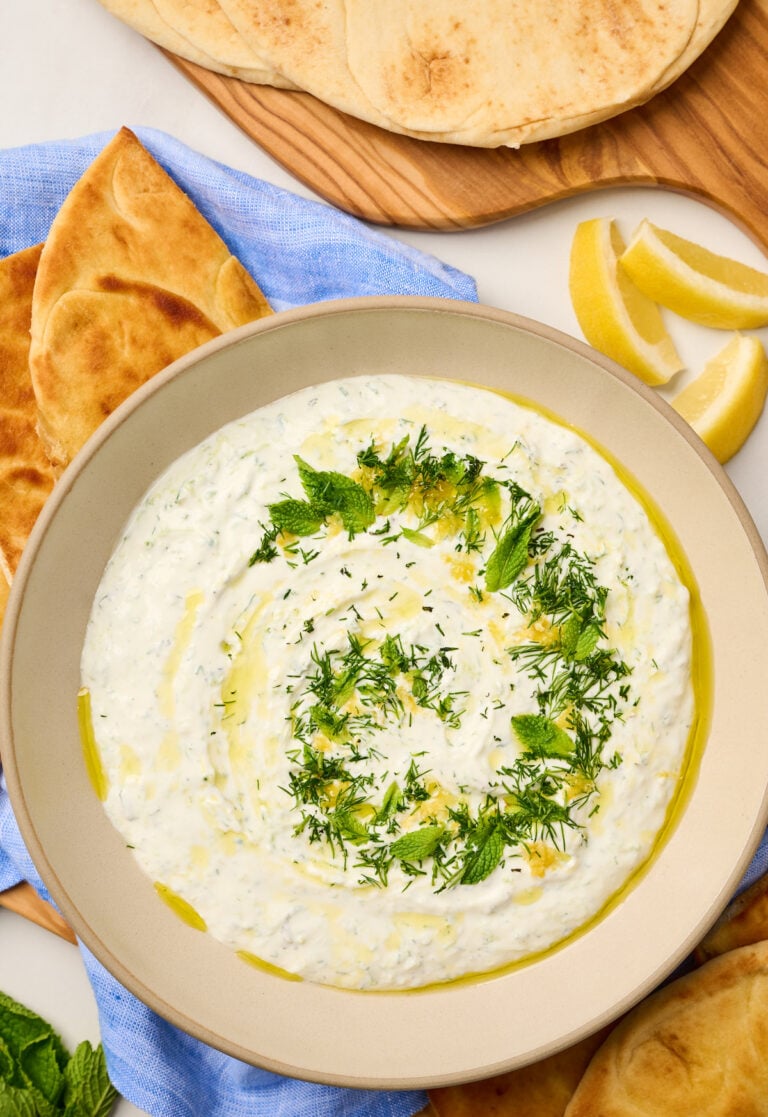
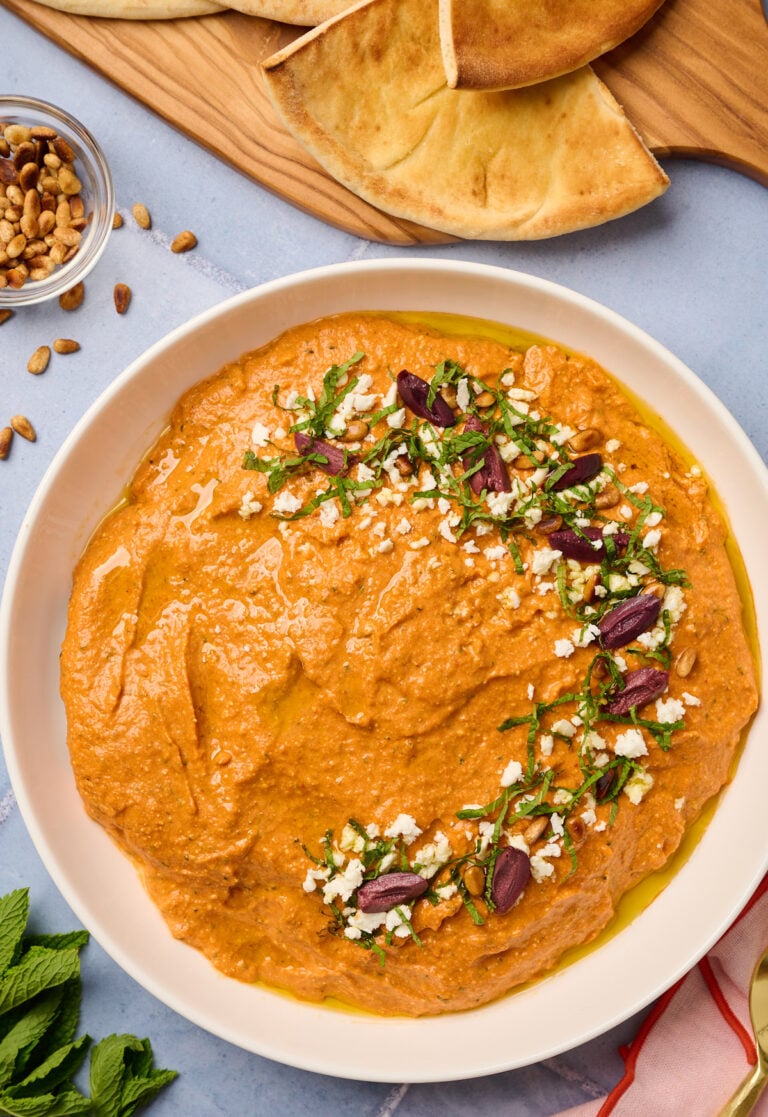
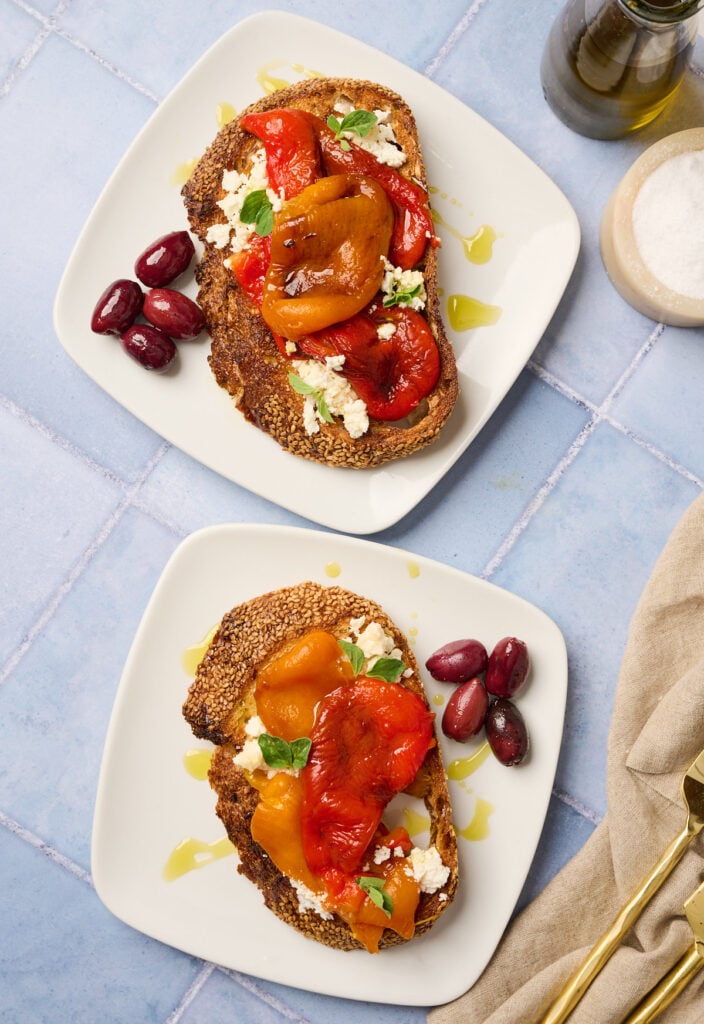
Use these roasted sweet bell peppers in salads, sandwiches, grain bowls, dips, eggs, mezze platters, or anywhere you want a soft, savory-sweet pepper with deep roasted flavor. I like to keep a container in the fridge for quick meals: blend them into tirokafteri or homemade hummus, layer them into sandwiches, or fold them into bulgur wheat bowls.
How to Roast Sweet Peppers
Sweet peppers roast best when they are cooked whole until the skins blister and separate from the flesh. Red, orange, and yellow bell peppers are the sweetest and give you the softest, most flavorful roasted peppers. Mini sweet peppers and Italian frying peppers also work, but they roast faster because they are smaller and thinner.
Sliced sweet peppers can be roasted on a sheet pan for a quicker side dish, but whole roasted peppers give you the softer, restaurant-style texture this recipe is built around.
Best Peppers and Ingredients for Roasted Peppers
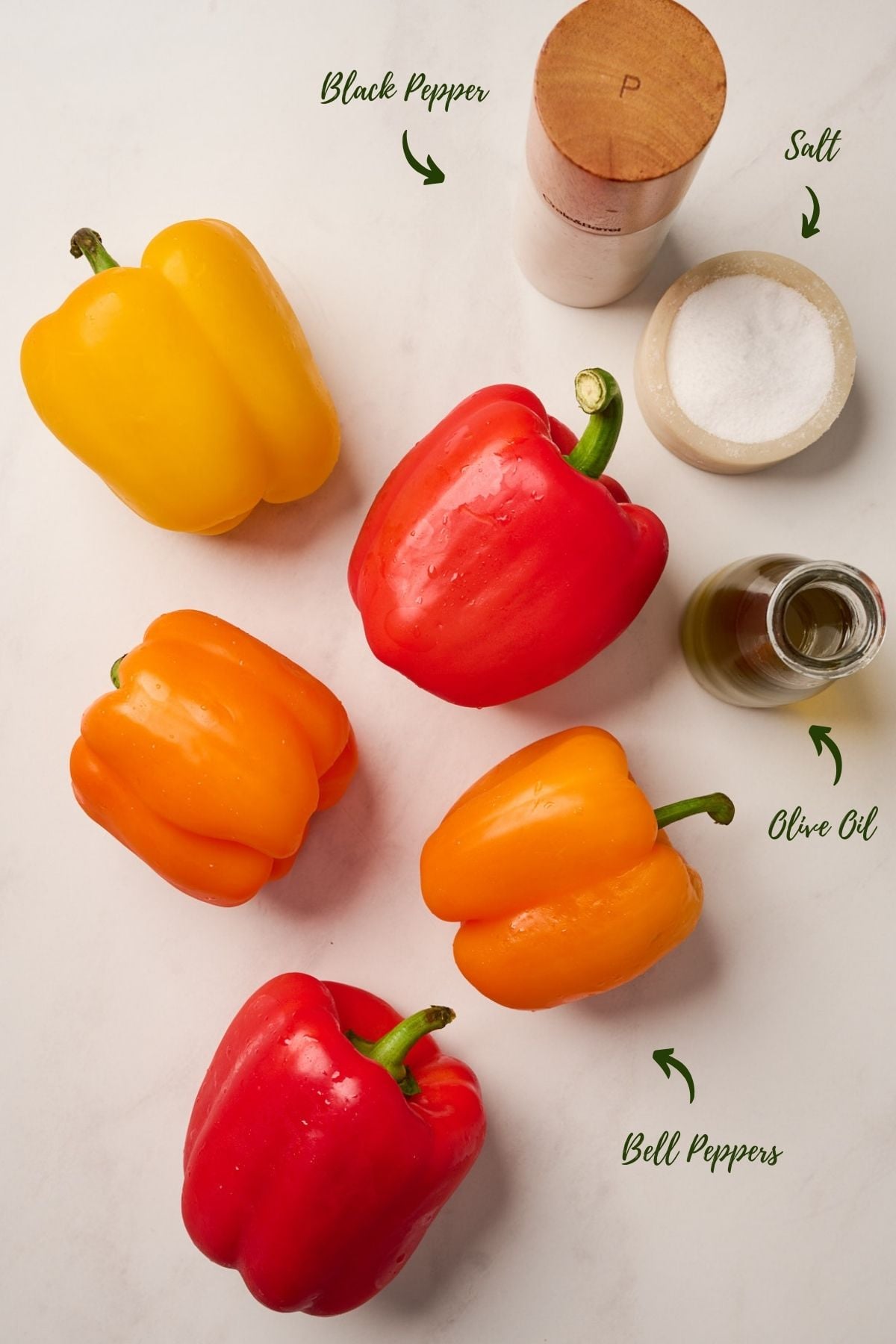
This recipe starts with three essential ingredients: fresh peppers, olive oil, and kosher salt. From there, you can add herbs, aromatics, or spices depending on how you want to serve them.
Bell Peppers
For the sweetest, most flavorful roasted peppers, use red, orange, or yellow bell peppers. Their natural sugars deepen as they roast, giving you tender peppers with a savory-sweet flavor. Green bell peppers can also be roasted, but they are less ripe and have a sharper, slightly bitter taste.
What Types of Peppers Can Be Roasted?
This method works with more than standard bell peppers. For sweet roasted peppers, try pimento peppers, mini sweet peppers, or Italian frying peppers. For a smokier or spicier result, use poblanos, pasilla peppers, Hatch chiles, jalapeños, serranos, or Anaheim peppers. Choose the pepper based on the sweetness, smokiness, or heat level you want.
Olive Oil
Extra virgin olive oil is added after roasting, when it combines with the pepper lacquer to create a silky, flavorful marinade. It helps coat, season, and store the peeled peppers.
For a more neutral flavor, use avocado oil or grapeseed oil. For a richer, more aromatic finish, try hazelnut oil or walnut oil.
Kosher Salt
Lightly season the peeled peppers once they are stored in the pepper lacquer and oil. Kosher salt sharpens their natural sweetness and makes the marinade taste brighter.
What Is Pepper Lacquer?
Pepper lacquer is the naturally sweet, concentrated liquid released as roasted peppers steam. As the skins loosen, the juices collect at the bottom of the bowl. My executive chef at Lupa called it “liquid gold” and insisted we save every drop because it carries the peppers’ deepest roasted flavor and natural sweetness.
How to Use Pepper Lacquer
Pour the pepper lacquer into your storage jar with the peeled peppers, olive oil, and salt. It becomes the base of the marinade and intensifies the peppers’ flavor as they rest. You can also drizzle a spoonful into dips, dressings, soups, sauces, or grain bowls for extra roasted flavor.
How to Roast Peppers
I use two professional techniques for roasting peppers: oven-roasting for the softest, silkiest texture, and open-flame charring for a bold, smoky flavor. Both methods blister the skins so they peel easily and develop a naturally sweet, concentrated taste.
Oven Method for Silky Roasted Peppers
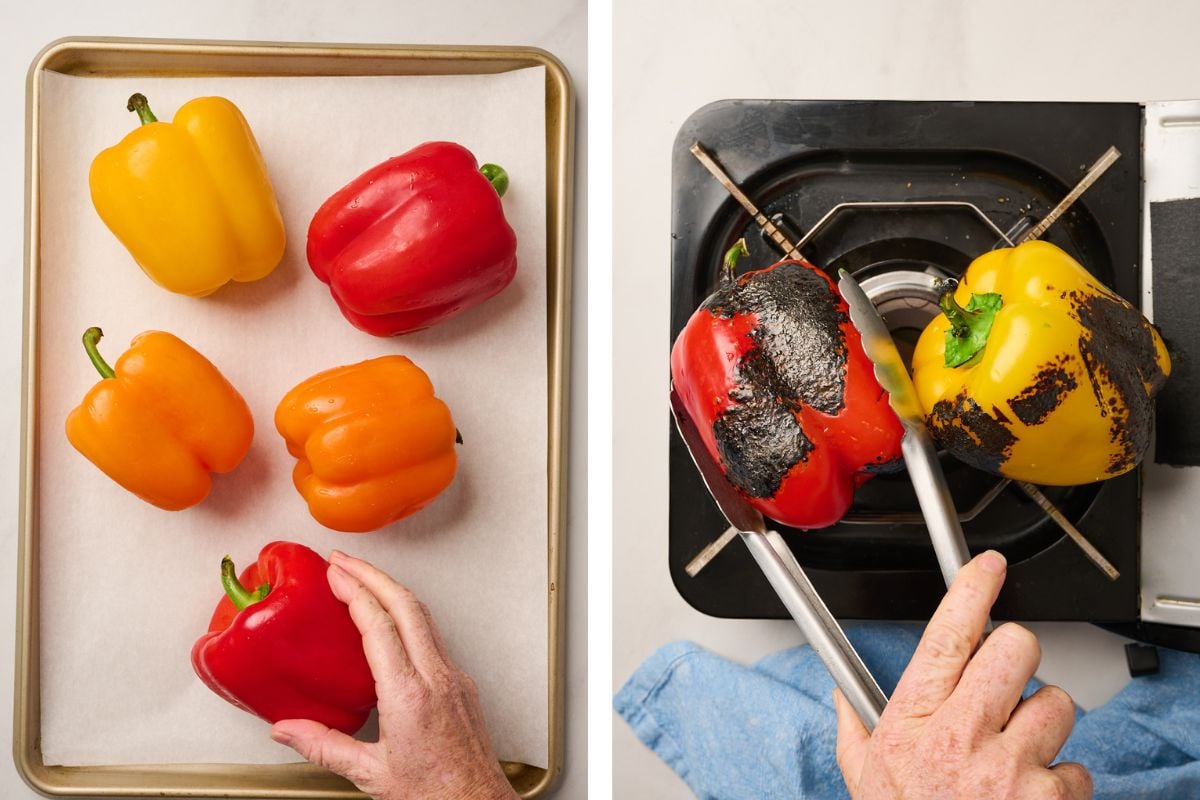
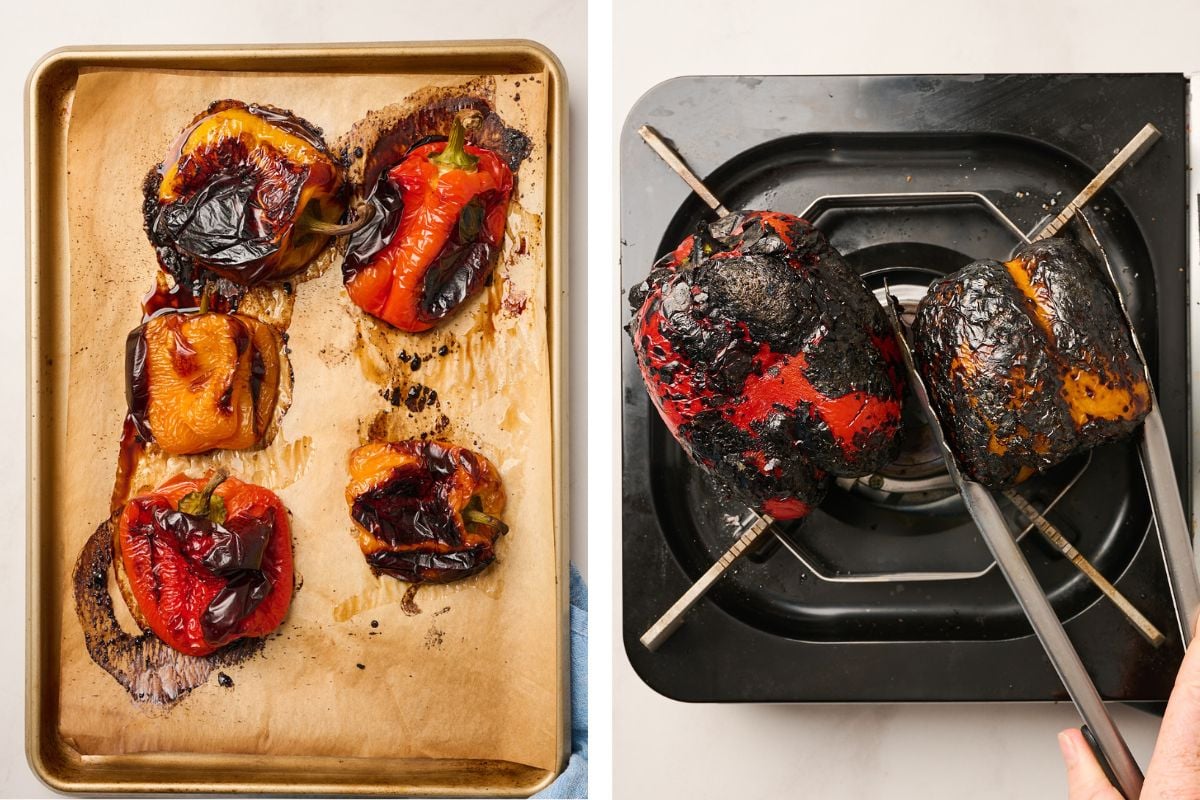
Preheat the oven to 425°F and place the whole peppers on a parchment-lined baking sheet. Roast for 30–35 minutes, turning every 10–15 minutes, until the skins are deeply blistered, browned, and pulling away from the flesh. The high heat blisters the skin while the steam inside softens the peppers for a tender, silky result.
Flame Method for Smoky Roasted Peppers
Char the peppers directly over a gas burner or hot grill, turning with tongs until all sides are blackened and blistered, about 12–15 minutes. This creates a deeper, smokier flavor in less time. Use your exhaust fan, as this method can get smoky.
Broiler or Grill Alternative
You can also roast peppers under the broiler or on a hot grill. Both methods create a flame-style char, but monitor closely because direct heat can blister the peppers quickly.
Steam the Peppers for Easy Peeling
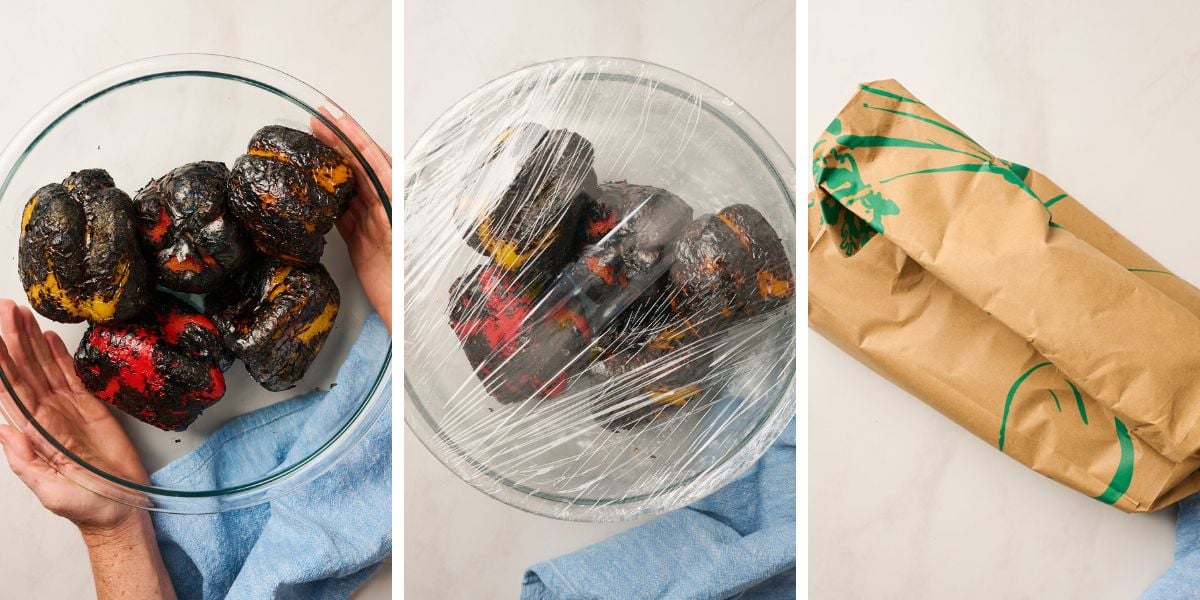
Immediately transfer the hot peppers to a covered bowl or sealed paper bag and let them steam for at least 20 minutes. This loosens the skins and creates the flavorful pepper lacquer in the bottom of the bowl.
Troubleshooting: If the skins do not peel easily, cover the peppers and steam them for a few minutes longer.
Peel, Seed, and Store the Roasted Peppers
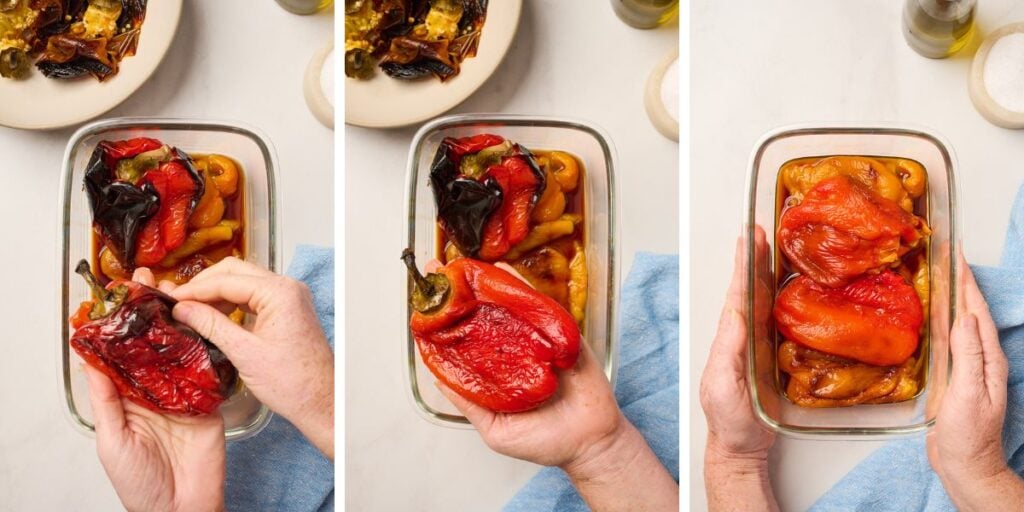
Once the peppers are cool enough to handle, peel off the skins by hand. Never rinse them; water washes away flavor and pepper lacquer. Remove the stems, cores, and seeds.
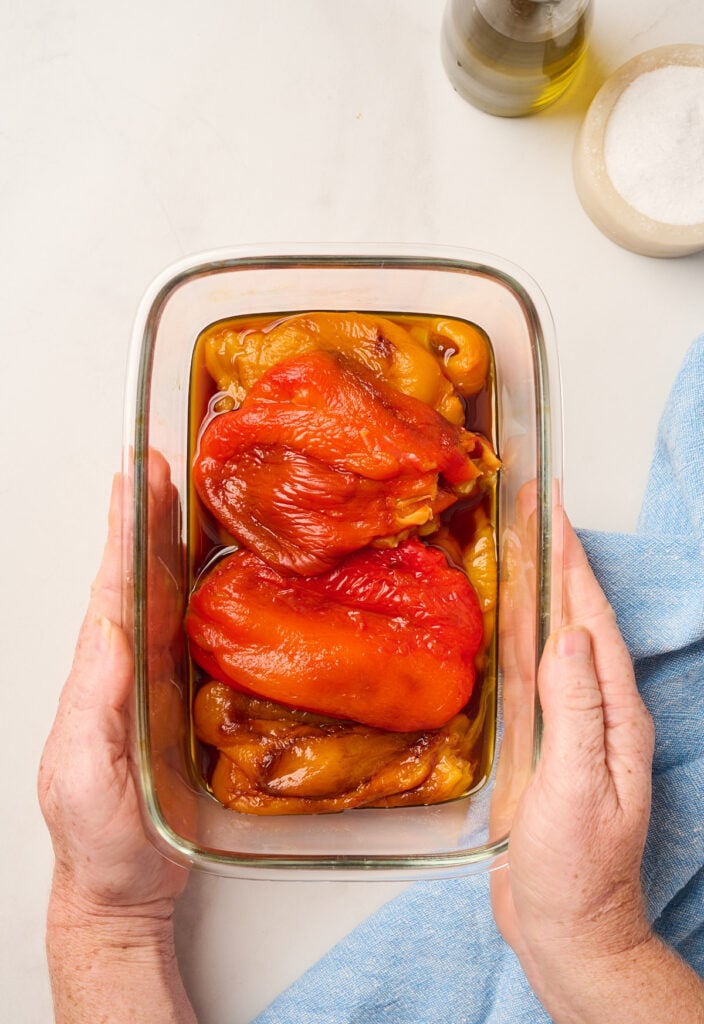
Place the cleaned peppers in a jar with the pepper lacquer and a generous drizzle of olive oil. Season lightly with kosher salt and store in the refrigerator.
Tips for the Best Roasted Peppers
After roasting countless peppers in restaurant kitchens and on culinary TV sets, I’ve learned that a few small details make the biggest difference.
Roast the Peppers Whole
Whole peppers hold onto moisture better than sliced peppers, which helps the flesh turn soft and silky instead of dry or stringy.
Steam Them While They’re Hot
Move the peppers to a covered bowl or paper bag as soon as they come off the heat. Waiting too long makes the skins harder to loosen.
Never Rinse After Peeling
My executive chef at Lupa drilled this into my brain: never rinse a roasted pepper. Rinsing washes away the smoky flavor, roasted sweetness, and pepper lacquer.
Store Them in Pepper Lacquer
Store the peeled peppers in their own pepper lacquer with olive oil and a little kosher salt so they stay glossy and flavorful.
Flavor Variations for Roasted Peppers
Once the roasted peppers are peeled and stored in their pepper lacquer, olive oil, and salt, you can season them in different ways depending on how you want to serve them.
Food safety note: Fresh garlic stored in oil can create a botulism risk over time. The CDC recommends refrigerating homemade garlic-in-oil mixtures and discarding them after 4 days. For this reason, if you plan to store the roasted peppers longer than 4 days, omit the garlic or use dried garlic or garlic powder instead.
Mediterranean: Add red wine vinegar or balsamic vinegar, oregano, parsley, lemon zest, capers, olives, and red pepper flakes for a bright, briny, herb-forward flavor.
Smoky: Add smoked paprika, cumin, coriander, chipotle powder, cayenne, or a splash of hot sauce for a deeper, bolder finish.
Mexican-inspired: Add lime zest or juice, chipotle in adobo, jalapeño, cilantro, or Tajín for fresh, vibrant heat.
Italian-style: Add Calabrian chili, red wine vinegar, and fresh basil for a simple Italian-style marinade. Add the basil just before serving for the freshest flavor.
Simple herb: Add thyme, rosemary, or marjoram with a small splash of vinegar for a clean, aromatic finish.
How to Store Roasted Peppers
Proper storage helps preserve the peppers’ silky texture and sweet, roasted flavor.
Refrigerator: Store roasted peppers in an airtight container with their pepper lacquer, olive oil, and kosher salt. Without fresh garlic, they will keep in the refrigerator for up to 2 weeks.
Fresh garlic reminder: If you added fresh garlic, follow the 4-day storage limit noted above.
Freezer: Peel the peppers before freezing because the skins become tough after thawing. Freeze without oil in a freezer-safe bag or container for up to 2 months. Frozen roasted peppers are best for soups, dips, sauces, and blended recipes.
How to Use Roasted Peppers
Roasted peppers are a kitchen workhorse. Their sweet, silky texture works in dips, breakfasts, bowls, sandwiches, vegetable sides, and simple appetizers.
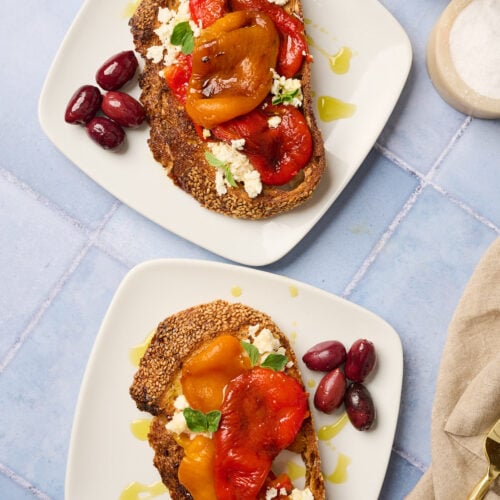
Dips and spreads: Blend them into spicy feta tirokafteri or creamy homemade hummus, or serve them on an appetizer board with cheese, olives, and crusty bread.
Breakfast: Fold them into omelets or frittatas, or layer them on toast with ricotta, garlic kale, and a soft-boiled egg.
Bowls and mains: Stir chopped roasted peppers into farro bowls, healthy bulgur wheat, pasta, homemade pizza, or roasted red pepper soup.
Vegetable sides: Add them near the end of cooking to roasted vegetables like zucchini, onions, or cauliflower. Their sweetness adds flavor, moisture, and balance.
Roasted Peppers FAQ
As a culinary instructor, these are the questions I’m asked most often when teaching roasted peppers.
Do you have to peel roasted peppers?
Yes, for this recipe, peeling is what gives roasted peppers their silky texture. The skin becomes papery, charred, and sometimes bitter after roasting, so removing it gives you the best flavor and texture.
What is the best way to roast peppers without a gas stove?
Use the oven method. Roasting whole peppers at 425°F blisters the skins evenly and gives you soft, silky flesh without needing an open flame.
Why are my roasted peppers hard to peel?
They likely need more roasting time or more steaming time. The skins should be deeply blistered and separating from the flesh before steaming. If they still resist, cover the peppers again and let them steam for another 5–10 minutes.
Why do my roasted peppers taste bland?
Make sure you save the pepper lacquer and season the peppers with kosher salt. The lacquer holds the concentrated roasted pepper flavor and becomes the base of the marinade.
Can you freeze roasted peppers?
Yes. Peel the peppers first, then freeze them without oil in a freezer-safe bag or container for up to 2 months. Their texture softens after thawing, so they are best for soups, dips, sauces, and blended recipes.
Can roasted peppers be canned?
Only use a USDA-tested pressure-canning recipe. Peppers are a low-acid food, so this recipe is intended for refrigerator storage or freezing, not casual home canning.
Why does olive oil solidify in the refrigerator?
Olive oil naturally turns cloudy or firm when chilled. Let the jar sit at room temperature for 10–15 minutes and the oil will loosen again.
Easy Roasted Peppers Recipe
Ingredients
- 5 red, orange, or yellow bell peppers, left whole
- 1/4 cup extra virgin olive oil
- Kosher salt, to taste
- Freshly ground black pepper, optional
Instructions
- Wash and dry the peppers, then leave them whole. Do not oil them before roasting; dry skins blister better.
- For the oven method: Preheat the oven to 425°F. Place the whole peppers on a parchment-lined baking sheet. Roast for 30–35 minutes, turning every 10–15 minutes, until the skins are deeply blistered, browned, and separating from the flesh.
- For the open-flame method: Char the peppers directly over a gas burner or hot grill, turning with tongs, until all sides are blackened and blistered, about 12–15 minutes.
- Transfer the hot peppers to a large bowl and cover tightly, or seal them in a paper bag. Let them steam for 20 minutes to loosen the skins.
- Once cool enough to handle, peel the skins by hand. Do not rinse. Remove the stems, cores, and seeds. Save the flavorful liquid in the bowl, also known as the pepper lacquer.
- Place the peeled peppers and pepper lacquer in a jar or airtight container. Add olive oil and season with kosher salt and black pepper, if using. Refrigerate for up to 2 weeks.
Notes
Nutrition
More Favorite Vegetable Sides
For more chef-tested vegetable sides, these recipes pair well with simple proteins, grain bowls, eggs, or mezze-style meals.
For another rich, make-ahead vegetable side, try my Tomato Confit, which is perfect on toast, grilled fish, or grain bowls.
If you want another naturally sweet vegetable, these Roasted Beets are delicious in salads or served simply on their own.
For a deeper savory flavor, my Miso Eggplant makes a bold, umami-rich side that pairs well with warm rice.
When you need something quick and green, this Baby Bok Choy cooks in under ten minutes and stays tender-crisp.
For an easy everyday green, my Sautéed Kale works well with eggs, bowls, or simple mains.