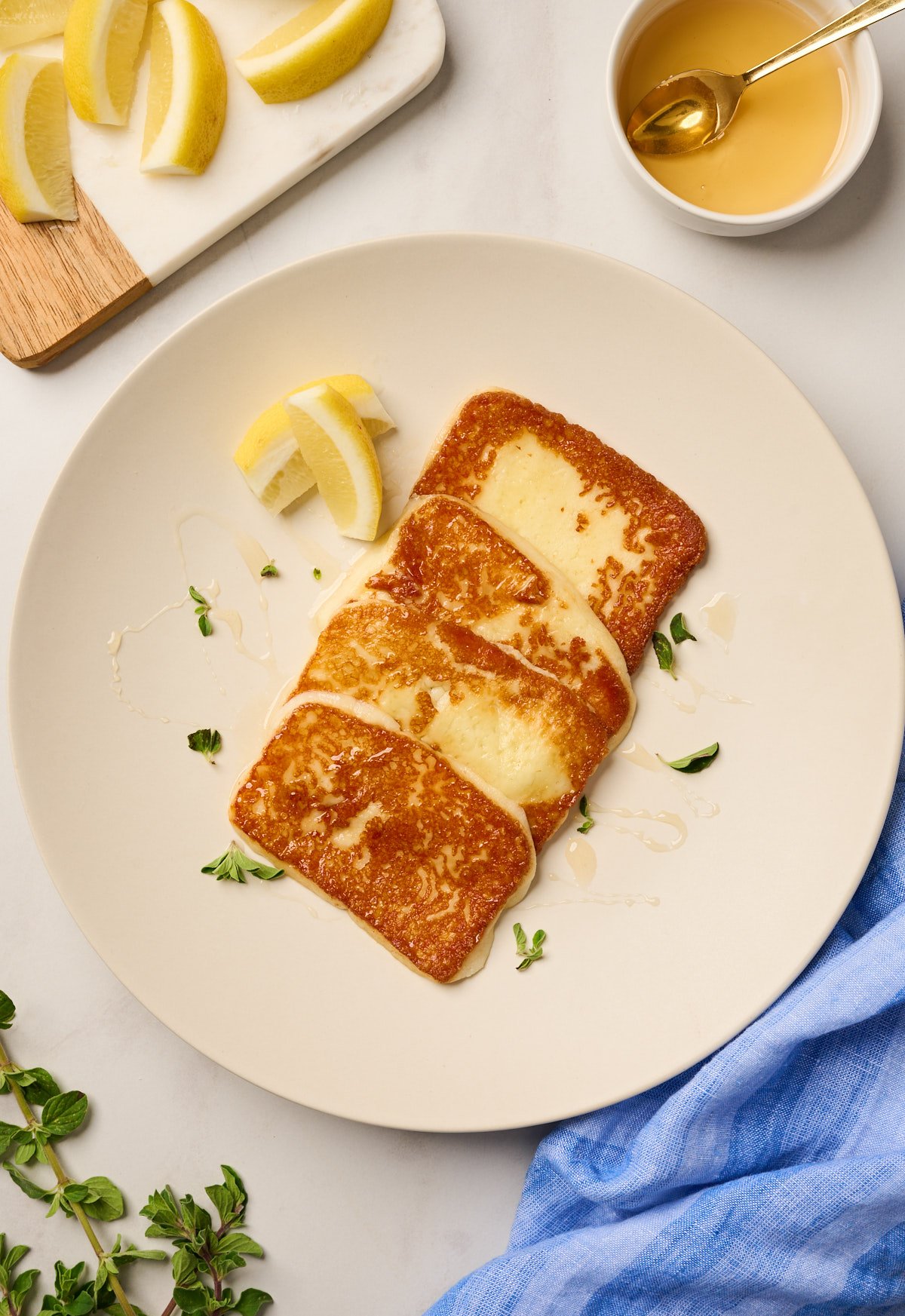
Golden, crispy on the outside, gooey and melty on the inside—this authentic Saganaki recipe brings the magic of a Greek taverna to your home kitchen in just minutes. It’s a spectacular dish made simply by pan-searing a slice of cheese until it forms its own incredible, golden crust—no flour needed.
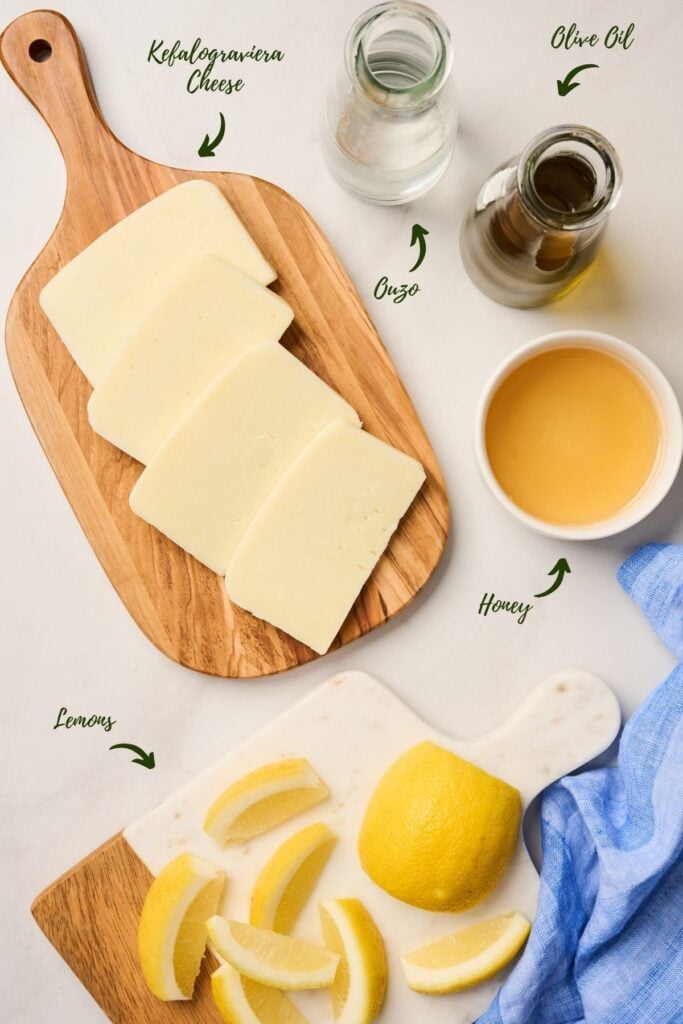
This recipe comes together with just a few high-quality ingredients: Kefalograviera cheese (or other traditional Greek cheeses), extra-virgin olive oil, fresh lemon wedges, and, optionally, a splash of ouzo or brandy for flambéing and a drizzle of honey.
I first fell in love with saganaki while traveling through the Greek islands—it’s one of my favorite mezze dishes. The word itself comes from sagani, the small, two-handled frying pan it’s traditionally cooked in. While that pan is also used for dishes like shrimp or mussels saganaki, this iconic pan-seared cheese is the most beloved version.
In my professional kitchen, I rely on method, not gimmicks, to produce the best texture and flavor from simple ingredients. As a professional chef, what sets this recipe apart is its simplicity and integrity: no shortcuts—just high-heat technique and the right cheese. I’ll walk you through how to get that golden crust without burning and explain why This Saganaki recipe — inspired by the Greek word sagani, meaning “frying pan” — is a quick, irresistible appetizer made by pan-searing cheese until golden and crisp. Traditionally served tableside in a sizzling skillet (sometimes flambéed), it’s a beloved Greek mezze. My version is lighter: no flour needed, just authentic Kefalograviera cheese seared in a touch of olive oil until crispy on the outside and soft inside. It’s salty, spongy, and absolutely heavenly — ready in minutes!
The Secret to Perfect Saganaki: Choosing the Best Cheese
The secret to great saganaki lies in the cheese. You need a firm, salty block that crisps up beautifully in a hot pan without melting into a mess. My top pick is Kefalograviera—a traditional Greek cheese that retains its shape, turns golden, and doesn’t need flour to sear perfectly. Here are the best options, ranked from best to workable:
Kefalograviera (Top Pick – Buy Kefalograviera Here)
A hard sheep-and-goat milk cheese with salty, nutty depth. It crisps beautifully while staying soft inside. This is the traditional saganaki cheese—and as a chef who’s tested dozens of cheeses for this dish, it’s my personal favorite. No flour needed.
Kasseri (Second Pick – Great for Stretch)
Softer and more elastic, Kasseri has a semi-firm texture and mozzarella-like pull. It delivers a gooier bite but won’t get as crisp as Kefalograviera.
Halloumi (Third Pick – Most Accessible)
Spongy and squeaky with mild flavor, Halloumi is widely available and holds its shape well. It sears cleanly but doesn’t melt much.
Graviera (Fourth Pick – Smooth and Mild)
Similar to Gruyère, Graviera is buttery and slightly sweet. It browns well but has a milder flavor than Kefalograviera or Kasseri.
Kefalotyri (Fifth Pick – Sharp and Salty)
Dense, firm, and briny, Kefalotyri sears nicely but can feel dry if overcooked. Think Gruyère meets Ricotta Salata.
Feta (Not Recommended – Too Crumbly)
Feta is too soft and moist for frying. It breaks apart in the pan—better suited for salads or dips.
Chef’s Note (from my culinary training and professional experience): Look for cheeses with a high melting point and dense texture. You want sizzle and crust, not a puddle. For softer cheeses like Kasseri or Halloumi, a light dusting of flour helps wick moisture and promote browning. Visit a Greek or Mediterranean market for the best results.
Key Ingredient Notes
While the cheese is the star of saganaki (see my full breakdown above), the supporting ingredients are what bring it to life. These finishing elements add texture, balance, and complexity. Here’s what to use and why:
Olive Oil: Use a high-quality, extra-virgin olive oil with a high smoke point. Pro Tip: You want it hot and shimmering to get that deep golden sear without burning the cheese or turning it greasy.
Ouzo or Brandy (Optional): For flambéing, just a splash of ouzo or brandy adds flair and complexity. The alcohol burns off quickly, leaving behind subtle anise or caramel notes. Always flambé off the heat for safety.
Lemon Wedges: Essential for balancing the richness, the acid cuts through the salt and fat, making every bite feel bright. Don’t skip it.
Honey (Optional): A light drizzle turns saganaki into a sweet-savory masterpiece. Add just before serving to prevent sogginess.
How to Make Saganaki (A Step-by-Step Visual Guide)
This visual guide goes beyond the recipe card to help you master saganaki with chef-level techniques, sensory cues, and pro tips for searing success.
Prep the Cheese (If Needed): If you’re not using Kefalograviera, lightly dust the cheese slices with flour. This absorbs excess moisture—especially in Halloumi or Kasseri—preventing splatter and helping the crust form. Moisture + hot oil = spatter risk and a weak sear.
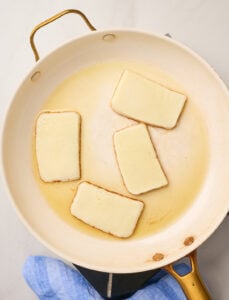
Heat the Pan and Oil: In my professional kitchen, I start by heating a medium sauté pan over medium-high heat. Add a thin layer of extra virgin olive oil and let it shimmer. You’ll know it’s ready when you see ripples, a faint wisp of smoke, and can feel gentle heat rising. If it’s not hot enough, the cheese will absorb oil. If it smokes too much, lower the heat slightly.
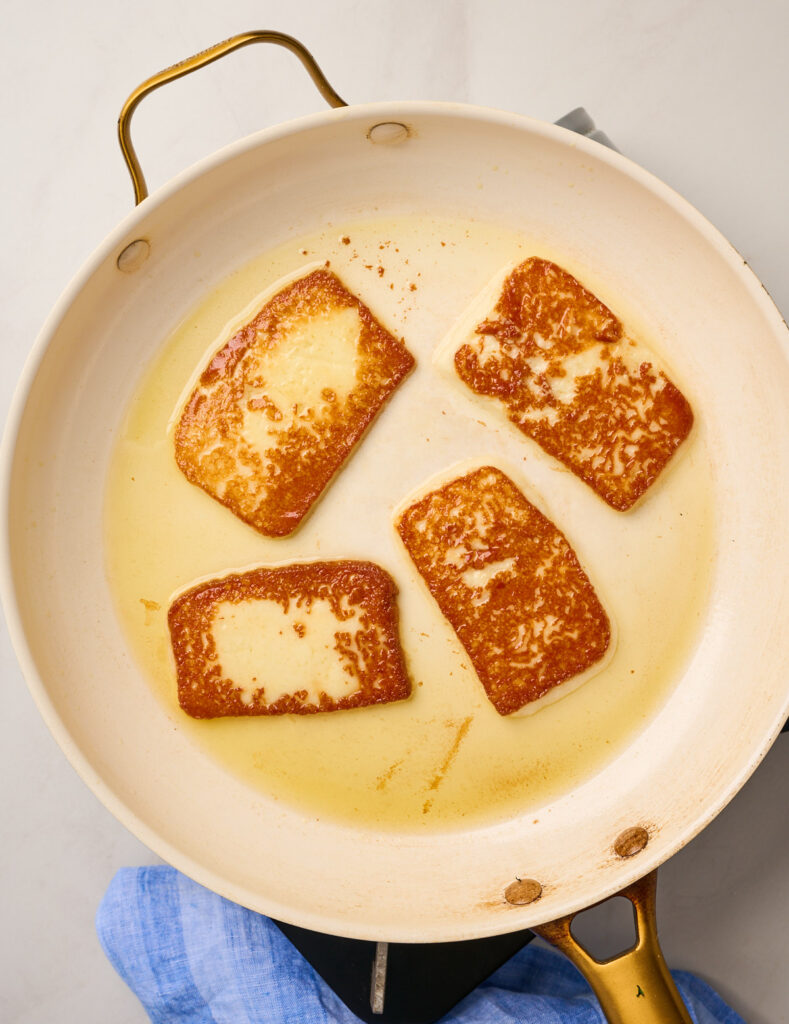
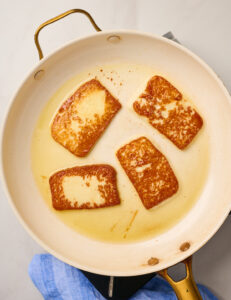
Sear the Cheese: As I teach in my culinary classes, carefully place the cheese in the oil, keeping it away from your body to avoid splatter. It should sizzle immediately. Let it cook undisturbed for 1–2 minutes, until it is deep golden brown and crisp at the edges. If it sticks, give it 10–15 more seconds. It will release naturally once it’s seared.
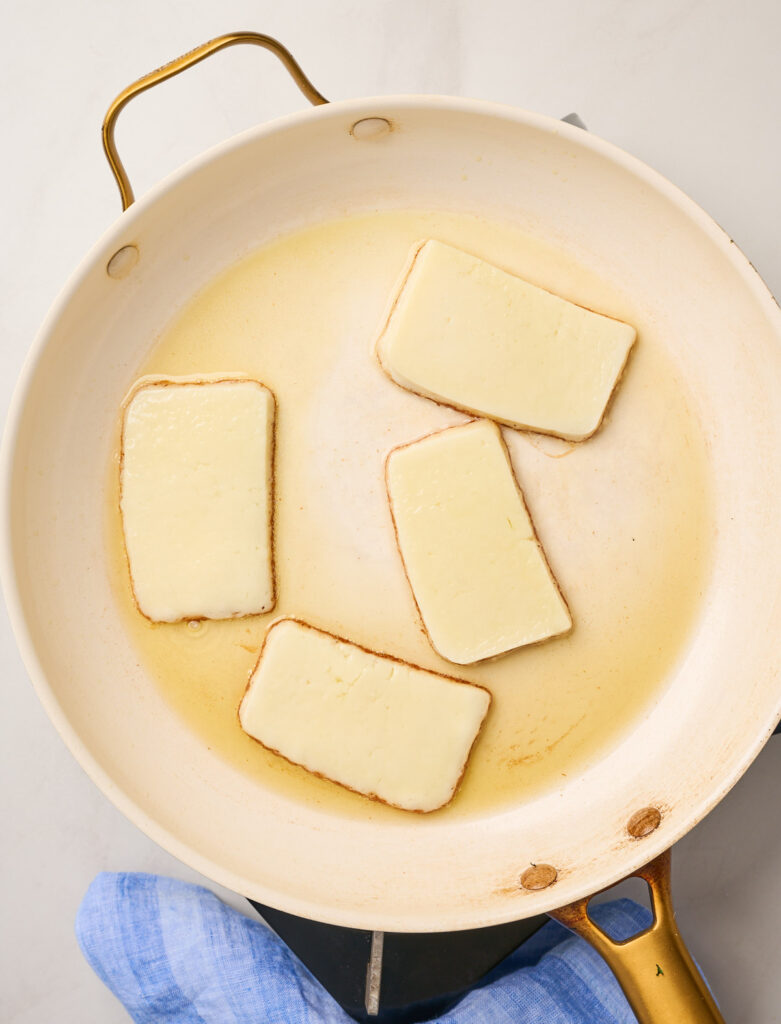
Flip and Finish: Gently flip with a flat spatula. The second side cooks faster—often under a minute—so watch closely to avoid burning. Don’t walk away. The cheese can go from golden to scorched fast.
Optional Step – The Art of the Flambé
While flambéing isn’t traditional in Greece, in my chef experience, it’s an excellent technique to elevate both flavor and showmanship, turning pan-fried cheese into a true showstopper.
The term flambé means “flamed” in French. The technique involves adding alcohol (like ouzo or brandy) to a hot pan, where it ignites and quickly burns off, leaving behind subtle sweetness and aroma.
To flambé safely:
- Remove the pan from heat and add about ½ ounce of ouzo or brandy.
- Return it to the burner and step back as the alcohol ignites.
- If it doesn’t light on its own, use a long lighter or match.
- The flame will rise quickly and fade in a few seconds.
Safety Tip: Never pour alcohol directly from the bottle, and always flambé off heat before returning the pan to the burner.
Fun Fact: Although now associated with Greek restaurants worldwide, flambéing saganaki actually originated in the U.S. at The Parthenon restaurant (now closed) in Chicago in the 1960s. The flaming tableside moment (often shouted with a joyful “Opa!”) became an instant hit. In Greece, however, saganaki is traditionally served without fire.
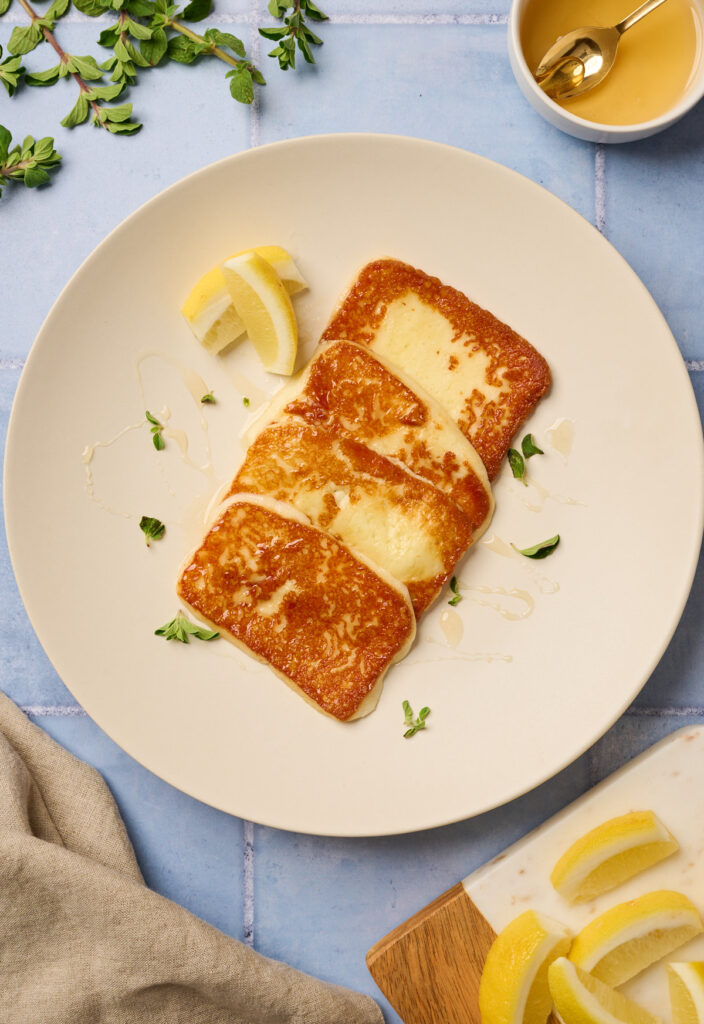
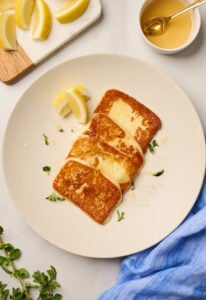
Garnish and Serve: Transfer to a warm plate. Add a squeeze of lemon and a drizzle of honey for balance and brightness. The acid cuts through the richness; the honey adds contrast. Serve immediately—sizzling is part of the experience.
How to Serve Saganaki
One of the best things about saganaki is its versatility and crowd-pleasing nature. Whether served as a simple appetizer or part of a Mediterranean spread, this golden, melty cheese makes everything more delicious.
With Crusty Bread: This is the classic way to serve saganaki. Provide plenty of crusty bread or warm pita for mopping up the delicious pan sauce created by the olive oil and lemon juice.
Serve with Tomato Confit: For a true chef-level pairing, pair the saganaki with a spoonful of my slow-roasted tomato confit for a sweet-savory contrast. I’ve served this pairing at pop-up dinners and private events—it’s like a fine dining take on mozzarella sticks.
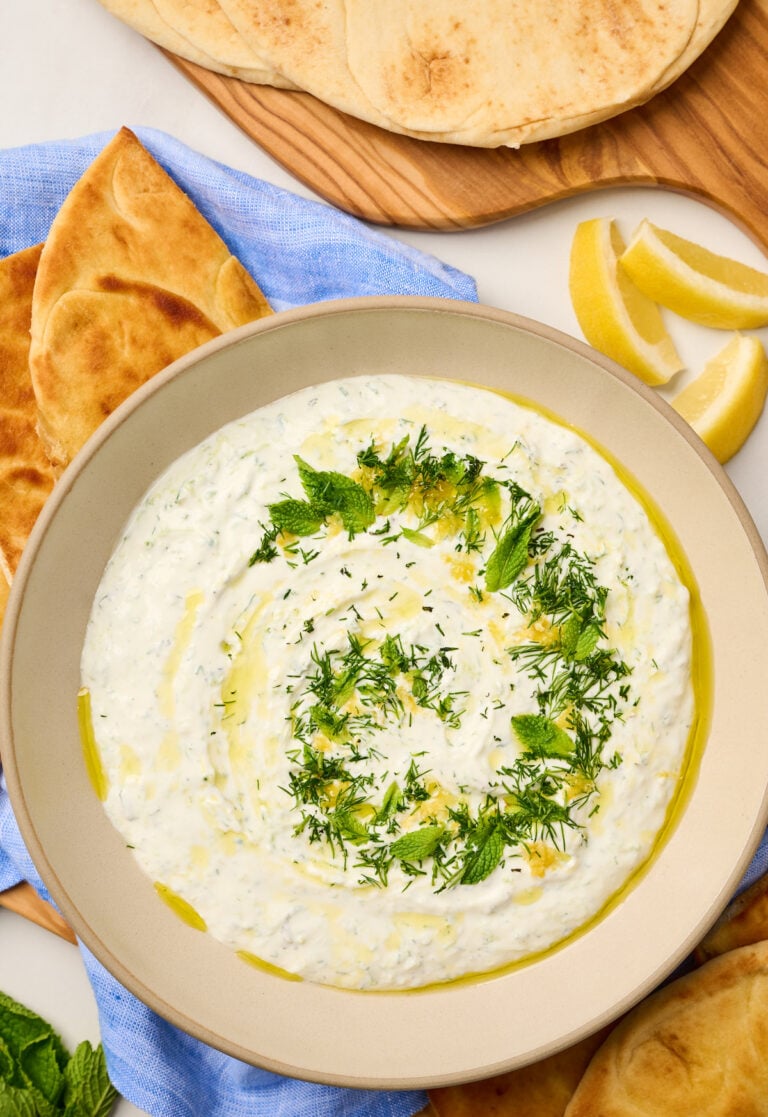
Add to a Mezze Platter: Saganaki pairs beautifully with a Mediterranean mezze, complementing olives, pita, tzatziki, spicy feta dip tirokafteri, hummus, or roasted peppers.
Pair with Fresh Salads and Sides: Serve it alongside a crisp Greek salad, asparagus orzo, or roasted vegetables for a vibrant, balanced meal.
Round it Out with Protein and Dessert: Make it a complete meal with grilled lamb or chicken, and finish with creamy rice pudding for a classic Greek ending.
Saganaki FAQs
Curious about saganaki? These commonly asked questions cover everything from serving tips to cultural context, helping you master the dish and enjoy it even more.
Yes. As long as you skip the flour coating, this recipe is naturally gluten-free. In my culinary practice, I avoid flour altogether by using the right cheese from the start. My preferred method, using high-quality cheese like Kefalograviera, requires no flour at all.
Nope! While “saganaki” refers to a small, two-handled Greek frying pan, in both restaurant kitchens and home settings, I’ve used everything from cast iron to nonstick with success.
“Opa!” is a joyful Greek expression used to celebrate moments of fun and flair, like the tableside flambé of saganaki. It’s all about enthusiasm, excitement, and sharing good food with others.
Saganaki is rich and salty, making it a great start to many Greek meals. Try serving it before grilled lamb, chicken souvlaki, roasted fish, or a classic like moussaka.
Storing and Reheating
Like most cheese-based appetizers I prepare, saganaki is best enjoyed hot from the pan, but leftovers can be stored and reheated with decent results.
Refrigerator: Let the cheese cool completely, then transfer to an airtight container and refrigerate for up to 3–4 days. To reheat, pan-fry in a lightly oiled skillet over medium heat until warmed through and re-crisped. The texture may soften slightly, but the flavor remains rich and delicious.
Freezer (Not Recommended): Due to its high moisture content, saganaki doesn’t freeze well. It tends to turn rubbery and lose its crispy edge once thawed, so it’s best to skip freezing altogether.
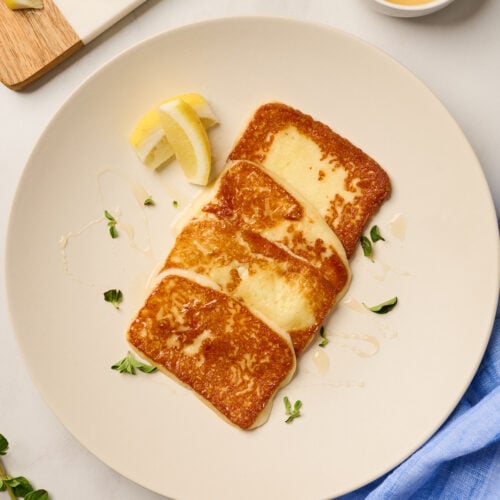
Authentic Greek Saganaki Recipe
Ingredients
- 6 oz package Kefalograviera cheese, sliced into ½ cm planks
- 2 tbsp extra virgin olive oil olive oil
- 1/2 oz ouzo or brandy (optional, for flambéing)
- 1 lemon, sliced into wedges for serving
- Honey, for drizzling (optional)
Instructions
- Heat a medium sauté pan over moderate-high heat. Add olive oil and let it shimmer.
- Carefully place the cheese slices in the pan, laying them away from your body to avoid splatter.

- Sear for 1–2 minutes, until the underside is golden brown and crisp at the edges.
- Flip gently and cook the second side for about 1 minute, watching closely to avoid burning.

- If flambéing, remove the pan from heat and add the ouzo or brandy. Return the pan to the burner and let the alcohol ignite naturally. If needed, use a long lighter. The flame will rise and quickly burn off.
- Transfer the cheese to a plate. Serve immediately with lemon wedges and, optionally, a drizzle of honey.

Notes
Nutrition
More Chef-Tested Greek Appetizers You’ll Love
If you loved this authentic saganaki, here are more Greek-inspired appetizers and mezze favorites that bring big flavor and balance to your table.
- Cool and creamy, this Tzatziki Sauce Recipe is made with thick Greek yogurt, grated cucumber, garlic, and fresh herbs — perfect for dipping warm pita or spooning over grilled meats.
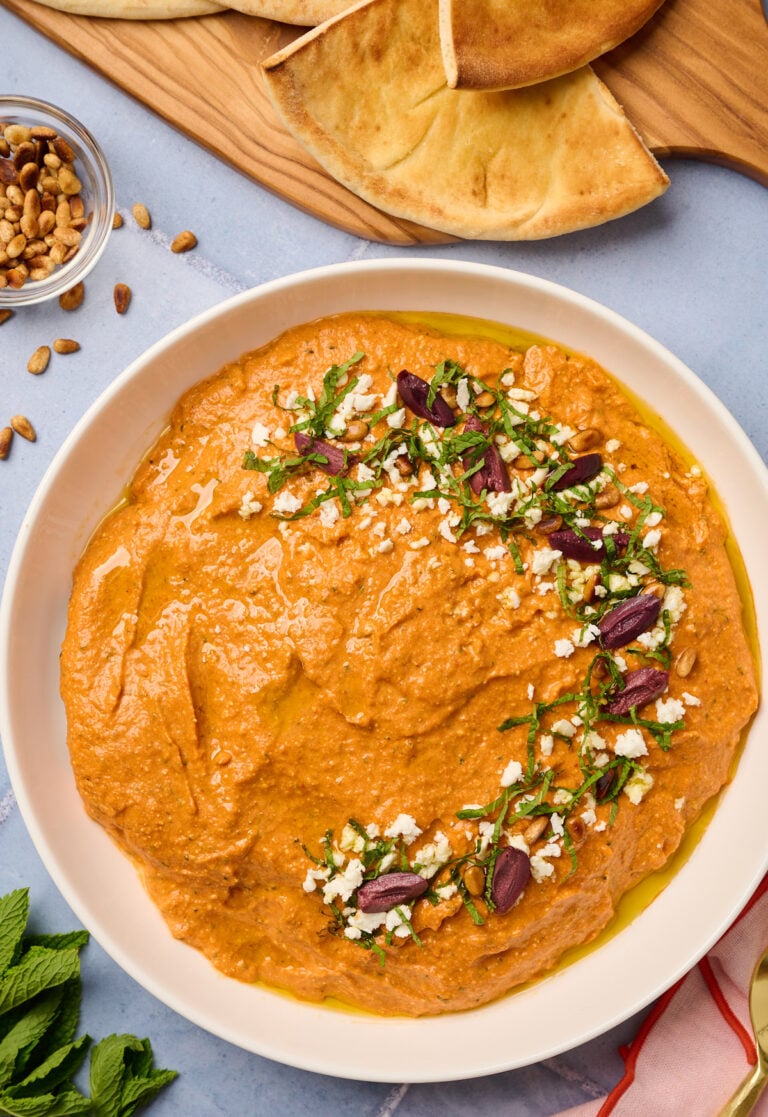
- For a fiery contrast to the rich cheese, try Tirokafteri, a bold and spicy feta dip blended with harissa and roasted red peppers.
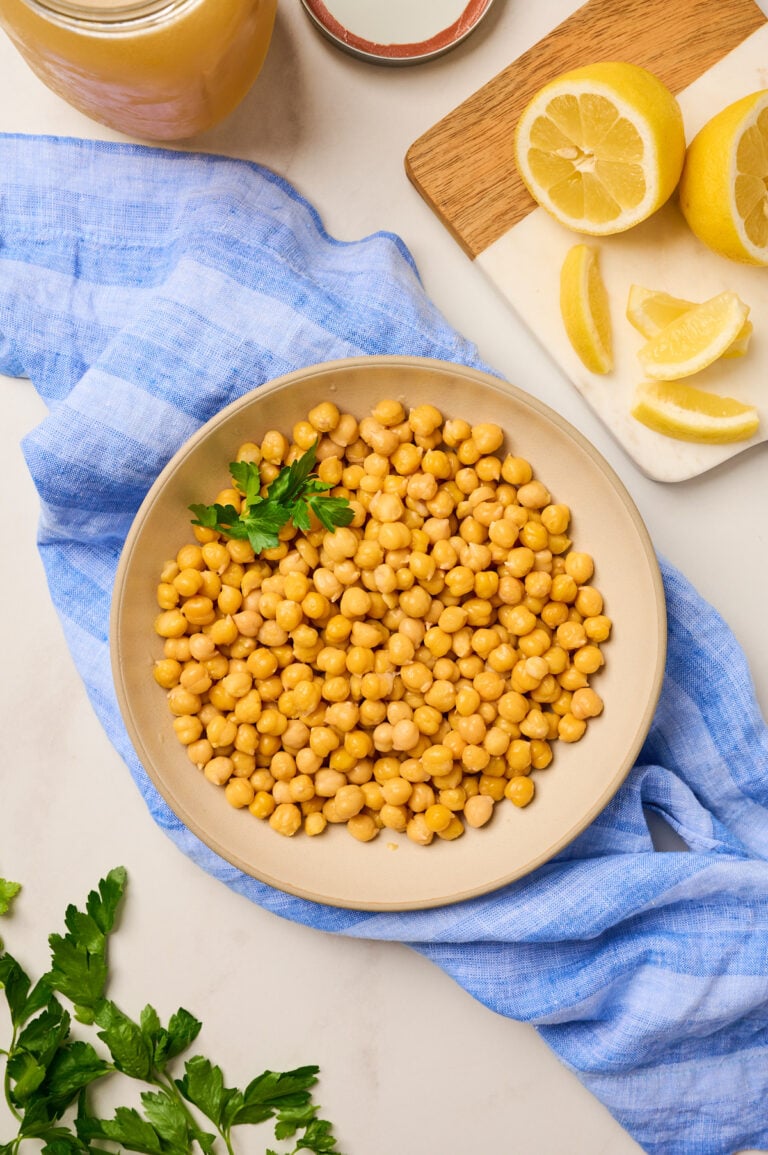
- Or complete your spread with this Homemade Hummus Recipe, made ultra-smooth with warm chickpeas, garlic, lemon, and tahini — a must-have dip for any Greek-inspired table.
- Bright and herby, this Tabouli Salad Recipe adds a refreshing, lemony bite that’s perfect alongside pan-seared saganaki.
- My Roasted Red Peppers offer a smoky-sweet accent to any mezze platter and pair beautifully with salty Greek cheeses.
- And for a fine-dining twist, serve saganaki with a spoonful of Tomato Confit — the slow-roasted tomatoes bring sweetness and depth to every bite.